
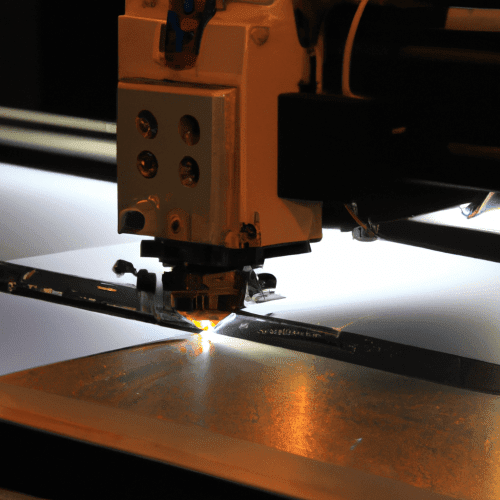
Laser cutting technology offers exceptional precision for manufacturing, enabling the creation of intricate parts with tight dimensional control. Understanding the factors that influence this accuracy is essential for engineers and fabricators to optimize designs and production processes. Modern laser systems, particularly fiber lasers, have significantly advanced the achievable tolerances in various materials.
Kerf Width Tolerances
Kerf refers to the width of material removed by the laser beam during the cutting process. This material removal is analogous to the blade thickness of a saw, directly impacting the final dimensions of a part. Typical kerf widths range from 0.1 mm to 0.3 mm, depending on the laser type, material, and thickness.
Fiber lasers generally produce a narrower kerf, typically between 0.15 mm and 0.3 mm for mild steel between 1 mm and 12 mm thick. CO2 lasers, conversely, often result in a slightly wider kerf, ranging from 0.2 mm to 0.5 mm. Accounting for kerf is critical in design, especially for press-fit assemblies or tab-and-slot designs, where precise mating features are required.
Modern laser cutting software often compensates for kerf automatically during nesting. However, engineers should still be aware of the kerf width for their specific material and thickness to ensure minimum feature sizes and slot widths are maintained. For instance, internal holes will be slightly larger than drawn, while external profiles will be marginally smaller if kerf is not properly managed.
Thermal Expansion Effects
| Parameter | Fiber Laser | CO2 Laser |
|---|---|---|
| Wavelength | ~1.06 µm | ~10.6 µm |
| Typical Metal Tolerance | ±0.002″ to ±0.008″ (±0.05 mm to ±0.2 mm) | ±0.004″ to ±0.020″ (±0.1 mm to ±0.5 mm) |
| Kerf Width | 0.006″ – 0.012″ (0.15-0.3 mm) | 0.008″ – 0.020″ (0.2-0.5 mm) |
| Metal Cutting Speed (Thin) | 3-5x faster than CO2 | Slower for metals |
| Material Compatibility | Excellent for all metals | Ideal for non-metals, less efficient for reflective metals |
Laser cutting is a thermal process, and the intense, localized heat input can induce thermal stress within the material. This stress arises from uneven heating and cooling around the cut line, causing the material to expand and contract at different rates.
Distortion, warping, or bowing can occur if the internal stress exceeds the material’s ability to remain flat. Thin sheet materials are particularly susceptible to these effects due to their limited mass to absorb and dissipate heat. Concentrated heat from tight clusters of cuts or long, unbroken cut lines can exacerbate thermal deformation.
Effective thermal management, including proper cooling techniques and optimized cutting parameters, is essential to mitigate these effects. While part quality in terms of dross height and surface roughness may not be significantly affected by temperature variations, dimensional accuracy can experience substantial deviations, sometimes reaching up to 1.2 mm in aluminum alloys.
Fiber vs. CO2 Laser Accuracy
The choice between fiber and CO2 laser technology significantly impacts cutting precision, primarily due to fundamental differences in their operational wavelengths and beam characteristics. Fiber lasers operate at a shorter wavelength of approximately 1.064 micrometers (µm), while CO2 lasers emit at a much longer 10.6 µm.
Fiber lasers offer superior beam quality with a smaller focal spot and higher power density, leading to tighter focus and enhanced precision, especially for thin metals. This allows fiber lasers to achieve dimensional tolerances as tight as ±0.003 inches (±0.076 mm) and even ±0.0005 inches (±0.0127 mm) under optimal conditions for ultra-precision applications.
CO2 lasers, while effective for a wide range of materials including non-metals like wood and acrylic, generally provide dimensional accuracies around ±0.005 inches (±0.127 mm). Their larger wavelength results in a slightly larger focal spot, making them less precise for intricate metal cutting compared to fiber lasers.
The efficiency of metal absorption also differs; metals absorb fiber laser energy more readily, reducing reflectivity losses and enabling faster cutting speeds for thin metals. This makes fiber lasers the dominant technology for sheet metal fabrication in 2026.
Material Thickness Impacts
Material thickness significantly influences the achievable precision in laser cutting. Thicker materials generally require broader tolerances compared to thinner sheets. This is primarily due to increased heat input, which can lead to greater distortion and a wider kerf as the laser beam diverges through the material.
For thin sheet metal, typically 1.5 mm or less, laser cutting machines can operate at high speeds while maintaining tight tolerances, often around ±0.002″ to ±0.003″ (±0.05 mm to ±0.076 mm). Less heat buildup in thinner materials reduces distortion, allowing for highly precise cuts and smoother edges with minimal dross.
As material thickness increases, several challenges emerge. Slower cutting speeds are necessary to ensure full penetration and maintain edge quality, which can increase the heat-affected zone (HAZ) and potential for warping. Edge tapering also becomes more pronounced, where the cut widens slightly from the top to the bottom of the material.
For thicker materials, such as steel plates exceeding 12 mm, expected tolerances can loosen to ±0.008″ to ±0.015″ (±0.2 mm to ±0.38 mm) or even ±0.020″ (±0.5 mm) for 25mm steel. High-power lasers and expert technicians can still achieve precise results on thicker plates, especially with appropriate assist gases and optimized machine parameters.
Repeatability Specifications
Repeatability in laser cutting refers to the machine’s ability to consistently produce identical parts within a specified tolerance across multiple production runs. This is a critical aspect of precision manufacturing, ensuring uniformity and interchangeability of components. A machine can be precise (consistent) without being accurate (on-target), highlighting the importance of both attributes.
Modern fiber laser systems offer excellent repeatability, contributing to their ability to achieve tight tolerances for critical features. Factors influencing repeatability include the mechanical precision of the laser cutting system, the stability of the laser head, and the accuracy of the XY axes. Even minor clearances or vibrations can lead to blurred contours or out-of-round geometries, particularly for small features.
The control technology, specifically CNC-controlled systems, plays a vital role in coordinating the cutting path with the CAD drawing, thereby enhancing positioning accuracy. Consistent temperature management within the machine and optimized cutting parameters also contribute significantly to maintaining stable tolerance and repeatability over time.