
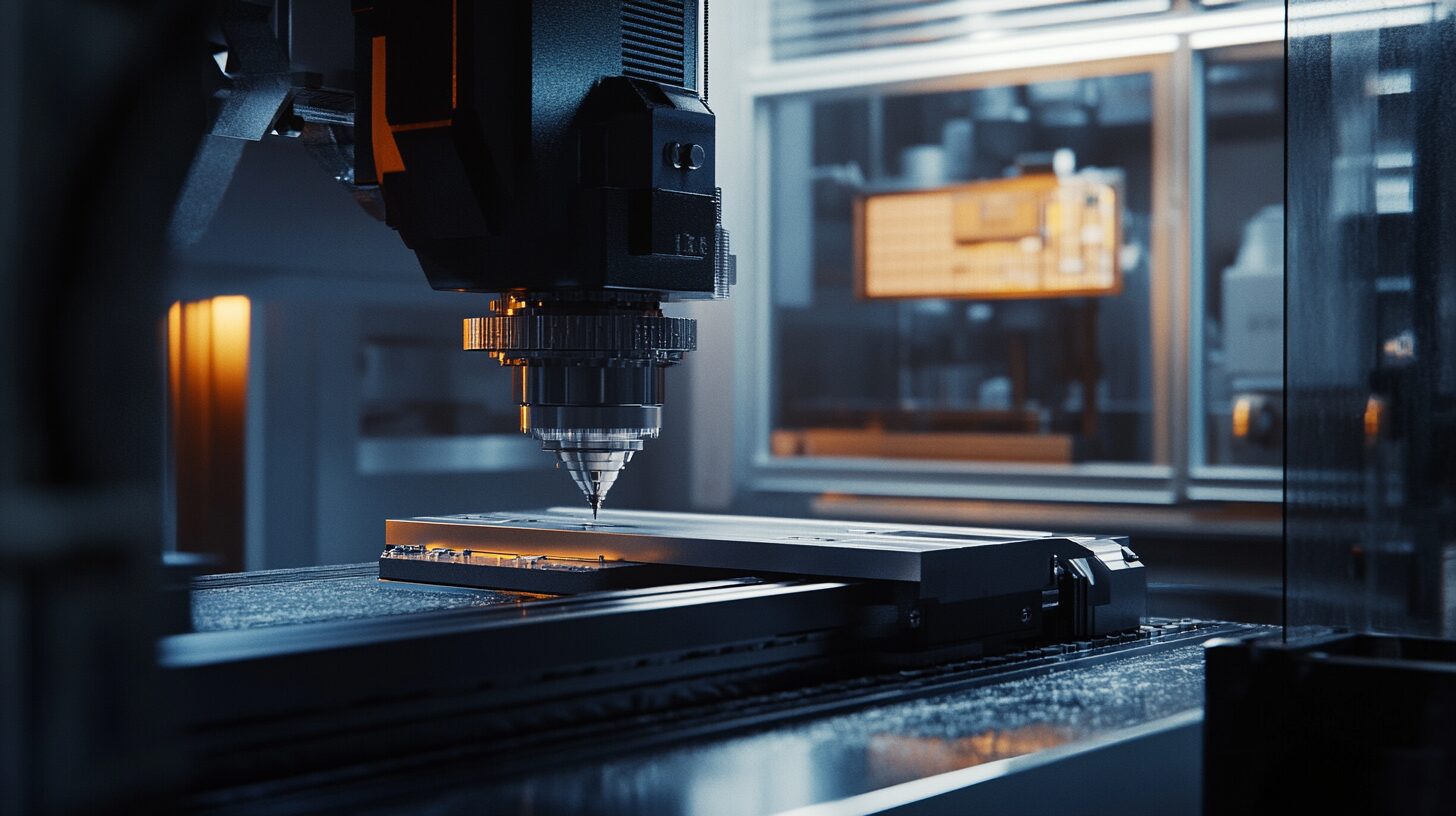
Achieving optimal efficiency in CNC machining requires a strategic integration of advanced automation with established lean manufacturing principles. This synergy allows shops to maximize throughput, reduce waste, and maintain competitive edge in a rapidly evolving industrial landscape. Modern practices emphasize data-driven decisions and continuous process refinement, moving beyond traditional operational models.
Reducing Setup Batch Setup Times
Minimizing setup time is a critical factor for improving machine utilization and overall shop profitability, especially in high-mix, low-volume production environments. In 2026, setup time has become a defining measure of competitiveness for CNC machine shops. Implementing Single-Minute Exchange of Die (SMED) principles is fundamental, focusing on converting internal setup activities (machine stopped) to external ones (machine running).
Offline preparation significantly reduces the time machines spend idle. This includes presetting tools, verifying programs with digital simulation, and using virtual machine environments to catch potential errors or collisions before physical setup begins. Zoller reports that measuring just five tools offline can reduce setup time by over 40%, as tools arrive with accurate offset data already confirmed.
Advanced workholding technology offers substantial gains in setup reduction. Modular zero-point systems, dovetail vises, and self-centering vises allow operators to swap fixtures in seconds with micron-level repeatability. These systems eliminate the need for manual alignment and tramming, enabling operators to prepare multiple setups away from the machine. Quick-change jaw systems on CNC lathe chucks also allow jaw swaps in seconds, directly impacting profit margins.
Standardized work instructions and digital setup sheets further streamline the process, reducing operator-to-operator variability. These digital guides ensure consistent machine settings and procedures, leading to ‘First Time Right’ success on changeovers and minimizing startup waste.
Robotic Machine Tending
| Feature Type | Standard Tolerance | Precision Tolerance | Tightest Practical Tolerance |
|---|---|---|---|
| Linear Dimensions (Metals) | ±0.005 in (±0.127 mm) | ±0.002 in (±0.05 mm) | ±0.0005 in (±0.0127 mm) |
| Linear Dimensions (Plastics) | ±0.010 in (±0.254 mm) | ±0.005 in (±0.127 mm) | ±0.002 in (±0.05 mm) |
| Hole Diameter (Reamed/Bored) | ±0.002 in (±0.05 mm) | ±0.001 in (±0.025 mm) | ±0.0002 in (±0.005 mm) |
Automated machine tending, utilizing robotic systems, is transforming CNC operations by handling repetitive and hazardous tasks like loading and unloading workpieces. This allows machines to operate continuously, often 24/7, turning idle hours into productive output. Manufacturers are adopting this technology to improve efficiency, maintain consistent output, and address ongoing labor shortages.
Benefits of CNC machine tending automation are extensive, including higher uptime, consistent part quality, and safer work environments. Robots ensure consistent positioning, reducing variation and damage between parts, while freeing human workers for more complex, value-added activities. Shops have reported production increases of 40-60% through automated tending.
Collaborative robots, or ‘cobots,’ are particularly well-suited for CNC machine tending due to their safety features, compact footprint, and ease of deployment. These robots can be quickly integrated and reprogrammed for different tasks, offering flexibility for mixed-job runs. Modern machine tending setups often include robotic arms paired with sensors, vision systems, and conveyors for seamless part transfer.
Integrating machine tending robots requires careful communication between the robot and the CNC machine to manage cycles, open doors, and time various functions. Advanced systems can even incorporate autonomous post-inspection using machine vision, creating fully closed machining loops that prevent defective parts from leaving the cell.
Value Stream Mapping Shop Floors
Value Stream Mapping (VSM) is a powerful lean manufacturing technique used to visualize, analyze, and improve the complete material and information flow for a product, from raw material to customer delivery. This disciplined diagnostic helps teams identify and eliminate waste, reduce delays, and deliver greater customer value.
The VSM process typically involves four key steps: selecting a product family, mapping the current state, designing a future state, and creating an implementation plan. It is crucial to ‘walk the gemba’—the actual place where work happens—and record real data, rather than relying on standard operating procedures.
During current-state mapping, data points such as cycle time, changeover time, batch size, inventory levels, and defect rates are collected at each process step. This visual representation, using specific VSM symbols, helps to clearly distinguish value-adding activities from non-value-adding waste, such as waiting, excess inventory, or unnecessary movement.
Designing the future state involves answering how work should flow to meet customer demand with minimal waste. This includes calculating takt time, implementing continuous flow where possible, and installing pull systems where continuous flow is not feasible. The goal is to eliminate bottlenecks and create a smoother, more efficient process.
Minimizing Scrap Material
Reducing scrap material is paramount for profitability and resource efficiency in CNC machining. Scrap rates, particularly in multi-step production, can range from 3% to 8%, representing significant losses in material, machine time, and labor. Scrap is not inevitable; it stems from specific variables related to material, machine, operator, or method.
Common causes of scrap include tool wear and edge breakdown, thermal expansion and distortion, poor fixturing, setup errors, and chip accumulation. Programming mistakes, such as incorrect G-code entries or toolpath instructions, are also leading causes of faults. Even small typos can result in scrapped parts or tool crashes.
Effective strategies for scrap reduction involve digital material checks to verify correct and unexpired materials before loading. Precision maintenance ensures machines hold tolerance, preventing defects caused by asset degradation like worn bearings or sticking hydraulic valves. Correlating scrap logs with machine condition logs can reveal when scrap spikes coincide with increased machine temperature or vibration.
Standardizing setup procedures with ‘centerlining’—determining exact settings for good parts—and using digital setup sheets minimizes startup waste. Verifying tool offsets and using material-specific tooling and optimized cutting parameters are also crucial. In-process metrology and automatic tool offset adjustments provide closed-loop quality feedback, preventing issues before they compound.
Continuous Improvement Flow
Continuous improvement is not merely a set of tools but a fundamental mindset for manufacturing excellence. It involves an ongoing commitment to small, incremental improvements across all processes, fostering adaptability and early issue identification. This approach is essential for navigating evolving requirements and reducing risks before they impact the customer.
Methodologies like Kaizen, rooted in the philosophy of ‘change for the better,’ emphasize that no day should pass without some form of improvement. The Plan-Do-Check-Act (PDCA) cycle provides a structured framework for testing changes, measuring results, and standardizing successful adjustments.
Data-driven decisions are at the core of modern continuous improvement. Key Performance Indicators (KPIs) such as Overall Equipment Effectiveness (OEE), First Pass Yield (FPY), Cycle Time, and Scrap Rate provide measurable insights into operational performance. Real-time machine monitoring and live feedback loops turn improvement from a monthly task into a daily habit, empowering teams to act on data.
Integrating Industry 4.0 technologies, such as AI-native control systems and digital twins, further enhances continuous improvement. AI-driven machining uses real-time sensor feedback to automatically adjust feeds, speeds, and toolpaths, leading to more consistent quality and fewer production halts. Predictive maintenance, using IIoT sensors, schedules servicing before failures occur, significantly increasing spindle uptime.