
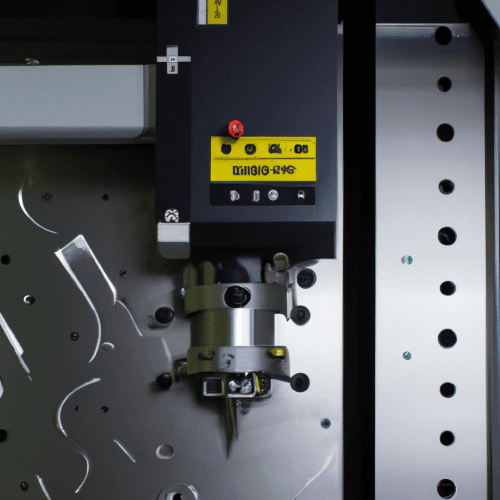
Effective Siemens CNC programming requires a structured approach to learning, encompassing various documentation types and software functionalities. Engineers often seek comprehensive guides to master the intricacies of Sinumerik controllers, particularly the widely adopted 840D series.
Understanding the diverse range of available resources is crucial for both novice and experienced machinists. These resources span from foundational G-code syntax to advanced multi-axis strategies, each demanding specific learning materials.
Navigating Siemens Sinumerik 840D Documentation
The Siemens Sinumerik 840D solution line (sl) is a high-performance CNC system, and its comprehensive documentation is the primary resource for in-depth understanding. Key manuals include the ‘Operating Manual HMI-Advanced’, ‘Programming Manual G-Code’, and ‘Function Manual Basic Functions’. These documents provide detailed explanations of system operation, programming commands, and specific functionalities.
Accessing the most current versions of these manuals is essential, typically found on the Siemens Industry Online Support portal. These digital resources are continuously updated, reflecting software revisions and new features for the 840D sl controller. Users can download PDFs for offline reference or utilize interactive online versions.
Specific programming examples and application notes are often embedded within these manuals, illustrating practical implementations of various G-code functions and cycles. Engineers should prioritize the ‘Programming Manual G-Code’ for a thorough understanding of the controller’s native language.
Unlocking Efficiency with ShopMill and Conversational Programming
| Resource Type | Primary Focus | Target User | Key Benefit |
|---|---|---|---|
| Sinumerik 840D Manuals | System operation, G-code syntax, functions | All levels | Authoritative, comprehensive system details |
| ShopMill Guides | Conversational programming, workshop tasks | Beginner to Intermediate | Rapid program creation, ease of use |
| G-Code Handbooks | Fundamental G-code commands, cycles | All levels | Core programming language mastery |
| Advanced Multi-Axis Books | Complex kinematics, tool orientation | Intermediate to Advanced | Specialized multi-axis techniques |
Siemens ShopMill software offers a powerful, workshop-oriented programming environment designed to simplify complex machining tasks. This conversational programming interface allows operators to create programs directly at the machine, using graphical prompts and input fields rather than raw G-code.
ShopMill guides typically cover the creation of milling operations, drilling cycles, and contour definitions through an intuitive menu-driven system. This approach significantly reduces programming time for standard parts and simplifies the learning curve for new users. The software translates the conversational inputs into executable G-code automatically.
While ShopMill excels in ease of use, a solid understanding of underlying G-code principles enhances its utility. Programmers can often switch between conversational and G-code views, allowing for fine-tuning or integration of custom G-code blocks within ShopMill-generated programs.
Mastering G-Code Syntax for Siemens Controllers
G-code remains the fundamental language for CNC machine control, and Siemens Sinumerik controllers adhere to ISO standards with specific extensions. A dedicated G-code syntax handbook for Sinumerik systems details all supported commands, including preparatory functions (G-codes), miscellaneous functions (M-codes), and auxiliary functions.
Understanding the nuances of Siemens-specific G-codes, such as cycle calls (e.g., CYCLE81 for drilling, CYCLE83 for deep hole drilling), is critical for efficient programming. These cycles streamline common machining operations, reducing the amount of manual G-code required.
Programmers must also grasp coordinate systems (G54-G59 for work offsets), tool compensation (G40-G42), and feed rate/spindle speed commands (F and S functions). Precise application of these commands ensures accurate tool paths and optimal material removal rates.
Advanced Multi-Axis Programming on Siemens Platforms
Programming for multi-axis Siemens CNC machines, particularly 5-axis systems, introduces significant complexities beyond 3-axis operations. Advanced multi-axis books and specialized Siemens documentation focus on topics like tool orientation control, transformation functions, and collision avoidance strategies.
Key concepts include the use of TRAORI (Transformation Orientation) for tool center point management and the application of various kinematic transformations. These functions allow the machine to maintain the desired tool orientation relative to the workpiece, even as multiple axes move simultaneously.
Effective multi-axis programming often leverages CAM software, which generates complex tool paths that are then post-processed for the specific Siemens controller. However, understanding the underlying G-code and Siemens-specific commands for multi-axis motion is vital for debugging and optimization.
Selecting Optimal Siemens CNC Programming Resources
Choosing the best programming resources depends heavily on the user’s current skill level and specific application needs. Beginners benefit from conversational programming guides and introductory G-code handbooks, while experienced users require advanced manuals and specialized texts.
Online forums and community resources also provide valuable insights and practical solutions for common programming challenges. Many experienced Siemens programmers share tips and custom macros that can enhance productivity and problem-solving capabilities.
Consider the following comparison of programming resource types:
Ultimately, a combination of official Siemens documentation, practical software guides, and specialized texts provides the most robust foundation for mastering Siemens CNC programming.