
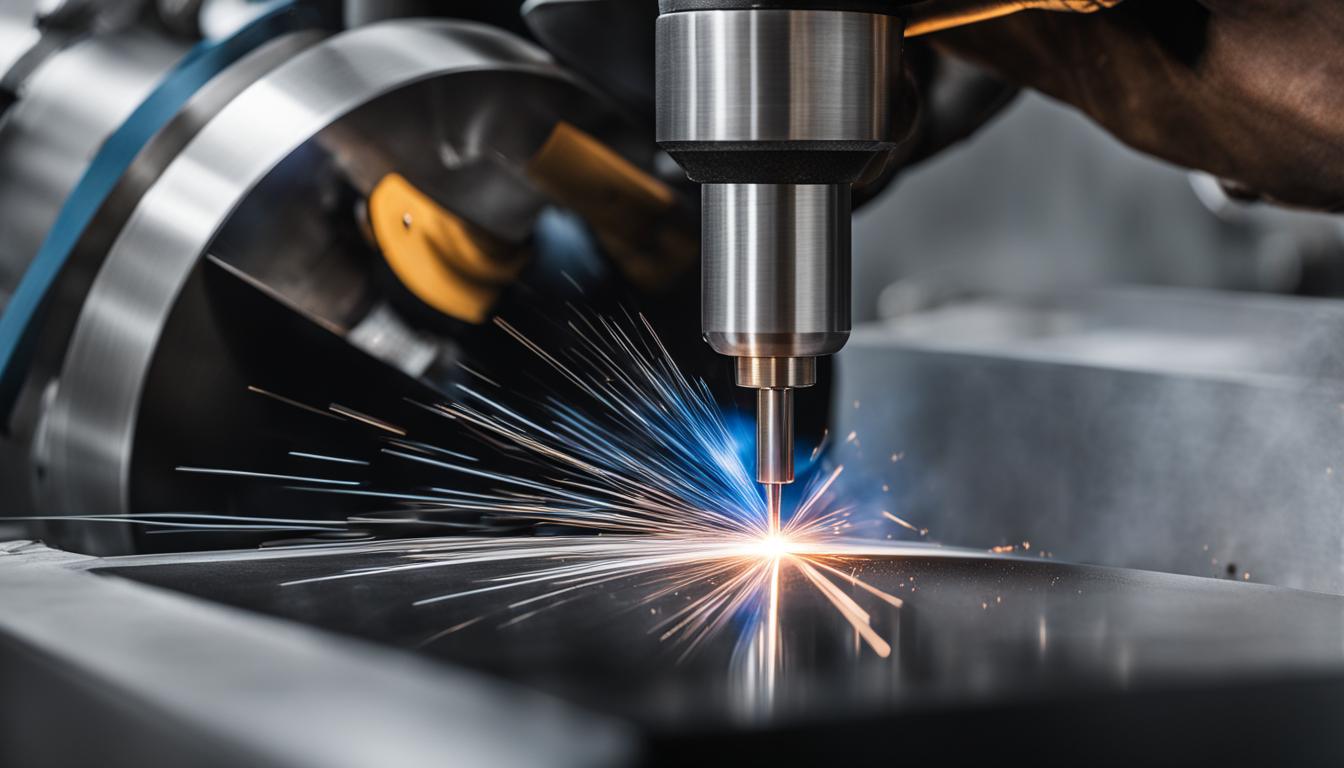
Precision manufacturing relies on various subtractive processes, each optimized for specific material properties, geometric complexities, and surface finish requirements. Among the most fundamental are turning and grinding, two distinct methods that achieve material removal through fundamentally different mechanics. Understanding these differences is crucial for selecting the optimal process in modern engineering applications.
While both processes shape workpieces, their capabilities diverge significantly, particularly concerning the final part’s accuracy, surface quality, and suitability for hardened materials. Engineers must evaluate these distinctions to ensure cost-effective production and meet stringent performance specifications.
Abrasive Wheel versus Single-Point Cutter
Turning operations utilize a single-point cutting tool, typically made from carbide, ceramic, or cubic boron nitride (CBN), to shear material from a rotating workpiece. The tool’s geometry features a defined cutting edge that forms distinct chips as it traverses the material. This direct shearing action allows for high material removal rates in many applications.
Conversely, grinding employs an abrasive wheel composed of numerous small, hard abrasive grains bonded together. Each grain acts as a microscopic, undefined cutting edge, removing minute chips through a combination of cutting, plowing, and rubbing actions. This multi-point cutting mechanism is inherently different from the single-point approach of turning.
The grinding wheel’s composition, including abrasive type (e.g., aluminum oxide, diamond), grit size, and bonding material, dictates its cutting performance. These parameters are carefully selected to achieve specific surface finishes and material removal characteristics.
Material Removal Rate and Efficiency
| Parameter | Typical Turning Capabilities | Typical Grinding Capabilities |
|---|---|---|
| Surface Roughness (Ra) | 16-250 µin (0.4-6.3 µm) | 4-32 µin (0.1-0.8 µm) |
| Dimensional Tolerance | ±0.005-0.010 in (±0.13-0.25 mm) | ±0.0001-0.0005 in (±0.0025-0.013 mm) |
| Hardness Range | Softer to medium-hard materials; Hard turning up to 68 HRC | Wide range, including hardened steels, ceramics, carbides (>45 HRC) |
Turning generally offers higher material removal rates (MRR) for softer to medium-hard materials. A single-point tool can take deeper cuts and operate at higher feed rates, quickly reducing the workpiece to near-net shape. This makes turning highly efficient for initial roughing operations.
Grinding, by its nature, typically removes material in much smaller increments. While conventional grinding has lower MRRs compared to rough turning, advancements like creep feed grinding can achieve significant material removal, sometimes even surpassing milling in deep cuts for harder materials.
Hard turning, utilizing specialized CBN or ceramic inserts, bridges some of this gap by enabling efficient material removal from hardened steels (45-68 HRC) on standard CNC lathes. This can reduce cycle times and eliminate the need for separate grinding machines in certain applications.
Micron Surface Finish Quality and Precision
Grinding consistently achieves superior surface finishes and tighter dimensional tolerances compared to turning. Standard turning typically produces surface roughness (Ra) values ranging from 16 to 250 microinches (0.4 to 6.3 micrometers). Fine turning can reach Ra 32 microinches (0.8 micrometers).
Precision grinding, however, routinely delivers Ra values between 4 and 32 microinches (0.1 to 0.8 micrometers). Specialized grinding processes can achieve finishes as fine as 0.5 microinches (0.012 micrometers) with tolerances down to ±0.00002 inch, essential for critical components like hydraulic cylinders or piston rods.
Dimensional tolerances also differ significantly. Standard CNC turning typically holds tolerances of ±0.005 to ±0.010 inch (±0.13 to ±0.25 mm). Precision turning can achieve ±0.001 inch (±0.025 mm) or better.
Grinding, particularly precision grinding, can achieve much tighter dimensional control, often within ±0.0001 inch (±0.0025 mm) or even microns (0.00004 inch). This level of accuracy is critical for aerospace, medical, and tooling industries.
Hardened Metal Machining Strategies
Machining hardened metals (typically above 45 HRC) presents significant challenges for conventional turning due to rapid tool wear and potential for thermal damage. While specialized CBN inserts allow ‘hard turning’ of materials up to 68 HRC, grinding remains the traditional and often preferred method for finishing these components.
Grinding excels in processing hardened steels, ceramics, and carbides, materials that are extremely difficult or impossible to machine with single-point tools. The abrasive action of grinding wheels is well-suited for these high-hardness materials, providing both material removal and the desired surface integrity.
Hard turning offers advantages in flexibility and cost for small to medium batch sizes, especially for parts with continuous surfaces. However, for ultra-fine surface finishes, no-lead shaft specifications, or parts with interrupted geometries like keyways, grinding consistently outperforms hard turning.
Cutting Mechanics Differences
Turning involves a continuous chip formation process where the single cutting edge shears a relatively large, continuous chip from the workpiece. The cutting forces are concentrated at this single point, generating significant heat that must be managed with coolant or appropriate cutting parameters.
Grinding mechanics are characterized by numerous small, random cutting edges. Each abrasive grain removes a tiny, discontinuous chip, or ‘swarf’. The process generates considerable friction and heat, which can penetrate deeper into the subsurface of the workpiece compared to turning.
Tool wear in turning is concentrated on a single edge, leading to predictable wear patterns. In grinding, the abrasive grains dull, fracture, or pull out, constantly exposing new cutting edges or requiring wheel dressing to maintain cutting efficiency. This difference impacts process control and tool life management.