
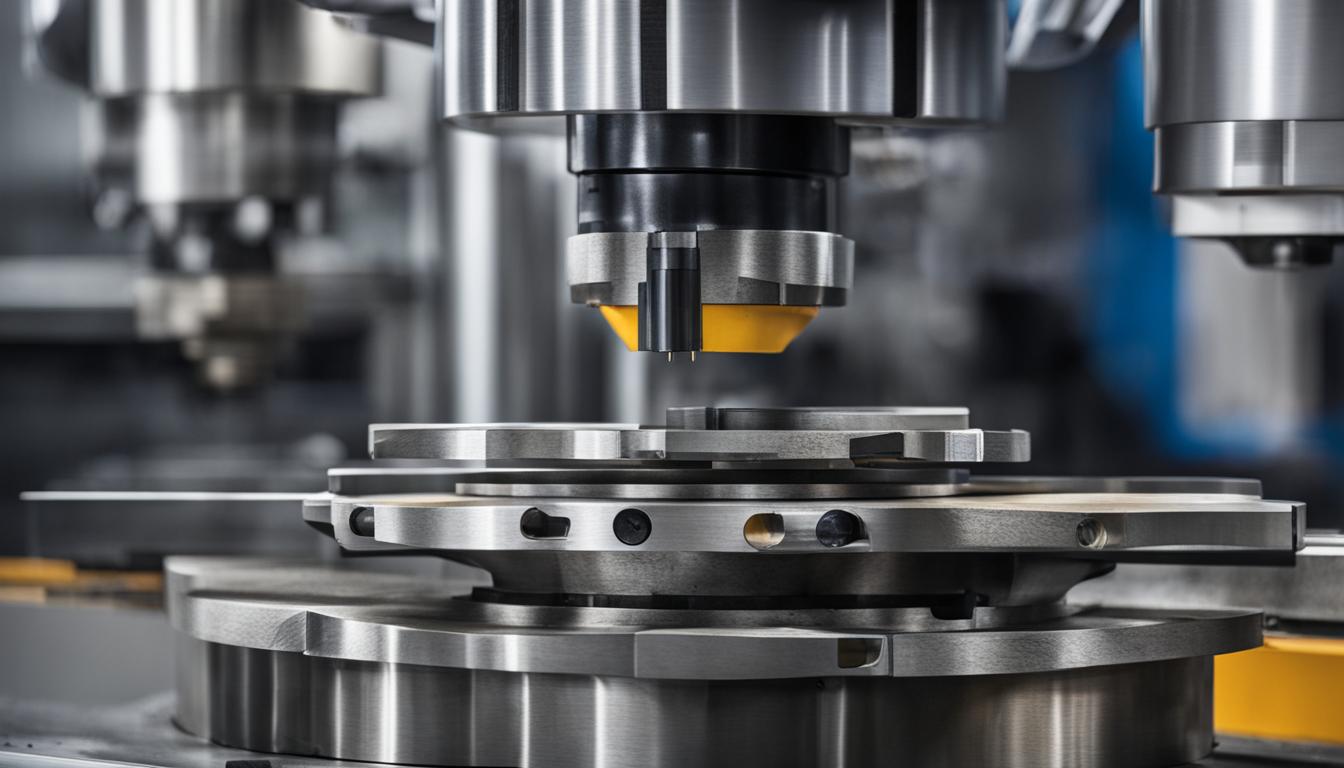
Selecting the optimal CNC milling machine is a critical decision for any manufacturing operation, directly influencing productivity, part quality, and overall cost efficiency. The fundamental distinction between vertical machining centers (VMCs) and horizontal machining centers (HMCs) lies in their spindle orientation, a design choice that profoundly impacts their operational characteristics and suitability for various applications. Understanding these core differences is essential for aligning machine capabilities with specific production demands and material types.
Chip Evacuation and Machining Stability
Horizontal machining centers inherently offer superior chip evacuation due to their spindle orientation. Gravity naturally pulls chips away from the cutting zone, preventing re-cutting and heat buildup. This efficient chip removal significantly extends tool life by 30% to 50% and improves workpiece surface finish, often achieving Ra 0.4-0.8 without additional processing.
Conversely, vertical machining centers face challenges with chip accumulation, particularly in deep pockets and cavities. Chips tend to fall onto the workpiece or workholding, necessitating frequent manual or coolant-based removal. This can lead to chip re-cutting, which increases tool wear, generates more heat, and can degrade surface finish quality during extended production runs.
Effective chip management directly impacts machining stability and process reliability. HMCs, with their gravity-assisted chip flow, enable more aggressive cutting parameters and higher metal removal rates, especially in heavy-duty applications. This structural advantage contributes to a more consistent and robust machining process, reducing the risk of tool breakage and ensuring higher throughput.
Workholding Strategies and Multi-Face Machining
| Feature | Vertical Machining Center (VMC) | Horizontal Machining Center (HMC) |
|---|---|---|
| Spindle Orientation | Vertical (perpendicular to worktable) | Horizontal (parallel to worktable) |
| Chip Evacuation | Chips accumulate on workpiece/table, requires active removal | Gravity assists chip removal, reducing re-cutting |
| Workholding | Simple vises/fixtures on fixed table, limits multi-face access | Tombstone fixtures, pallet changers for multi-face machining |
| Machine Footprint | Smaller, suitable for limited shop space | Larger, requires more floor space |
| Initial Cost | Lower initial investment | Higher upfront cost |
| Production Volume | Low to medium volume, prototyping, varied runs | High volume, mass production, continuous runs |
| Tool Access | Easier operator access to workpiece | Less direct operator access during machining, supports automation |
| Spindle Utilization | Typically 25% | Typically 85% |
| Typical Tolerances | ±0.005″ (standard), up to ±0.001″ (precision) | ±0.005″ (standard), up to ±0.001″ (precision) |
Horizontal machining centers excel in multi-face machining through the use of tombstone fixtures and integrated pallet changers. These setups allow for the mounting of multiple workpieces or multiple faces of a single complex part, enabling machining on four to six sides in a single clamping operation. This significantly reduces non-cutting time, minimizes cumulative errors from repeated setups, and boosts spindle utilization to averages of 85%.
Vertical machining centers typically employ simpler vises or fixtures on a fixed table, which limits direct access to five sides of a workpiece without repositioning. While VMCs can be equipped with 4th or 5th-axis capabilities, integrating such workholding often reduces the available work envelope and can complicate chip management, making multi-face machining less efficient compared to an HMC’s dedicated design.
The ability of HMCs to process multiple parts or multiple faces in one setup can reduce setup time by 50% or more for complex prismatic parts. This parallel processing capability, where one pallet is machined while another is loaded offline, is a key driver for increased productivity and reduced operator intervention in high-volume environments.
Machine Footprint, Investment, and Operating Costs
Vertical machining centers generally present a lower initial investment and occupy a smaller footprint, making them a preferred choice for shops with limited floor space or tighter budgets. A typical VMC can cost significantly less than an HMC of comparable capability, with prices ranging from $20,000 to $100,000 for mid-range models.
Horizontal machining centers, conversely, require a higher upfront investment and a larger floor space due to their robust construction and often integrated pallet systems. While the initial purchase price is higher, HMCs are designed for durability and high-volume manufacturing, which can lead to a lower long-term comprehensive cost per piece.
Operating costs also differ; VMCs generally have lower maintenance costs due to their simpler design. However, HMCs can reduce single-piece production costs by 20% to 40% through longer tool life, fewer reworks, and higher utilization rates, delivering a strong return on investment over their 15-20 year service life in production-heavy environments.
Tool Access, Flexibility, and Production Scale
Vertical machining centers offer excellent operator accessibility to the workpiece, simplifying setup, monitoring, and quick changeovers for less complex parts. This ease of access and intuitive operation makes VMCs highly versatile and well-suited for low- to medium-volume production, prototyping, and job shops with diverse part families.
Horizontal machining centers are engineered for high-volume, continuous production, often featuring automatic pallet changers and extensive tool magazines that support unattended operation. This automation potential minimizes idle downtime and maximizes spindle uptime, making HMCs ideal for mass production of complex prismatic parts like engine blocks or valve bodies.
The choice between these machine types ultimately depends on the specific production requirements. VMCs provide flexibility for varied, smaller runs and precision work on single surfaces, while HMCs deliver unparalleled efficiency and consistency for large-scale, multi-sided component manufacturing.
Precision and Performance Benchmarks
Modern CNC milling machines, both vertical and horizontal, are capable of achieving high levels of precision. Standard CNC machining tolerances typically range around ±0.005 inches (±0.127 mm) for most metals, which is achievable with conventional tooling and setups. This level of accuracy balances precision with cost-effectiveness for non-critical dimensions.
For applications demanding tighter control, precision CNC machining can achieve tolerances of ±0.001 inches (±0.025 mm) or even ±0.0001 inches (±0.0025 mm) under optimal conditions. Achieving these tight tolerances requires stable machines, high-quality cutting tools, temperature-controlled environments, and rigorous quality inspection, which inherently increases machining costs.