
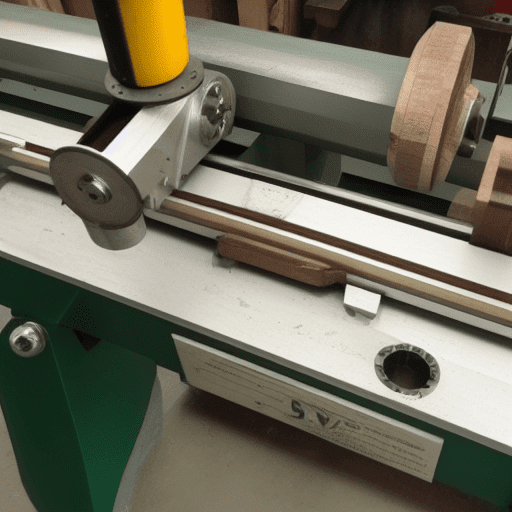
Lathe machines are indispensable in modern manufacturing, shaping materials into precise cylindrical profiles through a process known as turning. Effective turning relies heavily on the selection and application of appropriate cutting tools, which directly influence surface finish, dimensional accuracy, and overall productivity. Understanding the distinct characteristics and applications of various lathe tools is fundamental for any tooling engineer.
These specialized tools remove material from a rotating workpiece via controlled cutting action, encompassing operations from external turning and facing to intricate threading and grooving. Both single-point and multi-point tools are utilized, with their cutting edge geometry and material composition being critical factors for performance.
Understanding Lathe Tooling Essentials
The core function of any lathe tool is to efficiently remove material while maintaining geometric accuracy and surface integrity. Tooling engineers must consider workpiece material, desired surface finish, and machine rigidity when selecting a tool. Modern lathe machining leverages sophisticated tools, digital automation, and real-time data analysis to optimize performance.
Cutting tools interact with the workpiece under high forces, temperatures, and friction, making tool geometry a critical design parameter. Proper selection and application of these tools are essential for maximizing metal removal rates, extending tool life, and achieving the required part specifications.
Carbide Indexable Inserts: High Performance Turning
| Feature | Carbide Indexable Inserts | High-Speed Steel (HSS) Bits |
|---|---|---|
| Material Hardness | Very High | High |
| Heat Resistance | Excellent (up to 1000°C) | Good (up to 650°C) |
| Cutting Speed | High (2-6x faster than HSS) | Moderate |
| Wear Resistance | Superior | Good |
| Toughness/Brittleness | More brittle, less forgiving | Tougher, more resistant to shock |
| Resharpening | Not typically resharpened (indexable) | Easily resharpened |
| Cost | Higher initial cost | Lower initial cost |
| Applications | High-volume production, tough materials, CNC | Manual lathes, softer materials, short runs |
Carbide indexable inserts represent a cornerstone of modern turning operations, offering superior hardness and heat resistance compared to traditional tool materials. These inserts, typically made from tungsten carbide, allow for significantly higher cutting speeds, often two to six times faster than high-speed steel (HSS) tools.
The ISO 1832 designation system provides a standardized method for identifying indexable inserts, detailing features like shape, clearance angle, and tolerances. This system ensures unique naming and clearly states important features and dimensions, aiding machinists in selecting the correct insert for specific applications.
Common carbide insert grades are often coated to enhance performance, with PVD TiN and TiAlN coatings frequently used for turning steel and alloy steels. For general-purpose aluminum alloys like 6061, starting surface speeds of 600 to 1200 SFM are recommended with carbide tooling.
Standard tolerances for ‘G’ (ground) and ‘M’ (molded) class inserts are typically ±.005 inches for thickness. Achieving optimal results, especially on smaller diameter parts or with small nose radius inserts, often requires adjusting the center height to a maximum of ±.001 inches.
High-Speed Steel Bits: Versatility and Edge Retention
High-speed steel (HSS) bits remain a vital component in many machining environments, particularly for manual lathes, short production runs, and hobbyist applications. HSS is an alloy steel containing elements like tungsten, molybdenum, vanadium, and chromium, providing good hardness, toughness, and the ability to withstand moderate cutting temperatures.
These tools are known for their excellent toughness and resistance to shock and vibration, making them less prone to shattering under uneven loads. HSS tools are also more economical upfront and can be easily resharpened, offering multiple cutting lives.
Common HSS grades include M2, known for its balance of wear resistance and toughness, and M42 (cobalt HSS), which offers high red hardness for machining stainless steel and nickel alloys. While HSS cannot match carbide’s cutting speeds, it excels in applications involving softer materials like mild steels, brass, and aluminum.
For turning aluminum with HSS tools, recommended surface speeds are generally lower than with carbide, often around 250 SFM. When parting on a manual lathe with HSS, it is advisable to run at approximately 60% of the recommended surface speed for the material.
Single-Point Cutting Geometry and Tool Holders
The geometry of a single-point cutting tool is paramount, directly influencing chip formation, heat distribution, cutting forces, and surface finish. Key geometric parameters include the rake angle, clearance (relief) angle, cutting edge angle, and nose radius.
The rake angle, measured between the rake face and the normal to the cutting surface, controls how easily the tool shears material. Positive rake angles reduce cutting forces and improve chip flow, while negative rake angles enhance edge strength, suitable for interrupted cuts.
Clearance angles prevent the tool’s flank from rubbing against the machined surface, minimizing friction and heat generation. A sufficient clearance angle is crucial to avoid ‘ploughing’ the material, which can deform the surface rather than cleanly remove it.
The nose radius, a small radius at the tool tip, significantly impacts both surface finish and tool life. Larger nose radii generally produce smoother surfaces by reducing scallop height, but excessively large radii can increase cutting forces and chatter susceptibility.
Tool holders securely clamp the cutting inserts or HSS bits, ensuring rigidity and precise positioning. The ISO designation system also applies to tool holders, providing a standardized way to identify their features and dimensions, ensuring compatibility with various inserts.
Specialized Lathe Operations: Boring and Parting
Boring bars are essential for internal turning operations, used to enlarge or refine pre-drilled or cast holes, create accurate cavities, and improve surface finishes. These tools are mounted on boring bars for stability, allowing them to reach deep into the workpiece.
Boring bars are available in various materials, including high-speed steel, carbide, cermet, and polycrystalline diamond (PCD), chosen based on the workpiece material and required rigidity. Minimizing overhang is critical for stability, with standard length-to-diameter ratios typically at 4:1 or less to maximize rigidity.
For extended reach applications (5:1 to 10:1 length-to-diameter ratios), vibration-dampening techniques or anti-vibration bars become necessary to maintain precision and prevent chatter. Proper setup and material selection are key to achieving tight tolerances in internal features.
Parting blades, also known as cut-off blades, are precision cutting tools designed to separate a finished component from the main workpiece. They feature a slim profile to minimize material waste and cutting force, producing clean and accurate cuts.
These blades are commonly made from HSS or utilize replaceable carbide inserts, offering durability and wear resistance. Parting tools are also used for grooving and slotting operations in both CNC and conventional lathe machines.
Effective parting requires careful attention to tool height alignment, ensuring the blade is on the workpiece centerline. Applying a steady, moderate feed rate and ample coolant is crucial to prevent overheating and blade breakage, especially when cutting steel or aluminum.