
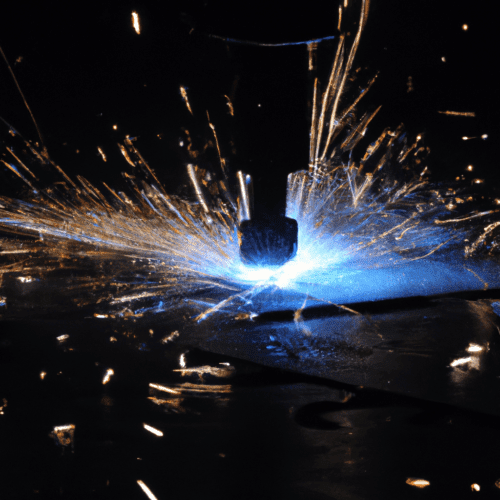
Plasma cutting utilizes an electrically conductive gas, known as plasma, to precisely cut through various electrically conductive materials. This technique employs a plasma torch to generate a high-speed jet of hot plasma, instantly melting the metal at the cutting point. The process is ideal for materials such as mild steel, stainless steel, aluminum, brass, and copper, offering efficiency and precision unmatched by many traditional methods.
Modern plasma cutting systems, especially those with Computer Numerical Control (CNC), have revolutionized metal fabrication by providing enhanced control, higher cutting speeds, and increased versatility across different material thicknesses and types. These advancements have made plasma cutting a cornerstone in industries ranging from automotive to heavy equipment production.
High-Speed Processing for Sheet Metal
Plasma cutting offers significant speed advantages for sheet metal applications, particularly when compared to oxy-fuel cutting. For instance, plasma can cut 0.5-inch thick steel at 150 inches per minute (IPM), a substantial increase over oxy-fuel’s capabilities. This rapid material removal minimizes heat input, which in turn reduces the heat-affected zone (HAZ) and potential material distortion, especially critical for thinner gauges.
Thin materials, typically under 1/8 inch, cut exceptionally fast, often exceeding 200 IPM on powerful machines. This speed is crucial for high-volume production, where maximizing throughput directly impacts profitability. Modern CNC plasma systems further optimize this by integrating advanced software for precise control over cutting parameters.
Achieving clean and precise cuts on thin sheet metal requires careful adjustment of amperage output and the use of appropriate consumables. For example, Hypertherm’s FineCut consumables can produce cut quality comparable to laser and waterjet on sheet metal. Proper cutting speed is paramount; cutting too slowly can lead to excessive dross and distortion, while cutting too fast results in incomplete cuts.
Robust Capability for Heavy Plate
| Parameter | Standard Plasma Cutting | High-Definition Plasma Cutting |
|---|---|---|
| Typical Tolerance | ±0.5mm to ±1mm | ±0.1mm to ±0.25mm |
| Mild Steel Thickness | Up to 50mm (2 inches) production, 150mm max | Up to 60mm (2.36 inches) |
| Cutting Speed (1/4″ Mild Steel) | ~145-220 IPM (3.6-5.6 m/min) | Significantly faster, often >100 IPM |
| Kerf Width | Wider than laser, narrower than oxy-fuel | Reduced, approaching laser quality |
| Edge Quality | Good, may require minor post-processing | Excellent, often bolt-ready |
Plasma cutting excels in processing thick steel plates, a capability where it often surpasses laser cutting in both speed and cost-effectiveness. While early plasma cutters were developed specifically for thick steel, modern systems can handle materials up to 150mm thick, far exceeding the typical limits of most laser systems.
Industrial-grade plasma cutters, such as the Hypertherm MAX200, can cut 2-inch (50mm) thick steel at 6 IPM, offering 100% duty cycle for continuous production. For materials up to 1-inch thick, the Hypertherm Powermax 85 SYNC can achieve speeds of 21 IPM, while the Powermax 105 SYNC reaches 30 IPM. These machines are designed for demanding workloads, ensuring high-quality finishes even on substantial thicknesses.
For very thick materials exceeding 1/2 inch, cutting speeds will naturally decrease, sometimes to single-digit IPM, to ensure complete penetration and melting. High-definition plasma systems further enhance this capability, providing superior edge quality and tighter tolerances, often as precise as ±0.25mm, depending on the material and machine settings.
Optimizing Operational Expenditure
Plasma cutting generally presents a more budget-friendly option compared to laser cutting, particularly in terms of initial investment and ongoing operational costs for thicker materials. Entry-level plasma cutters can start around $2,000-$5,000, with high-end CNC systems reaching $20,000 or more, significantly less than fiber laser machines.
Operational costs for plasma cutting typically average around $15 per hour, whereas laser cutting can be around $20 per hour. This cost difference is influenced by factors such as energy consumption, consumables, and maintenance. While laser cutting might be faster for thin sheets, plasma cutting often offers a faster return on investment, with payback periods of 2-3 years compared to 5 years for laser systems.
Consumable life is a critical factor in long-term cost efficiency. Advanced plasma systems, like Hypertherm’s XPR platform, incorporate technologies that manage arc stability and shutdown events, protecting consumables and extending their lifespan. This reduces recurring costs and contributes to a lower overall cost per foot of metal cut, especially in high-production environments.
Enhanced Portability and Accessibility
The availability of portable plasma cutting equipment significantly enhances operational flexibility, allowing for on-site repairs and fabrication tasks that would be impractical with stationary machines. These compact and lightweight units are easily transported to various job sites, from construction zones to remote repair locations.
Handheld plasma cutters, such as the Hypertherm Powermax line, are versatile tools capable of cutting various metals, including steel, aluminum, and copper, with precision and speed. They are particularly useful for trimming components, fitting joints, gouging welding defects, and piercing holes, making them indispensable for field repairs and modifications.
Even portable CNC plasma cutters exist, offering full plasma-table capabilities on a benchtop. These systems provide automated precision in a mobile format, capable of cutting metal plates up to 4ft x 8ft, making them highly adaptable for diverse production needs. Their ease of use, often requiring no complex CAD software, further democratizes advanced metal cutting.
Reduced Pre-Processing Demands
Plasma cutting generally requires minimal surface preparation, which can significantly reduce overall production time and labor costs. Unlike some other cutting methods, plasma systems are less sensitive to surface conditions such as rust, paint, or scale.
While a clean, dry compressed air supply is crucial for optimal performance and consumable life, extensive material cleaning before cutting is often unnecessary. This ability to handle less-than-perfect surface conditions can eliminate or substantially reduce pre-processing steps, streamlining the fabrication workflow.
However, proper setup still involves ensuring a stable power supply, adequate grounding, and a firm, level cutting platform. The inherent nature of the plasma arc, which rapidly melts and expels molten metal, allows it to cut through surface contaminants effectively, contributing to its efficiency in real-world industrial environments.
The following table provides a technical comparison of typical plasma cutting parameters and tolerances: