
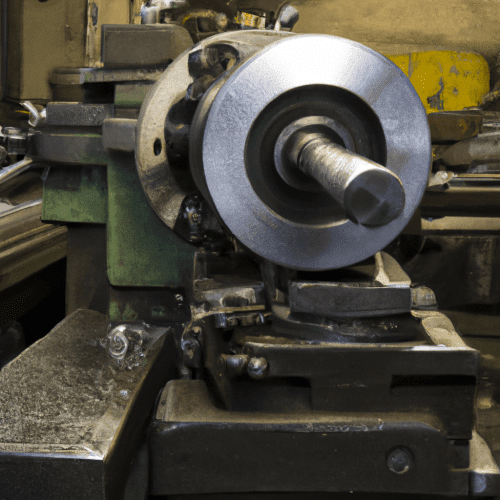
A teach-in lathe represents a sophisticated hybrid machine tool, seamlessly blending the tactile control of a manual lathe with the automated precision of a Computer Numerical Control (CNC) system. This innovative design allows operators to perform machining tasks manually while the machine’s control system records every movement and parameter.
Once recorded, these manual operations can be stored as a CNC program and replayed automatically, ensuring high repeatability and consistent quality for subsequent parts. This makes the teach-in lathe particularly well-suited for prototyping, small batch production, and educational environments where flexibility and control are paramount.
Understanding the Hybrid Manual-CNC Lathe
Hybrid manual-CNC lathes, often referred to as teach-in lathes, bridge the operational gap between traditional engine lathes and fully automated CNC turning centers. They offer the intuitive, hands-on control that experienced machinists value for one-off jobs and complex detailing, combined with the ability to automate repetitive tasks.
These machines are essentially full CNC lathes equipped with an enhanced interface that facilitates manual operation and program generation without requiring extensive G-code knowledge. Operators can switch between manual and automatic modes based on the project’s complexity or production volume, providing exceptional adaptability.
The underlying hardware of a teach-in lathe is robust, featuring components like induction-hardened and ground ways, oversized ballscrews, and precision-ground gearing, similar to dedicated CNC machines. This ensures high rigidity, stability, and precision during machining operations, even at full power.
Many modern teach-in lathes come with conversational programming interfaces, guiding operators through the process with visual toolpath previews. This significantly shortens the learning curve for manual machinists transitioning to CNC capabilities, making them productive in hours rather than months.
Precision Control with Electronic Handwheels
| Parameter | ISO 2768-1 (Linear) | Typical Values (Turning) |
|---|---|---|
| Tolerance Class ‘f’ (Fine) | ±0.05 mm (0.5-6 mm nominal) | ±0.1 mm (6-30 mm nominal) |
| Tolerance Class ‘m’ (Medium) | ±0.1 mm (0.5-6 mm nominal) | ±0.2 mm (6-30 mm nominal) |
| 1045 Steel SFM (Carbide) | N/A | 300-600 SFM |
| 1045 Steel Feed Rate (Carbide) | N/A | 0.004-0.010 IPR |
| 6061 Aluminum SFM (Carbide) | N/A | 800-1500 SFM |
| 6061 Aluminum Chip Load (Finishing) | N/A | 0.002-0.003 CPT |
Electronic handwheels are a cornerstone of the teach-in lathe’s hybrid functionality, providing operators with a familiar, tactile interface while interacting directly with the CNC control system. These handwheels enable precise, ‘manual’ control of both X and Z axes for positioning, cutting, and other operations.
Unlike purely mechanical handwheels, electronic versions translate physical rotation into digital signals, which the CNC system then uses to command servo motors. This integration allows for real-time feedback and control, enhancing accuracy and simplifying the machining process.
Many electronic handwheels offer adjustable step resolution, allowing operators to define movement increments, such as 0.1 mm or 0.01 mm, for fine control. They often include additional features like jog buttons for rapid positioning, feed-per-revolution adjustments, and even jog chamfer functions.
Some advanced electronic handwheels support wireless connectivity, offering remote control for CNC machines and featuring backlit displays for coordinates and overrides. These units typically include machine control buttons, such as E-Stop, Start, and Pause, along with customizable function keys for macros.
Streamlined Operations Through Cycle Recording
The ‘teach-in’ aspect of these lathes refers directly to their cycle recording control capability, a feature that dramatically simplifies programming for repetitive tasks. An operator can manually perform the machining of a part, and the control system automatically records the sequence of movements and parameters.
This recorded sequence is then converted into a CNC program, often in G-code, which can be saved and replayed to produce identical parts with high repeatability. This eliminates the need for manual G-code programming for every new part, significantly reducing setup and preparation time.
Conversational programming interfaces further enhance this process, allowing operators to create programs by answering a series of prompts about the desired machining operations. The system then generates the necessary G-code, often with 3D graphic simulations for verification.
Beyond simple recording, modern teach-in controls often incorporate canned cycles for common operations like rough turning, boring, and threading. These pre-programmed cycles streamline complex operations, allowing for efficient execution of intricate shapes that would be challenging on a purely manual machine.
Rapid Setup Machine
Teach-in lathes are inherently designed for rapid setup, making them highly efficient for varied production needs, especially when compared to traditional CNC machines that require extensive programming. The ability to quickly transition from manual operation to automated cycles minimizes downtime.
Operators can use the electronic handwheels for quick tool setting and workpiece datum establishment, much like on a manual lathe, but with digital precision. This intuitive setup process means that even machinists with limited CNC experience can become productive quickly.
The conversational programming features, which generate G-code from simple inputs, further accelerate setup times. This allows for fast creation of repeatable machining cycles without the need for advanced G-code knowledge or complex CAD/CAM systems for every job.
For shops needing flexibility to prototype one day and run low-volume production the next, teach-in machines offer a logical solution. Their ability to quickly adapt to new requirements without extensive reprogramming makes them ideal for dynamic manufacturing environments.
Optimizing Low Volume Production Tool
Teach-in lathes excel as a low-volume production tool, effectively bridging the gap between prototyping and mass manufacturing. They are ideal for producing small to moderate quantities of parts, typically ranging from 10 to 1,000 units, without the significant tooling investment required for high-volume processes like injection molding.
This approach is particularly cost-effective for short runs, custom parts, and situations where designs are still evolving or demand is uncertain. The flexibility to quickly adapt to design changes without extensive reprogramming is a major advantage for product development and validation.
For functional prototypes and design validation, teach-in lathes allow for the production of parts in actual production materials to required tolerances. This provides critical data that cannot be obtained from prototypes made with additive manufacturing or less representative materials.
The combination of manual control for intricate details and automated cycles for repetitive operations ensures high precision and consistency in custom parts, even in small batches. This makes teach-in lathes a valuable asset for tool and die shops, prototype shops, and educational institutions.
Typical Turning Tolerances and Feeds & Speeds
Achievable tolerances on teach-in lathes are comparable to those of dedicated CNC machines, often adhering to ISO 2768-1 standards. For general-purpose applications, the ‘medium’ (m) tolerance class is commonly specified, allowing for deviations such as ±0.3 mm for a 100 mm dimension.
For more precision-critical features, the ‘fine’ (f) class can be achieved, with tighter limits like ±0.15 mm for a 50 mm dimension. High-precision CNC turning can achieve tolerances as tight as ±0.025 mm (±0.001″) or better for specialized parts.
Feeds and speeds for teach-in lathes follow general CNC machining guidelines, varying significantly based on material, tooling, and desired surface finish. For 1045 steel, typical turning speeds with carbide inserts range from 300-600 Surface Feet per Minute (SFM) with feed rates of 0.004-0.010 Inches Per Revolution (IPR).
When machining 6061 aluminum with carbide tooling, recommended SFM can be between 800-1500, with chip loads for finishing passes around 0.002-0.003 inches per tooth (CPT). Proper coolant application is crucial for chip control and extending tool life, especially with materials like 1045 steel.