
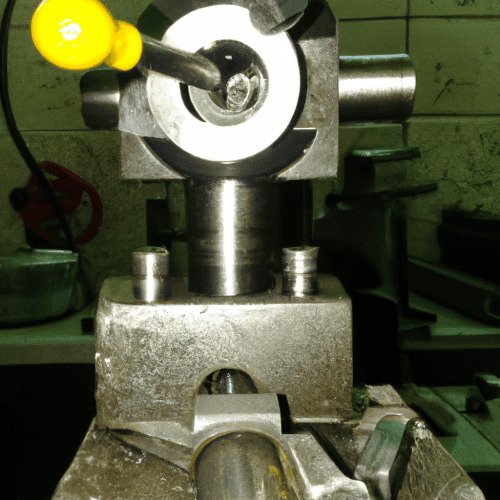
Machining tools are the fundamental components that physically remove material from a workpiece, shaping it into a desired form with high accuracy. This subtractive manufacturing process relies on the precise interaction between the cutting edge and the material. Modern manufacturing demands exceptional precision, often adhering to international standards like ISO 2768 for general tolerances, which defines precision levels from ‘fine’ to ‘very coarse’ for linear and angular dimensions.
The selection of the correct machining tool is critical for achieving specified part quality, optimizing production efficiency, and managing manufacturing costs. Each tool type, from cutting inserts to drill bits, is engineered with specific geometries, materials, and coatings to excel in particular applications and material removal scenarios. Understanding these distinctions is essential for any tooling engineer.
Cutting Edge Inserts: Precision and Versatility
Indexable cutting inserts have revolutionized modern machining by offering replaceable cutting edges, significantly enhancing efficiency and versatility. Instead of replacing an entire tool when an edge dulls, machinists simply rotate or replace a small insert, minimizing downtime and reducing tooling costs.
These inserts are manufactured with high precision, ensuring consistent performance and accuracy across various operations like turning, milling, and drilling. They come in a wide array of shapes, sizes, grades, and coatings, allowing for optimization based on the workpiece material, part geometry, and specific machining conditions.
Insert geometries feature specific chip breakers and rake angles designed to manage chip formation, reduce cutting forces, and improve surface finish. Common coatings, such as Titanium Nitride (TiN), Aluminum Titanium Nitride (AlTiN), and physical vapor deposition (PVD) or chemical vapor deposition (CVD) layers, enhance wear resistance and heat dissipation, extending tool life.
Rotary Cutting: Drill Bits and End Mills
| Feature | High-Speed Steel (HSS) | Carbide (Cemented Carbide) |
|---|---|---|
| Hardness (HRC) | 62-68 | 75-85 (HRC) / 85-92 (HRA) |
| Toughness | Excellent, shock-resistant | Good, but more brittle |
| Heat Resistance | Up to ~600°C (loses hardness above) | Above 1000°C (maintains hardness) |
| Cutting Speed | Lower (e.g., 30m/min for steel) | Higher (e.g., 80-300m/min for steel) |
| Wear Resistance | Moderate | Superior |
| Cost | Lower initial cost | Higher initial cost |
| Resharpening | Easily resharpened | Difficult, often indexable/disposable |
| Typical Applications | Manual machining, soft metals, interrupted cuts, prototyping | High-speed CNC, hard materials, high-volume production, continuous cuts |
Drill bits are essential rotary cutting tools primarily designed for creating holes in a workpiece. Common types include twist drills for general-purpose hole making, spot drills for starting holes accurately, and center drills for creating a precise conical center hole. Their design focuses on efficient chip evacuation and maintaining concentricity.
End mills, conversely, are versatile rotary tools used for a broad range of milling operations, including slotting, profiling, pocketing, and contouring. They feature multiple cutting edges along their periphery and at the end. Flat end mills create square shoulders and flat-bottomed slots, while ball nose end mills produce rounded profiles for 3D contouring, and bull nose end mills offer a radius at the corner for strength and improved surface finish.
The performance of end mills is significantly influenced by their flute count and helix angle. Two or three-flute end mills are often preferred for aluminum due to better chip evacuation, while four or more flutes are common for steel to provide greater rigidity and a finer finish. Helix angles typically range from 12° to 60°, with higher angles (40-45°) improving chip removal and reducing deflection, especially in softer materials like aluminum or stainless steel.
For a 0.5-inch, 4-flute solid carbide end mill roughing 1018 mild steel, a starting surface speed (SFM) of 400 and a chip load of 0.002 inches per tooth are typical. When drilling aluminum with an HSS drill, surface speeds of 200-300 SFM are common, with feed rates ranging from 0.004 to 0.008 inches per revolution for drills between 1/4 and 1/2 inch in diameter.
Lathe Turning Tools: Shaping Cylindrical Forms
Lathe turning tools are single-point cutting instruments used to remove material from a rotating workpiece, generating cylindrical or conical shapes. These tools are fundamental to operations such as facing, which creates flat surfaces perpendicular to the axis of rotation, and turning, which reduces the workpiece diameter.
Additional turning operations include boring, which enlarges existing holes, and threading, which cuts helical grooves for fasteners. Grooving tools create narrow channels, while parting-off tools separate a finished component from the stock material. Each operation requires specific tool geometries and insert shapes to achieve optimal results.
Turning inserts come in various standardized shapes, identified by ISO codes, such as ‘C’ (80° diamond), ‘D’ (55° diamond), ‘S’ (square), ‘T’ (triangle), and ‘V’ (35° diamond). Square inserts are robust for roughing, while diamond shapes are ideal for profiling and finishing, offering access to tighter spaces.
Tool Holders and Arbors: the Foundation of Rigidity
Tool holders are crucial interfaces that securely grip cutting tools and connect them to the machine spindle, ensuring concentricity, rigidity, and precise tool positioning. Their design directly impacts machining accuracy, surface finish, and tool life.
Common tool holder interfaces for CNC machines include CAT, BT, and HSK (Hohl Schaft Kegel or hollow taper shaft) systems. HSK holders, with their 1:10 taper ratio and hollow design, are increasingly favored in high-speed machining environments due to their superior precision and performance, minimizing vibration and maintaining accuracy.
Arbors are specialized tool holders primarily used in milling machines to mount and drive cutters like shell mills or side and face cutters. Standard milling machine arbors feature a tapered shank for spindle connection and a threaded end for securing the cutter with a nut.
Maintaining minimal tool runout and proper balance in tool holders and arbors is paramount. Excessive runout can lead to premature tool wear, poor surface finishes, and dimensional inaccuracies. Modern tool holders, such as shrink-fit and hydraulic clamping systems, offer exceptional gripping strength and low runout, contributing to superior machining results.
Material Science: Carbide versus High-Speed Steel
High-Speed Steel (HSS) has long been a staple in cutting tool manufacturing due to its excellent toughness and cost-effectiveness. HSS tools are more forgiving under shock loads or unstable setups, making them suitable for manual machining, interrupted cuts, and softer materials like aluminum or mild steel.
However, HSS loses hardness rapidly when cutting temperatures exceed approximately 600°F, limiting its cutting speeds and overall productivity. It can be easily resharpened, which contributes to its lower cost per tool for certain applications.
Carbide, specifically cemented carbide, represents a significant advancement in cutting tool materials. Composed of tungsten carbide particles bonded with cobalt, carbide tools possess dramatically higher hardness and superior heat resistance compared to HSS.
Carbide tools can operate at cutting speeds typically 4 to 7 times faster than HSS, maintaining their hardness even at temperatures exceeding 1000°C. This allows for significantly higher material removal rates, longer tool life, and improved surface finishes, making carbide the preferred choice for high-volume production, harder materials, and rigid CNC machining setups.