
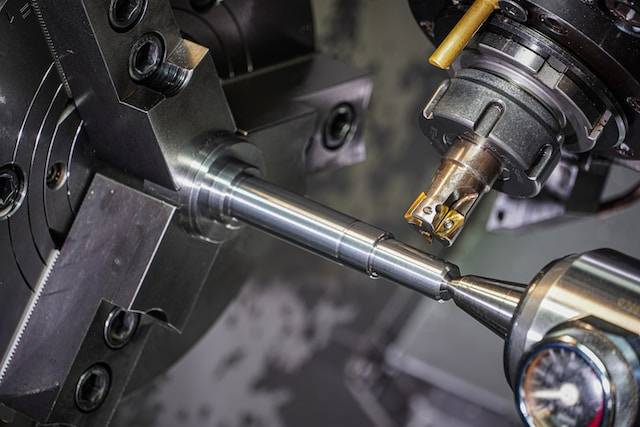
Computer Numerical Control (CNC) machining has fundamentally transformed manufacturing across diverse sectors. Its precision, repeatability, and adaptability enable the production of complex components with exacting specifications. Examining successful implementations provides valuable insights into optimizing operations and achieving significant returns on investment.
This article explores how various industries leverage CNC technology, focusing on key areas such as financial returns in automotive shops, efficiency gains in aerospace, stringent compliance in medical facilities, growth strategies for custom job shops, and critical metrics for lead time reduction.
Automotive Manufacturing: Driving ROI with CNC
Automotive manufacturers consistently seek methods to enhance efficiency and reduce costs while maintaining high quality. CNC machining offers substantial benefits, particularly in powertrain components, chassis parts, and tooling. Implementing CNC automation can significantly reduce manual handling and boost machining efficiency.
Cycle time reduction is a primary driver of ROI in automotive CNC operations. Strategies include process optimization, bottleneck analysis, and the strategic use of advanced tooling and cutting parameters. For instance, optimizing CNC programs can lead to a 30% reduction in machining time for electronic components.
Standard tolerances for automotive powertrain components often fall within ±0.025 mm to ±0.1 mm, depending on the specific application and criticality. Achieving these tight tolerances consistently across high-volume production runs is where modern CNC machines excel, minimizing rework and scrap. Modern practices also emphasize single-setup approaches to complete multiple operations, which reduces idle time and improves spindle utilization.
Aerospace Production: Optimizing Precision and Efficiency
| Metric | Description | Impact on Lead Time |
|---|---|---|
| Cycle Time | Actual time to produce one unit from start to finish. | Directly impacts delivery speed; reductions improve throughput. |
| Queue Time | Time a job waits for a machine, operator, or material. | Often the largest component of total lead time; reducing it is critical. |
| Setup Time | Time required to prepare a machine for a new job. | High setup times increase batch sizes and queue times; SMED reduces this. |
| Scrap Rate | Percentage of defective parts requiring rework or disposal. | Reduces effective output and extends lead times due to re-runs. |
| On-Time Delivery | Percentage of orders delivered by the promised date. | Direct measure of reliability and customer satisfaction. |
The aerospace industry demands unparalleled precision, material integrity, and stringent quality control for critical components like turbine blades, structural elements, and landing gear. CNC machining is indispensable here, handling high-strength, tough alloy materials prone to deformation during traditional processing.
Optimization strategies in aerospace CNC machining encompass careful material selection, advanced tooling, and sophisticated CAD/CAM software. High-performance cutting tools are crucial for machining aerospace alloys such as Inconel and titanium, where cycle time reductions of up to 40% have been achieved in roughing operations.
Surface finish requirements for aerospace structural components are exceptionally strict, often demanding finishes as fine as Ra 0.8 µm or better to prevent fatigue crack initiation. Multi-axis CNC machines, particularly 5-axis systems, are vital for achieving these finishes and complex geometries with fewer setups, enhancing both quality and production speed.
Medical Device Machining: Ensuring Compliance and Quality
Medical device manufacturing operates under some of the most rigorous regulatory frameworks globally, with ISO 13485 being the international standard for quality management systems. This standard emphasizes regulatory compliance, risk management, and process control throughout the product lifecycle.
Precision CNC machining for medical devices requires extremely tight tolerances, often up to ±0.002 mm for critical dimensions, and the ability to produce complex geometries. Biocompatible materials like titanium, stainless steel, PEEK, and Ultem are commonly machined for implants, surgical instruments, and diagnostic equipment.
Traceability is a foundational capability in medical device manufacturing, tracking materials, components, and finished devices from raw stock to end-use. This systematic documentation is essential for patient safety, quality control, and rapid response to any quality issues or recalls.
Custom Job Shops: Strategies for Scalable Growth
Scaling a custom CNC job shop effectively involves more than simply acquiring new machines; it requires strategic operational improvements. Focusing on setup reduction is a key revenue strategy, as it is often the most expensive non-cutting activity. Standardizing fixtures, reducing tool variation, and optimizing CAM post-processing efficiency are critical steps.
Automation solutions are increasingly accessible for small to mid-sized job shops, helping to increase spindle utilization, reduce labor constraints, and expand production capacity. This can range from simple bar feeders and pallet changers to integrated robotic machine tending systems.
Implementing Enterprise Resource Planning (ERP) and Manufacturing Execution System (MES) software provides comprehensive visibility from quoting to delivery. These systems integrate real-time job tracking, material costs, labor rates, and historical data, enabling accurate quoting and efficient scheduling.
Reducing Lead Times: Key Metrics and Methodologies
Lead time reduction is a critical metric for enhancing competitiveness and profitability across all manufacturing sectors. It represents the total elapsed time from customer order to product delivery, encompassing both value-adding activities and non-value-adding waiting times.
Effective strategies include controlling Work-In-Process (WIP) through finite capacity scheduling, which prevents congestion and dramatically shrinks queue times. Overlap scheduling, where subsequent operations begin before the previous one is fully complete, can reduce order cycle time by 40-60% on multi-operation jobs.
Lean manufacturing principles, such as Value Stream Mapping (VSM), Kanban, and 5S, are instrumental in identifying and eliminating waste. These methodologies streamline workflows, simplify setup procedures, and standardize work instructions, leading to significant reductions in non-value-added activities and overall cycle time.