
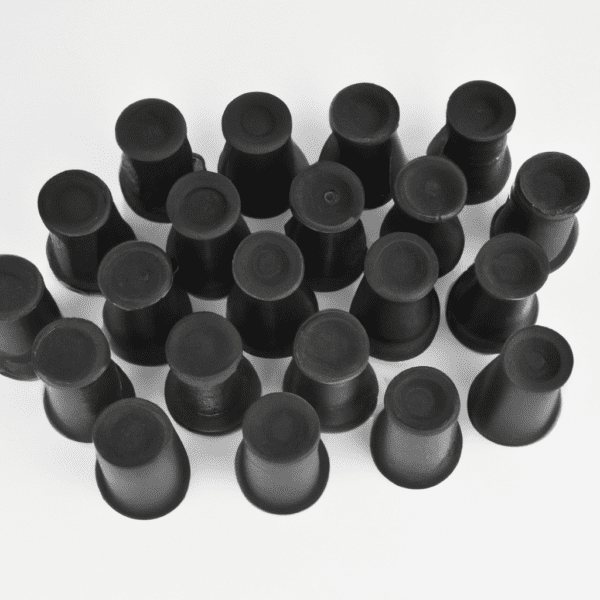
Delrin, known generically as polyoxymethylene homopolymer (POM-H), stands as a premier engineering thermoplastic. This material, originally commercialized by DuPont, offers a unique blend of high mechanical strength, exceptional dimensional stability, and outstanding wear resistance. It is frequently chosen for precision mechanical components that demand reliable performance under various loads and environmental conditions.
Engineers across diverse industries, including automotive, electronics, and medical devices, specify Delrin for its ability to machine with metal-like precision while offering a significant weight reduction. Its inherent properties make it an ideal substitute for metal in many applications where corrosion resistance and design flexibility are critical.
Mastering Acetal Homopolymer Machinability
Delrin exhibits excellent machinability, allowing for the creation of intricate parts with high precision. Its semi-crystalline structure facilitates efficient chip removal, which is crucial for maintaining surface finish and dimensional accuracy during CNC operations.
Selecting the correct tooling is paramount for successful Delrin machining. Sharp carbide or high-speed steel (HSS) tools with positive rake geometry are highly recommended. For milling operations, two-flute end mills are often preferred for slots and pockets, while a 35-45° high-helix angle aids in effective chip evacuation. Single-flute mills are particularly beneficial for reducing frictional heat and improving chip clearance.
Optimal feeds and speeds are critical to prevent material melting and achieve a superior surface finish. For milling, spindle speeds typically range from 8,000 to 15,000 RPM, depending on the cutter size and depth of cut. Feed rates should be set between 0.003 and 0.008 inches per tooth to ensure proper material removal without excessive heat generation. Maintaining a high chip load is essential, as heat is primarily removed through the chips.
Controlling thermal conditions is vital when machining Delrin, as the material is sensitive to temperatures above 250°F (121°C). While Delrin does not always require flood coolant, using compressed air or non-aromatic, air-based coolants can significantly improve surface finish and extend tool life by dissipating heat from the cutting zone.
Achieving High Dimensional Stability in Delrin Components
| Parameter | Typical Value (Milling Delrin) | Notes |
|---|---|---|
| Spindle Speed | 8,000 – 15,000 RPM | Varies with cutter diameter and depth of cut. |
| Feed Rate (per tooth) | 0.003 – 0.008 inches/tooth | Ensures proper chip load and heat removal. |
| Surface Speed (SFM) | 500 – 1,000 SFM | General range for effective cutting. |
| End Mill Flutes | 2-flute (preferred for slots/pockets) | High-helix (35-45°) for chip evacuation. |
| Standard Tolerance | ±0.10 mm (±0.004 inches) | Commonly achievable in general machining. |
| Tight Tolerance | ±0.02 – ±0.05 mm (±0.0008 – ±0.002 inches) | Achievable under controlled conditions. |
| Coolant | Compressed air / Non-aromatic air-based | Flood coolant can improve finish and tool life. |
Delrin’s exceptional dimensional stability is a key attribute, largely due to its very low moisture absorption rate, typically less than 0.25%. This property ensures that components maintain their precise dimensions even when exposed to humid or wet environments, a significant advantage over materials like nylon, which can swell considerably.
Despite its inherent stability, Delrin’s coefficient of thermal expansion is higher than that of metals, necessitating careful thermal management during machining. Climate-controlled environments and allowing raw material blanks to acclimatize are crucial for achieving and maintaining tight tolerances.
For parts requiring extremely narrow tolerances or those with complex geometries, post-machining annealing, or stress-relieving, is often recommended. This process involves slowly heating the part to a specific temperature, such as 300-320°F (149-160°C), holding it, and then gradually cooling it to relieve internal stresses induced during machining. Annealing is particularly beneficial before final finishing cuts.
Standard machining tolerances for Delrin typically fall within ±0.005 inches (±0.127 mm) or ±0.10 mm. However, with optimized processes, specialized tooling, and stringent thermal control, tighter tolerances of ±0.02 to ±0.05 mm are routinely achievable. Some advanced facilities can even hold critical features to ±0.001 inches (±0.025 mm) or better.
Leveraging Delrin’s Low Friction and Wear Resistance
Delrin’s naturally smooth, low-energy surface provides an inherently low coefficient of friction, typically ranging from 0.2 to 0.35 against steel for standard grades. PTFE-filled grades can achieve even lower values, around 0.1 to 0.2. This characteristic eliminates the need for external lubrication in many applications, contributing to quieter and more efficient operation.
The material’s outstanding wear resistance, coupled with its low friction, makes it an ideal choice for components subjected to continuous sliding or repetitive motion. Delrin exhibits excellent fatigue and creep resistance, allowing parts to sustain millions of load cycles without crack initiation or significant deformation.
These tribological properties are highly consistent across varying thermal conditions and loads. This reliability ensures long service lives for components such as gears, bearings, bushings, guide rails, and sliding mechanisms, making Delrin a preferred material over many other general-purpose plastics, especially in dry running applications.
Precision Milling for Delrin Plastic Gears
Delrin is an exceptional material for precision plastic gears due to its high strength, stiffness, and superior fatigue endurance. These properties allow gears to maintain their tooth profiles and mesh accurately under constant cyclic loading, bridging the performance gap between plastics and metals.
Milling Delrin gears demands sharp, high-quality end mills, often carbide, with geometries optimized for plastics. Tools with positive rake angles and high-helix designs are crucial for clean cuts and efficient chip evacuation, preventing material deformation and ensuring precise tooth forms.
Achieving the tight tolerances required for optimal gear mesh necessitates meticulous thermal control throughout the machining process. Localized heat generated during high-speed milling can cause temporary expansion, affecting measurements. Implementing ‘rest cycles’ between roughing and finishing passes, along with climate-controlled inspection protocols, helps stabilize dimensions. For ultra-precision gears, a mid-process annealing cycle can further relieve internal stresses.