
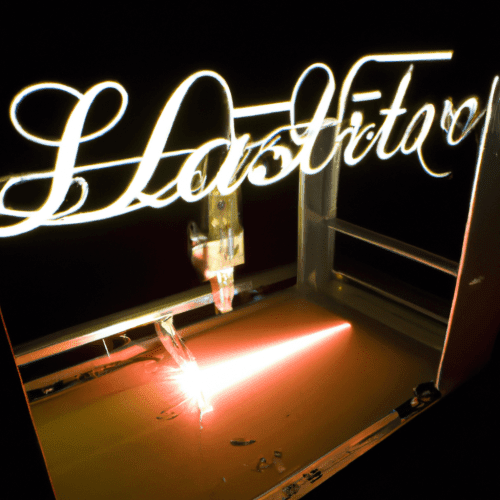
Modern manufacturing relies heavily on laser cutting technology, a versatile process employing a focused laser beam to precisely cut and engrave a wide array of materials. This non-contact method offers significant advantages over traditional mechanical cutting, enabling intricate designs and high-quality finishes across various industries. Its adaptability makes it an indispensable tool for both rapid prototyping and large-scale production.
Laser cutting systems utilize either CO2 or fiber lasers, each optimized for different material types and thicknesses. CO2 lasers typically excel with non-metals like plastics, wood, and paper, while fiber lasers are the industry standard for cutting various metals with high efficiency and precision. Understanding the capabilities and limitations of each laser type is crucial for optimal material processing.
What Things Can Be Made in a Laser Cutter
Laser cutters are instrumental in producing a vast range of items, from custom signage to complex mechanical components. The technology excels at transforming raw materials into finished goods with exceptional detail and repeatability. This capability extends across numerous applications, including decorative, functional, and artistic creations.
For acrylic signs, CO2 lasers deliver clean, flame-polished edges, making them ideal for high-end displays and branding. Engraving on cast acrylic typically produces a frosty white finish, while cutting extruded acrylic yields a polished edge. Standard tolerances for acrylic generally range from ±0.1 mm to ±0.2 mm.
Engraved wood panels benefit from the laser’s ability to create varying depths and contrasts, depending on wood type and laser settings. Hardwoods like oak or cherry often produce more contrasting engravings than softwoods such as poplar. Plywood and MDF are also commonly processed, though the type of glue used can affect cut quality and charring.
Custom leather goods are precisely cut and engraved, allowing for intricate patterns and personalized designs without material fraying. CO2 lasers are particularly effective for leather, with power settings around 40W to 60W suitable for various thicknesses. It is important to note that synthetic leathers containing polyvinyl chloride (‘PVC’) should be avoided due to the release of toxic fumes when heated.
Intricate paper models and delicate crafts are readily produced with CO2 lasers, which offer unparalleled precision for fine lines and complex geometries. The non-contact nature of laser cutting prevents tearing or deformation, making it superior to traditional cutting methods for detailed paper art. Low power settings are typically sufficient for cutting and engraving paper, ensuring minimal discoloration.
Sheet metal profiles, critical for aerospace, automotive, and general fabrication, are efficiently cut using fiber lasers. These lasers provide superior edge quality and high speed for materials like stainless steel, aluminum, and carbon steel. Typical tolerances for laser-cut metal range from ±0.005 inches to ±0.010 inches, with precision capabilities reaching ±0.002 inches for critical features like small holes.
Can You Make Money with a Laser Cutter
Operating a laser cutter presents significant opportunities for generating income through custom fabrication and product creation. The machine’s versatility allows entrepreneurs to cater to diverse markets, from personalized gifts to industrial components. This broad applicability supports various business models, including direct-to-consumer sales and business-to-business services.
Establishing a profitable laser cutting business involves identifying niche markets and optimizing production processes. Products such as custom jewelry, architectural models, promotional items, and specialized industrial parts are highly sought after. Efficient material utilization and rapid turnaround times, inherent to laser cutting, contribute directly to increased profitability.
What Is Laser Cutting Good For
Laser cutting excels in applications demanding high precision, speed, and minimal material distortion. The focused beam melts, burns, or vaporizes material along a programmed path, creating clean and accurate cuts. This thermal process is controlled by computer-aided systems, ensuring consistent results even for complex geometries.
A key advantage is the minimal heat-affected zone (‘HAZ’), particularly with fiber lasers on metals, which reduces warping and maintains material integrity. Unlike mechanical cutting, laser cutting is a non-contact process, eliminating tool wear and physical stress on the workpiece. This results in superior edge quality and tighter tolerances compared to many traditional methods.
Can You Laser Cut Glass
Glass can be effectively processed using CO2 laser technology for both cutting and engraving applications. The 10.6-micron wavelength of CO2 lasers is readily absorbed by glass, facilitating precise material removal. This absorption characteristic is crucial for achieving desired results without causing excessive thermal stress.
The process typically involves heating the glass surface to its melting or vaporization point, or creating controlled micro-cracks for engraving. Achieving clean cuts and intricate designs necessitates careful calibration of laser power, cutting speed, and focal length. Post-processing, such as sanding or flame polishing, may be required to smooth sharp edges for safety.
Can a Laser Cutter Cut Wood
CO2 laser cutters are widely utilized for cutting and engraving various types of wood, offering clean edges and intricate detail. The effectiveness of the cut depends significantly on the laser’s wattage, the wood’s density, and its moisture content. Different wood species, such as softwoods (balsa, poplar) and hardwoods (oak, cherry), react distinctly to laser energy.
For instance, a 40W-60W CO2 laser can cut 3-5mm thick plywood or MDF, while 80W-100W systems handle 8-12mm thicknesses. Thicker materials, up to 25mm or more, require higher power lasers (200W+) or multiple passes. Proper air assist is essential to minimize charring and clear debris from the cut path, ensuring a cleaner edge finish.
Can You Cut Metal with a Laser Cutter
Metal cutting with lasers is a highly advanced process, primarily dominated by fiber laser technology due to its efficiency and precision on various metallic materials. Fiber lasers produce a smaller, more focused spot and are significantly faster than CO2 lasers for thin sheet metal, often 2-3 times quicker for thicknesses up to 5mm. They also boast higher energy efficiency and lower maintenance requirements compared to CO2 systems.
Fiber lasers effectively cut stainless steel up to 0.75 inches thick, carbon steel up to 0.5 inches, mild steel up to 0.6 inches, and aluminum up to 0.4 inches. Reflective metals like copper and brass, traditionally challenging, are also cut with advanced fiber laser systems that manage reflections and precise power control. Assist gases such as oxygen, nitrogen, or compressed air are crucial for expelling molten material and achieving clean cuts.
Standard laser cutting tolerances for metal typically range from ±0.005 inches to ±0.010 inches, with precision applications achieving ±0.002 inches for critical features like small holes. Kerf width, the material removed by the laser, generally falls between 0.08 mm and 1 mm, varying with laser type, material, and thickness. Fiber lasers typically produce a tighter kerf (0.15-0.5 mm) compared to CO2 lasers (0.25-0.5 mm) for similar materials.
| Material Type | Laser Type (Primary) | Typical Thickness Range (mm) | Standard Tolerance (mm) | Typical Kerf Width (mm) |
|---|---|---|---|---|
| Acrylic | CO2 | 2 – 25 | ±0.1 – ±0.2 | 0.2 – 0.3 |
| Wood (Plywood/MDF) | CO2 | 3 – 15 | ±0.2 – ±0.5 | 0.2 – 0.5 |
| Leather | CO2 | 0.5 – 5 | ±0.2 – ±0.3 | 0.1 – 0.3 |
| Paper/Cardstock | CO2 | 0.1 – 3 | ±0.05 – ±0.1 | 0.08 – 0.2 |
| Mild Steel | Fiber | 0.5 – 15 | ±0.1 – ±0.25 | 0.15 – 0.5 |
| Stainless Steel | Fiber | 0.5 – 19 | ±0.1 – ±0.2 | 0.1 – 0.4 |
| Aluminum | Fiber | 0.5 – 10 | ±0.15 – ±0.25 | 0.15 – 0.4 |
Note: Tolerances and kerf widths can vary significantly based on machine specifics, material grade, and operational settings. Precision tolerances can be tighter for select applications.