
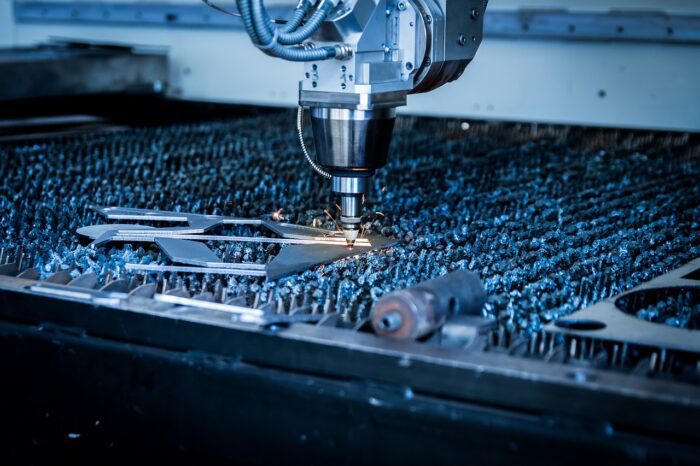
Plasma cutting remains a cornerstone technology in modern metal fabrication, offering a compelling balance of speed, versatility, and cost-effectiveness. This thermal cutting process utilizes an electrically conductive gas, superheated into plasma, to melt and expel material from a workpiece. Its widespread adoption across industries, from automotive to heavy construction, underscores its practical utility for a diverse range of applications.
Recent advancements in plasma cutting technology, particularly with high-definition (HD) systems, have significantly enhanced precision and efficiency. These innovations allow for tighter tolerances and improved cut quality, expanding the capabilities of plasma cutting beyond traditional rough-cut applications.
Fast Sheet Metal Processing
Plasma cutting excels in the rapid processing of sheet metal, delivering significantly faster cutting speeds compared to alternative methods like oxy-fuel. For materials up to 2 inches thick, plasma can be twice as fast as oxy-fuel, with efficiency multiplying for thinner sheets, achieving speeds up to 12 times faster.
Modern CNC plasma systems integrate advanced motion controls and optimized gas settings, enabling high-speed operations that minimize heat transfer to the material. This rapid cutting capability is crucial for high-volume production, reducing lead times and improving overall workflow efficiency in fabrication shops.
For instance, an 8mm carbon steel plate can be cut at speeds up to 3800mm/min, demonstrating plasma’s remarkable speed advantage. This efficiency translates directly into increased productivity and measurable gains in project delivery times for various industries.
Robust Thick Plate Cutting Capabilities
| Parameter | Plasma Cutting | Laser Cutting |
|---|---|---|
| Initial Investment | Lower ($2,000 – $20,000+ for CNC) | Higher ($15,000 – $100,000+ for industrial) |
| Operating Cost (Hourly) | ~ $15/hour | ~ $20/hour |
| Material Thickness | Excellent for thick plates (>50mm, up to 150mm) | Better for thinner to medium thicknesses (up to 25mm) |
| Typical Tolerance (Standard) | ±0.5mm to ±1mm | ±0.1mm |
| Typical Tolerance (High-Definition) | ±0.25mm | N/A (inherently high precision) |
| Material Versatility | All electrically conductive metals | Wide range, but less effective on highly reflective metals |
| Edge Quality | Good, may require post-processing for dross/bevel | Excellent, often ready for welding |
Plasma cutting is particularly well-suited for processing thick metal plates, a capability where it often surpasses laser cutting. Industrial plasma cutters can effectively handle materials exceeding 50 mm (2 inches) thick, with some powerful computer-controlled torches capable of slicing through steel up to 150 mm (6 inches) thick.
This robust capacity makes plasma an ideal choice for heavy manufacturing and construction sectors, including shipbuilding, bridge construction, and the fabrication of heavy machine components. It efficiently cuts substantial materials like carbon steel, stainless steel, and aluminum, maintaining a strong cut quality.
Heavy-duty gantry machines, combined with CNC control, ensure good part definition even at high cutting speeds for thick materials. These systems are engineered for continuous, high-volume production, utilizing precision linear guides and helical rack and pinion drives to maintain accuracy.
Heat-Affected Zone (HAZ) Deformation
A significant consideration in thermal cutting processes, including plasma cutting, is the formation of a Heat-Affected Zone (HAZ). This is the area of material adjacent to the cut that has not melted but has undergone changes in its microstructure due to high temperatures.
HAZ can lead to altered mechanical properties such as reduced strength, increased hardness or brittleness, and potential distortion or warping, especially in thinner materials. The extent of HAZ is influenced by factors like thermal diffusivity of the material, heat input, and exposure duration.
Minimizing HAZ is a critical engineering practice. Modern plasma cutting systems employ optimized cutting parameters, including precise control over cutting speed, amperage, and torch height, to reduce heat input and exposure. Faster cutting speeds, for instance, can significantly decrease the HAZ width.
Edge Dross Formation
Edge dross, also known as slag, is resolidified molten metal that adheres to the top or bottom edges of a plasma cut. It forms when the plasma jet fails to completely expel the molten material from the kerf, leading to additional post-processing requirements.
Dross formation is primarily influenced by incorrect cutting parameters, such as improper cutting speed, arc voltage, plasma gas pressure, and torch height. Cutting too slowly can cause thick, globular ‘low-speed dross,’ while excessively fast cutting or high standoff can result in hard ‘high-speed dross.’
To mitigate dross, operators must meticulously calibrate cutting parameters to the specific material type and thickness. Using high-quality consumables, maintaining proper torch height, and ensuring optimal gas flow are essential practices for achieving clean, dross-free edges and reducing secondary finishing operations.
Lower Cost Than Laser
Plasma cutting generally presents a more cost-effective solution compared to laser cutting, particularly in terms of initial investment and operational flexibility for thicker materials. Entry-level plasma cutters can start around $2,000-$5,000, with high-end CNC systems costing $20,000 or more, while fiber laser machines typically begin at $15,000-$50,000 and industrial CO₂ lasers can exceed $100,000.
While laser cutting offers tighter tolerances (often ±0.1mm) for intricate designs and thinner materials, plasma cutting provides a superior balance of precision and cost for thicker metals. Plasma is also more versatile for cutting various electrically conductive materials, including stainless steel, copper, and aluminum.
Operating costs for plasma cutters average around $15/hour, compared to approximately $20/hour for laser cutters. However, it is important to consider the total cost per part, which includes consumables, electricity, and post-processing labor. While plasma consumables may require more frequent replacement, the overall lower capital expenditure often makes plasma a more accessible and economically viable option for many fabrication shops.