
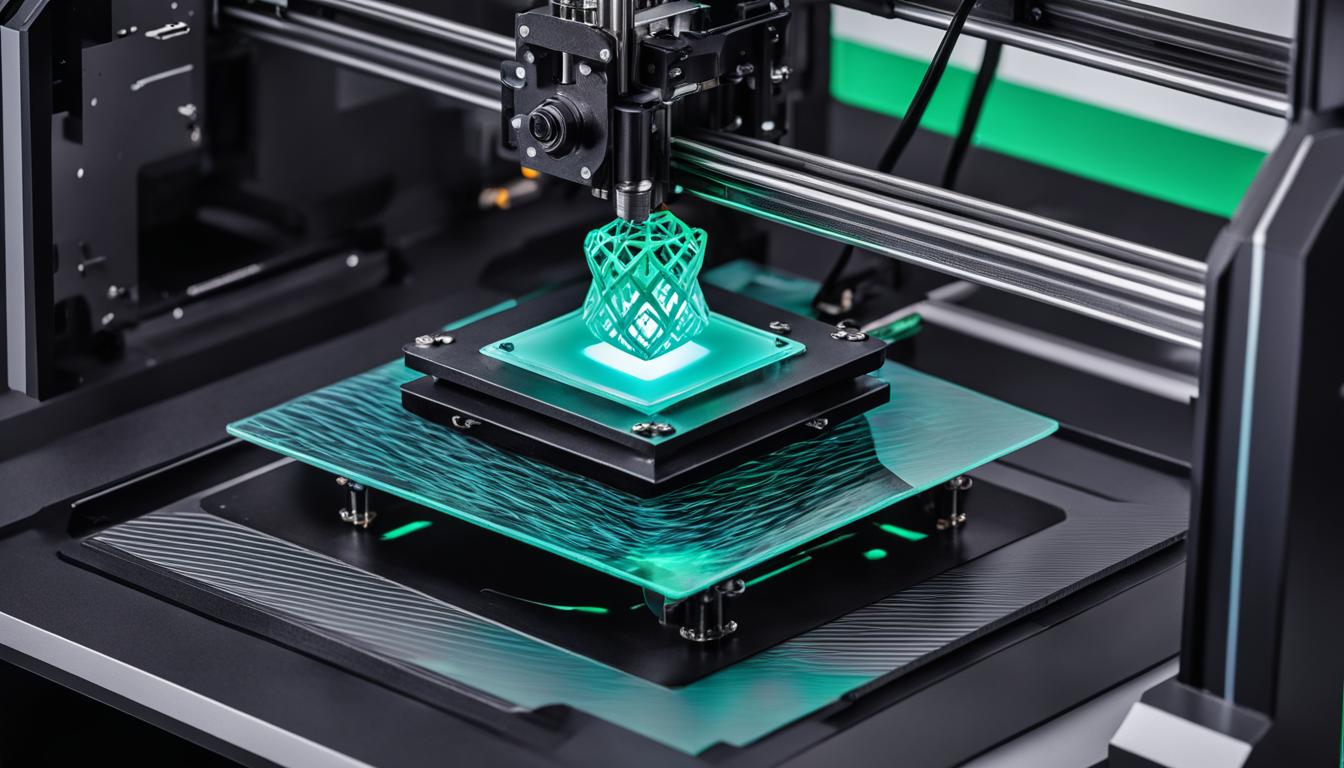
Additive manufacturing has significantly evolved, with Carbon’s Digital Light Synthesis (DLS) technology emerging as a key innovation. This advanced 3D printing method moves beyond traditional layer-by-layer approaches, enabling the production of complex, high-performance parts with superior mechanical properties and surface finishes.
The DLS process, often referred to by its foundational technology, Continuous Liquid Interface Production (CLIP), utilizes a unique photochemical reaction. This allows for the continuous ‘growth’ of objects from a resin vat, rather than discrete layer formation, which dramatically accelerates production speeds.
Digital Light Synthesis (DLS) and Continuous Liquid Interface Production (CLIP)
Digital Light Synthesis (DLS) is Carbon’s proprietary 3D printing method, fundamentally rooted in vat photopolymerization. It distinguishes itself from older stereolithography (SLA) and digital light processing (DLP) techniques by employing a continuous curing process.
The core innovation of DLS lies in its Continuous Liquid Interface Production (CLIP) mechanism. This process projects ultraviolet light through an oxygen-permeable window into a reservoir of liquid photopolymer resin. An oxygen ‘dead zone’ is created between the window and the curing part, inhibiting polymerization and allowing for a continuous flow of resin.
This persistent liquid interface prevents the resin from adhering to the window, enabling the object to be drawn continuously out of the vat. The result is a significantly faster print speed, potentially up to 100 times quicker than other additive manufacturing technologies, and parts with exceptionally smooth surfaces, minimizing visible layer lines.
Advanced Elastomeric Polyurethane Resins
| Parameter | Typical Carbon DLS Value | Notes |
|---|---|---|
| Tolerance | ±0.1% (±0.1 mm for 100 mm) | Can vary with part geometry and material. |
| Layer Thickness | ~0.1 mm | Continuous process, not discrete layers. |
| Minimum Feature Size | 1 mm (recommended) | Smaller features possible with specific resins. |
| Surface Finish | Smooth, seamless | Reduces post-processing needs. |
| Build Volume (Example) | Up to 119 x 189 x 300 mm | Recommended size within 100 x 100 x 150 mm for optimal results. |
Carbon’s material science advancements are critical to DLS technology, particularly with its range of elastomeric polyurethane (EPU) resins. These materials are engineered to deliver properties comparable to injection-molded polyurethanes, offering high elasticity, tear resistance, and excellent energy return.
Elastomeric polyurethanes like EPU 40 and EPU 41 are high-performance elastomers, ideal for applications requiring significant impact absorption, vibration isolation, and flexibility. Their characteristics make them suitable for technical footwear, protective devices, and ergonomic coatings.
The EPU Pro platform represents a newer generation of single-part, dual-cure elastomers. These resins eliminate the need for resin mixing, extend pot life, and enable solvent-free post-processing, streamlining the transition from prototyping to full-scale production.
These advanced elastomers can achieve impressive mechanical properties, such as an elongation at break of up to 820% with a Shore hardness of 53A, providing a remarkably soft and tactile surface feel. This broad range of stiffness and performance expands design possibilities for engineers.
High-Speed Resin Curing Mechanisms
The high-speed capabilities of Carbon DLS are directly linked to its sophisticated resin curing mechanisms. Unlike traditional layer-by-layer curing, DLS utilizes a continuous sequence of UV images projected through the oxygen-permeable window.
This continuous projection, combined with the oxygen ‘dead zone,’ allows for rapid and uninterrupted polymerization of the liquid resin. The UV light solidifies the precise cross-section of the object as it is continuously pulled upwards, eliminating the pauses typically associated with layer separation.
Further enhancing curing speed, some modern resins, including those from Carbon, are dual-cure materials. These resins blend UV-curable and thermally-curable chemistries. UV light defines the part’s shape during printing, followed by a secondary thermal baking step that activates the thermally curable components, creating an interpenetrating polymer network for enhanced durability.
Factors influencing print speed also include resin viscosity and light intensity. Lower viscosity resins facilitate faster flow and heat dissipation, preventing localized overheating and enabling quicker reflow for continuous printing.
Production-Scale 3D Printing Capabilities
Carbon DLS technology has transitioned 3D printing from a prototyping tool to a viable method for production-scale manufacturing. Its ability to produce parts with consistent, predictable mechanical properties and excellent surface qualities makes it suitable for series production.
The continuous nature of the CLIP process significantly reduces production time, making high-volume manufacturing more efficient. This allows for the rapid creation of customized components and functional end-use parts across various industrial sectors, including automotive, consumer electronics, and medical devices.
For production applications, post-processing remains a critical consideration. While DLS parts boast smooth finishes, support structure removal and subsequent thermal curing (baking) are necessary steps to achieve final material properties and part integrity.
The integration of DLS into manufacturing workflows often involves careful consideration of build volume and part size. While some DLS printers offer substantial build envelopes, optimizing part orientation and nesting within the build area is crucial for maximizing throughput in a production environment.
Technical Specifications and Tolerances
Carbon DLS technology is recognized for its ability to produce parts with high precision and fine details. Typical tolerances for DLS parts are generally within ±0.1% (or ±0.1 mm for parts up to 100 mm), which is a significant improvement over many other additive manufacturing methods.
Surface finish is another strong suit of DLS, often comparable to or exceeding that of stereolithography, with minimal visible layer lines due to the continuous printing process. This reduces the need for extensive post-processing to achieve aesthetic or functional surface requirements.
Material shrinkage during the curing process is a factor that engineers must consider when designing for DLS, as it can influence final part dimensions. Accounting for this shrinkage during the design phase is crucial for maintaining tight tolerances.