
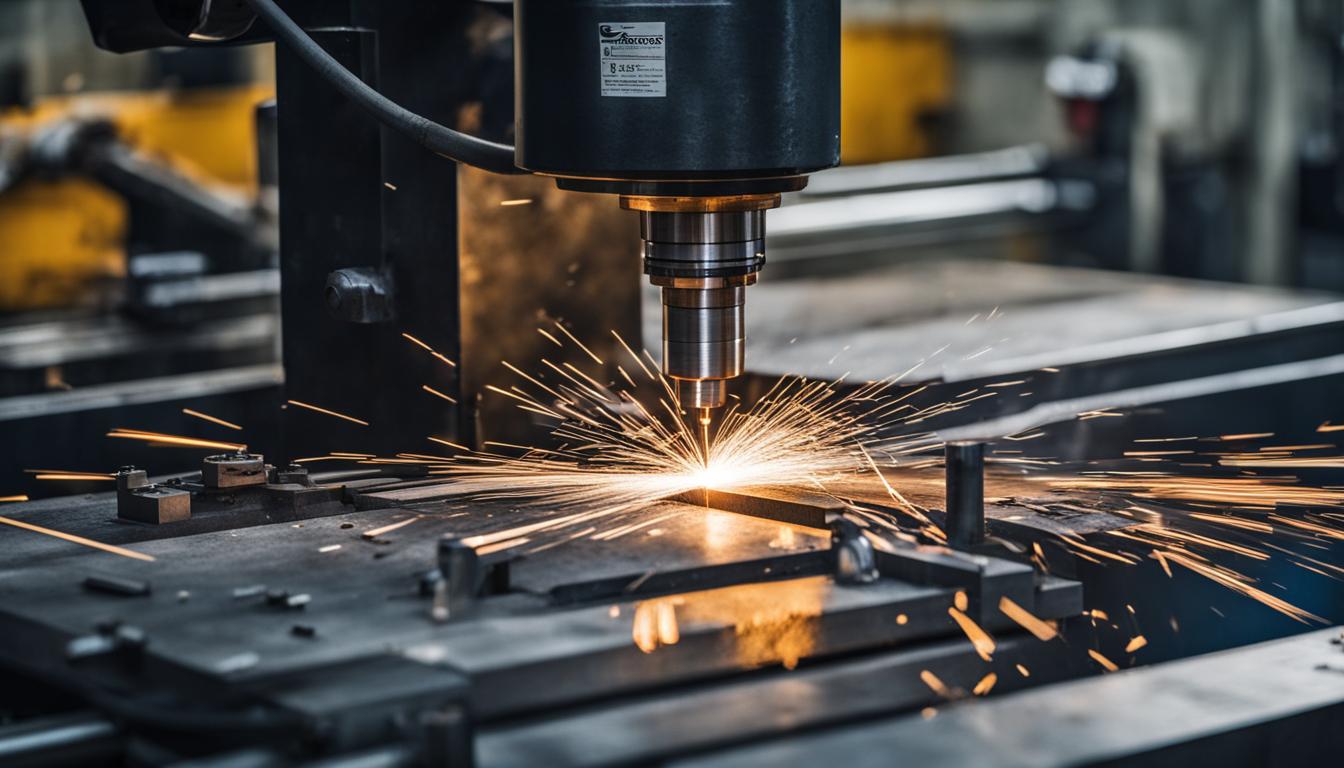
Traditional engine lathes and Computer Numerical Control (CNC) turning centers represent distinct approaches to subtractive manufacturing, primarily differing in their operational control and automation levels. While both machine tools are designed for rotating workpieces against a cutting tool to remove material, their underlying mechanics and programming paradigms diverge significantly, impacting precision, efficiency, and production scalability.
Manual Control versus Computer Automation
Manual handwheel turning machines rely entirely on direct operator interaction for every axis movement and cutting pass. Machinists physically manipulate handwheels to control the carriage, cross-slide, and compound rest, dictating the tool’s position and feed rate. This method demands extensive skill, experience, and continuous attention to achieve desired part geometries and surface finishes.
Conversely, CNC turning centers integrate sophisticated computer automation to execute machining operations. A digital program, often generated by CAD/CAM software, dictates all machine movements, spindle speeds, and tool changes. Servo motors or stepper motors precisely drive the axes based on these programmed instructions, eliminating the need for constant manual intervention during the cutting cycle.
This shift from manual to automated control fundamentally alters the manufacturing process. Manual machines excel in one-off jobs or repair work where setup time is less critical than the flexibility of direct human control. CNC machines, however, leverage their automation for unparalleled repeatability and complex contouring, making them indispensable for modern production environments.
Mechanical Feed Systems and G-Code Drivers
| Feature | Manual Lathe | CNC Turning Center |
|---|---|---|
| Control Method | Direct Handwheel Manipulation | G-Code Driven Computer Program |
| Axis Drive | Mechanical Lead Screw/Feed Rod | Servo/Stepper Motors with Ball Screws |
| Typical Tolerance | ±0.001″ to ±0.005″ (±0.025 to ±0.127 mm) | ±0.0002″ to ±0.0005″ (±0.005 to ±0.0127 mm) |
| Production Volume | Low Volume, One-Off, Repair | High Volume, Batch Production |
| Operator Skill Focus | Manual Dexterity, Measurement, Intuition | Programming, Setup, Monitoring, Troubleshooting |
| Repeatability | Dependent on Operator Consistency | High, Program-Driven |
| Complexity of Parts | Simpler Geometries, Cylindrical, Tapers | Complex Contours, Radii, Threads, Grooves |
Manual lathes utilize mechanical feed systems, where a gearbox and lead screw or feed rod transmit power from the spindle to the carriage and cross-slide. The operator selects a specific feed rate via levers, engaging a half-nut with the lead screw for threading or a clutch for standard feeding. This mechanical linkage provides a consistent, albeit fixed, feed per revolution.
CNC turning machines employ G-code drivers, which are digital instructions that command the machine’s movements. G-code, a standardized programming language, specifies precise coordinates, feed rates (F-codes), spindle speeds (S-codes), and tool changes (T-codes). These commands are interpreted by the CNC controller, which then sends signals to servo or stepper motors to drive the ball screws, enabling highly accurate and dynamic control over tool paths.
The G-code driven system allows for intricate, non-linear tool paths and variable feed rates within a single cut, which is impractical or impossible on a manual machine. This digital control facilitates the creation of complex geometries, tapers, and radii with high precision, directly from a digital model.
Production Efficiency: Single Job versus Batch Output
Manual lathes are inherently suited for single-job production or small-batch runs due to their setup-intensive nature and reliance on continuous operator oversight. Each new part or feature often requires manual measurement, tool adjustments, and careful monitoring, making high-volume, identical part production inefficient and prone to human error. Setup times can be significant, involving chucking, tool setting, and trial cuts.
CNC turning centers are optimized for efficient batch output and mass production. Once a program is proven, the machine can produce hundreds or thousands of identical parts with minimal operator intervention. Automated tool changers, part loaders, and unloaders further enhance throughput, allowing for lights-out manufacturing in some cases. The repeatability of CNC machines ensures consistent quality across an entire production run.
For high-volume manufacturing, the initial investment in CNC programming and setup is quickly amortized by the increased production speed, reduced labor costs per part, and superior consistency. This makes CNC technology the preferred choice for industries requiring large quantities of precision components.
Operator Skill and Digital Program Execution
Operating a manual lathe demands a high degree of craftsmanship, spatial reasoning, and tactile feedback. Skilled machinists develop an intuitive understanding of material behavior, tool wear, and machine dynamics. They must interpret engineering drawings, perform manual calculations, and constantly measure the workpiece during machining to maintain tolerances. This expertise is acquired over years of hands-on experience.
CNC turning requires a different skill set, focusing on programming, setup, and machine monitoring. Operators need to understand G-code, interpret CAD/CAM outputs, set up workholding and tools accurately, and troubleshoot program errors. While less direct physical manipulation is involved during cutting, the intellectual demands of programming and process optimization are substantial.
The digital program on a CNC machine acts as the ‘brain’ of the operation, executing precise instructions without deviation. This allows for complex operations to be performed consistently, even by operators with less direct machining experience, provided the program is robust and the setup is correct. The program ensures that every part is machined identically, adhering to the specified digital model.
Precision, Tolerances, and Modern Practices
Achieving tight tolerances on a manual lathe is possible but highly dependent on operator skill, machine condition, and meticulous measurement. Typical standard tolerances for manual turning might range from ±0.001 to ±0.005 inches (±0.025 to ±0.127 mm) for general work, with tighter tolerances requiring exceptional effort and specialized techniques.
CNC turning centers inherently offer superior precision and repeatability due to their rigid construction, precise ball screw drives, and closed-loop feedback systems. Modern CNC machines can consistently achieve tolerances of ±0.0005 inches (±0.0127 mm) or even ±0.0002 inches (±0.005 mm) for critical features, especially with advanced thermal compensation and vibration dampening.
Modern engineering practices leverage CNC turning for its ability to integrate with digital design workflows, enabling rapid prototyping and complex part manufacturing. The consistent application of optimal feeds and speeds, often derived from material databases and cutting tool manufacturers’ recommendations, further enhances surface finish and tool life in CNC operations. For example, turning 304 stainless steel with a carbide insert might involve surface speeds of 300-600 SFM (90-180 m/min) and feed rates of 0.004-0.012 IPR (0.1-0.3 mm/rev) on a CNC machine, optimized for efficiency and finish.