
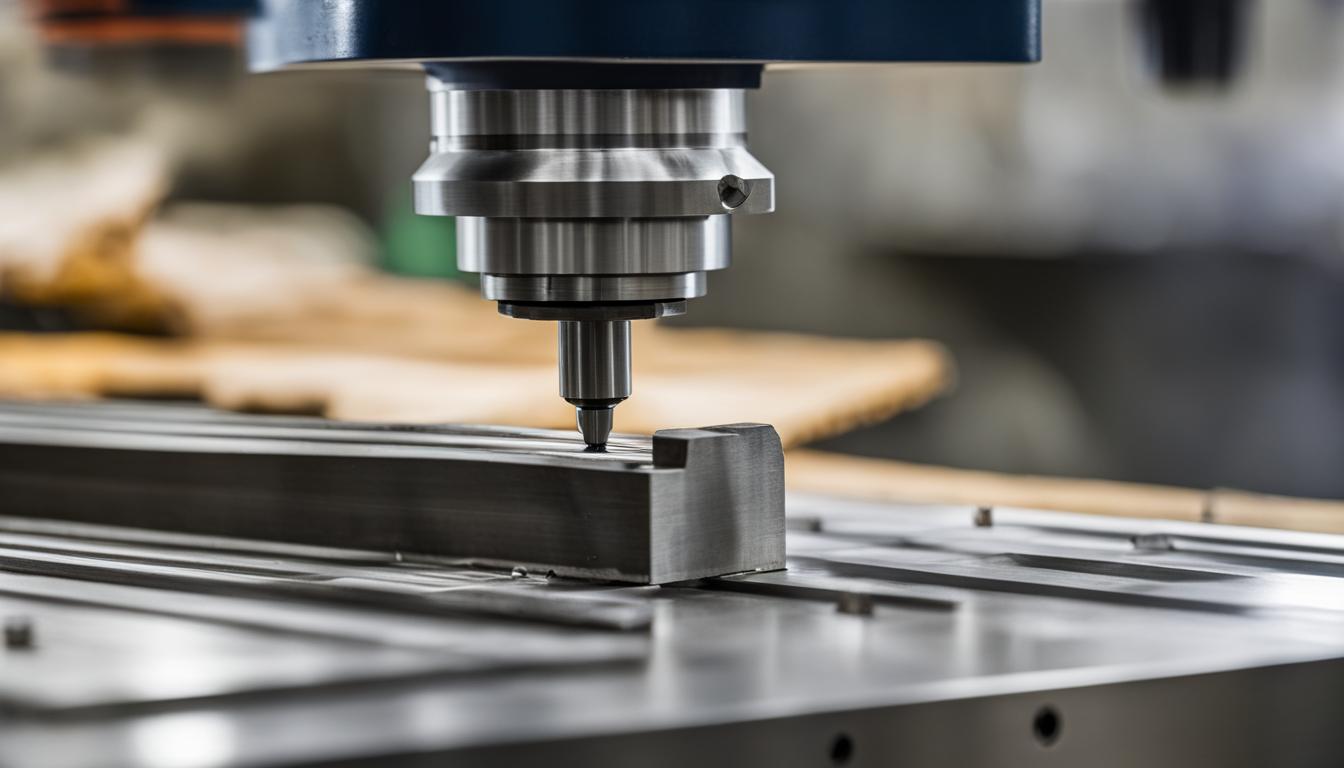
Precision machining operations rely heavily on the selection of appropriate cutting tools and robust tool holding systems. Modern CNC machine shops demand high performance, accuracy, and repeatability from every component in the tool path. Understanding the technical specifications and applications of these tools is paramount for optimizing production and achieving desired part quality.
The continuous advancement in material science and manufacturing processes has led to a diverse array of cutting tools, each engineered for specific tasks and materials. Selecting the correct tool for a given application directly impacts efficiency, tool life, and the final dimensional integrity of the workpiece.
Solid Carbide End Mills
Solid carbide end mills are fundamental cutting tools in CNC milling, prized for their rigidity and ability to maintain sharp cutting edges at elevated temperatures. These tools are typically manufactured from micro-grain or sub-micro-grain carbide, offering superior hardness and wear resistance compared to high-speed steel (HSS) alternatives.
Coatings significantly enhance the performance of solid carbide end mills. Common coatings include Titanium Nitride (TiN) for general purpose machining, Titanium Aluminum Nitride (TiAlN) and Aluminum Titanium Nitride (AlTiN) for high-temperature applications in hard materials, and Aluminum Chromium Nitride (AlCrN) for excellent wear resistance and oxidation stability.
End mill geometry, including flute count and helix angle, dictates chip evacuation and surface finish. Two-flute designs excel in softer materials and deep slotting due to larger chip valleys, while four-flute and multi-flute end mills are preferred for finishing operations, providing smoother surfaces and higher material removal rates in harder materials. Helix angles typically range from 30 to 45 degrees, influencing axial cutting forces and chip flow.
Standard manufacturing tolerances for solid carbide end mills are critical for precision. Diameter tolerances for general purpose tools often fall within +0.0000/-0.0010 inches (+0.000/-0.025 mm), with tighter tolerances available for high-precision applications. Runout specifications are equally important, typically held to less than 0.0002 inches (0.005 mm) to ensure consistent cutting and extended tool life.
Indexable Face Milling Cutters
| Feature | CAT Taper | BT Taper | HSK Taper |
|---|---|---|---|
| Taper Ratio | 7:24 | 7:24 | 1:10 |
| Spindle Contact | Taper Only (Single) | Taper Only (Single) | Taper & Face (Dual) |
| Rigidity | Good | Good | Excellent |
| High Speed Performance | Moderate | Good (Balanced) | Superior |
| Thermal Stability | Moderate | Moderate | High |
| Common Regions | North America | Asia | Global (High-End) |
Indexable face milling cutters are highly versatile tools designed for efficient material removal over large surface areas. Their primary advantage lies in the use of replaceable carbide inserts, which allows for quick edge changes without removing the cutter body from the spindle, significantly reducing downtime.
The cutter body, often made from hardened steel, features precisely machined pockets that securely hold the carbide inserts. These inserts come in various geometries—such as square, round, octagonal, and triangular—each optimized for specific cutting conditions, including roughing, semi-finishing, and finishing. Chip breakers integrated into the insert design manage chip formation and evacuation.
Insert grades are selected based on the workpiece material and application. For instance, PVD (Physical Vapor Deposition) coated inserts are often used for stainless steels and high-temperature alloys, while CVD (Chemical Vapor Deposition) coated inserts are suitable for cast iron and steel at higher cutting speeds. Ceramic and CBN (Cubic Boron Nitride) inserts are employed for machining hardened steels and superalloys at extreme speeds.
Modern indexable face mills incorporate high-feed milling strategies, utilizing inserts with small lead angles to thin the chip, allowing for significantly increased feed rates while maintaining manageable cutting forces. This approach is particularly effective in roughing operations, maximizing material removal rates.
Precision Drill Bits and Taps
Precision drill bits are engineered to create accurate holes with specific diameters and surface finishes. Solid carbide drills offer superior rigidity and wear resistance, making them ideal for high-volume production and challenging materials. High-speed steel (HSS) and cobalt drills remain popular for general-purpose drilling due to their toughness and cost-effectiveness.
Advanced drill geometries include parabolic flutes for improved chip evacuation in deep holes and through-coolant channels that deliver coolant directly to the cutting edge, enhancing tool life and chip removal. Coatings like TiAlN and AlCrN are commonly applied to carbide and HSS drills to boost hardness and reduce friction.
Taps are essential for creating internal threads. Cut taps, such as spiral point and spiral flute designs, remove material to form threads. Spiral point taps push chips forward, suitable for through-holes, while spiral flute taps lift chips out, ideal for blind holes. Form taps, also known as roll taps, cold-form threads without producing chips, resulting in stronger threads and longer tool life, particularly in ductile materials.
Thread classes, such as 2B or 3B for internal threads, define the tolerance range for the thread’s pitch diameter. Selecting the correct tap and thread class is crucial for ensuring proper fastener fit and assembly integrity. Proper lubrication and cutting parameters are vital to prevent tap breakage and achieve desired thread quality.
Boring Bars and Reamers
Boring bars are specialized tools used to enlarge existing holes, improve their concentricity, and achieve precise internal diameters and surface finishes. They consist of a shank and an insert pocket, with designs ranging from solid carbide for maximum rigidity to steel shanks with carbide inserts for versatility. Modular boring systems allow for quick changes of cutting heads and extensions.
Vibration-dampening boring bars, often incorporating tuned mass dampers, are critical for deep hole boring or when machining with long overhangs. These systems significantly reduce chatter, leading to improved surface finish and extended insert life. Insert selection for boring mirrors milling, with specific geometries for roughing, semi-finishing, and fine finishing.
Reamers are multi-fluted cutting tools designed to enlarge and finish a pre-drilled or bored hole to a precise diameter with a smooth surface finish. They remove a minimal amount of material, typically 0.002 to 0.010 inches (0.05 to 0.25 mm) on the diameter, ensuring high accuracy.
Common reamer types include chucking reamers for general purpose work, shell reamers for larger diameters, and expansion reamers for slight size adjustments. Reamed hole tolerances are typically very tight, often within ±0.0002 to ±0.0005 inches (±0.005 to ±0.013 mm), making them indispensable for critical fits.
Tool Holder Tapers: CAT, BT, and HSK Systems
Tool holder tapers are the interface between the cutting tool and the machine spindle, crucial for transmitting torque and maintaining tool rigidity. CAT (Caterpillar) tapers, prevalent in North America, feature a 7:24 taper ratio and a V-flange for automatic tool changing. They are known for their robust design and are widely used in general-purpose milling and drilling.
BT (Bottle Taper) tapers, common in Asian markets, also utilize a 7:24 taper but differ from CAT in their flange design and pull stud thread. BT holders are balanced from the factory, which can offer better performance in higher RPM applications compared to standard CAT holders, though both are single-contact systems.
HSK (Hollow Taper Shank) systems represent a significant advancement, offering dual contact with both the taper and the face of the spindle. This dual contact provides superior rigidity, improved runout accuracy, and enhanced thermal stability, making HSK ideal for high-speed and high-precision machining. HSK comes in various forms (e.g., A, B, C, D, E, F) tailored for different applications and spindle types.
The choice of tool holder taper significantly impacts machining performance, especially in demanding applications. HSK’s ability to maintain concentricity and reduce vibration at high spindle speeds makes it a preferred choice for aerospace and medical component manufacturing where tight tolerances and superior surface finishes are paramount.