
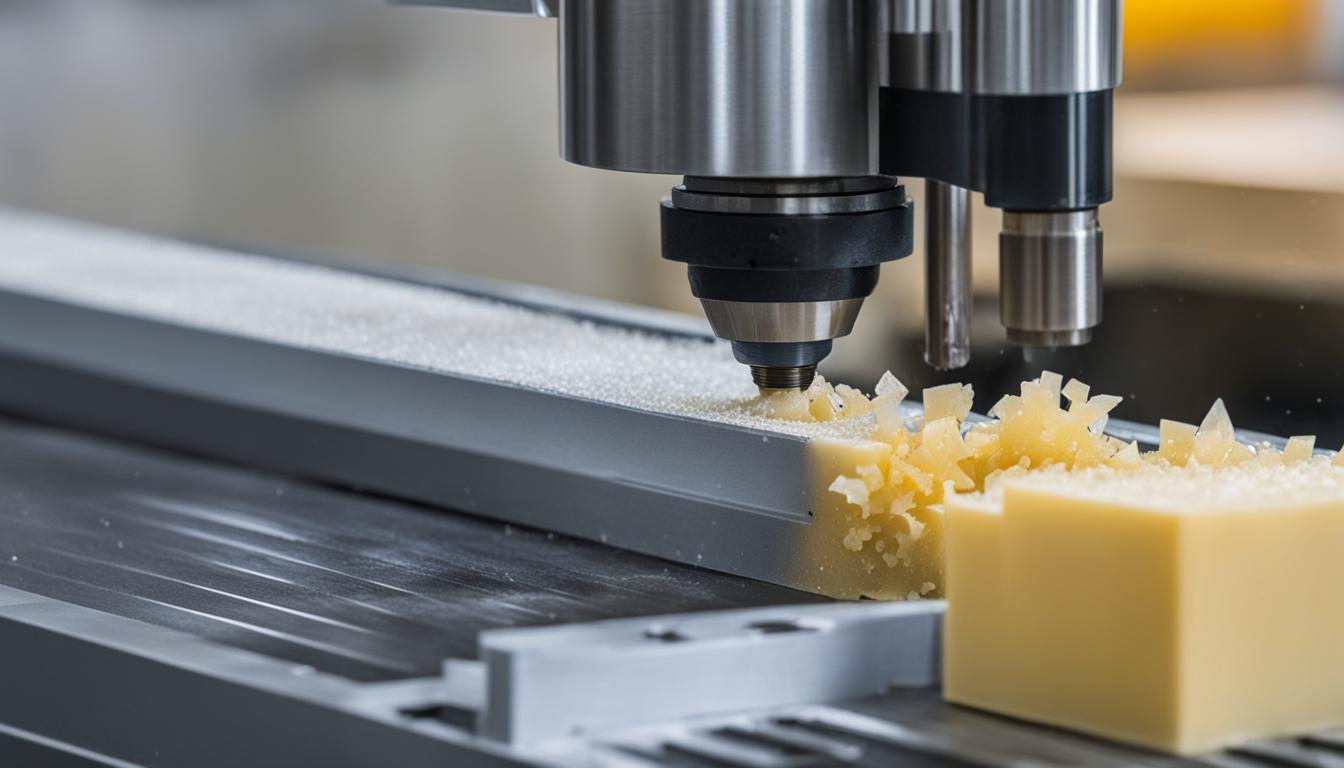
Precision CNC machining of engineering plastics demands specialized knowledge and meticulous process control. Achieving tight tolerances and superior surface finishes on materials like Delrin POM-H and PEEK requires careful consideration of material properties and advanced machining strategies. This technical guide explores best practices for high-performance polymer fabrication.
Precision Machining Engineering Plastics: Delrin and PEEK
Delrin, a homopolymer acetal (POM-H), offers excellent stiffness, low friction, and dimensional stability, making it ideal for gears, bearings, and medical components. Its crystalline structure provides high strength and rigidity, but also necessitates careful thermal management during machining to prevent material degradation.
PEEK (Polyether Ether Ketone) is a high-performance thermoplastic renowned for its exceptional mechanical strength, chemical resistance, and high-temperature performance. Often used in aerospace, medical, and semiconductor industries, PEEK components require precise machining due to their demanding application environments.
Machining Delrin and PEEK presents distinct challenges. Delrin’s lower melting point and tendency to gum up require sharp tools and effective chip evacuation. PEEK, conversely, is abrasive and generates significant heat, demanding robust tooling and aggressive cooling to maintain dimensional accuracy.
Achieving optimal results with these engineering plastics involves understanding their unique thermal and mechanical characteristics. Proper tool selection, cutting parameters, and cooling methods are paramount to preventing material stress, warping, and poor surface finishes.
Optimizing Feeds, Speeds, and Tooling for Polymers
| Material | Tool Type | Diameter (in) | Spindle Speed (RPM) | Feed Rate (IPM) | Depth of Cut (in) | Tolerance (in) |
|---|---|---|---|---|---|---|
| Delrin POM-H | Single Flute, Polished | 0.250 | 8,000 – 12,000 | 40 – 80 | 0.050 – 0.100 | ±0.003 – ±0.005 |
| PEEK | Carbide, 2-Flute | 0.250 | 5,000 – 8,000 | 20 – 40 | 0.030 – 0.060 | ±0.004 – ±0.006 |
| Acrylic | Single Flute, Polished | 0.250 | 10,000 – 15,000 | 60 – 100 | 0.040 – 0.080 | ±0.003 – ±0.005 |
Specialized plastic end mills are crucial for successful polymer machining. Tools designed for plastics typically feature high positive rake angles, polished flutes, and sharp cutting edges to minimize heat generation and prevent material adhesion. Single-flute end mills are often preferred for their large chip valleys, which facilitate efficient chip evacuation.
For Delrin, a high helix angle (around 45-55 degrees) helps lift chips away from the cutting zone, reducing heat buildup and improving surface finish. PEEK, being more abrasive, benefits from carbide tools with a moderate helix angle (around 30-40 degrees) and a strong edge preparation to resist wear.
Standard tolerances for CNC machined plastics can vary significantly based on material, part geometry, and machining process. General commercial tolerances for plastics often range from ±0.005 to ±0.010 inches for dimensions up to 1 inch, with tighter tolerances achievable under controlled conditions.
The following table outlines general starting points for machining parameters, though specific applications may require fine-tuning based on machine rigidity, tool condition, and desired surface finish.
Mitigating Thermal Issues in Plastic CNC Machining
Preventing plastic heat melting is a primary concern in CNC machining. Excessive heat can lead to gumming, material deformation, poor surface finish, and dimensional inaccuracies. Effective thermal management strategies are essential for maintaining part integrity and quality.
Aggressive chip evacuation is a key strategy. Using high-pressure air blasts or vacuum systems helps remove chips quickly from the cutting zone, preventing them from re-melting and adhering to the tool or workpiece. This also reduces friction and heat buildup.
Coolants can be beneficial, but their selection requires care. While flood coolants can effectively dissipate heat, some plastics may absorb them, leading to swelling or chemical degradation. Compressed air or mist coolants are often preferred for many plastics, providing cooling without material interaction.
Optimizing cutting parameters, such as increasing spindle speed while maintaining a sufficient chip load, can also help. A higher surface speed with a proper feed rate ensures that each cutting edge removes a substantial chip, carrying heat away from the workpiece rather than rubbing and generating more heat.
Achieving Optical Clarity: Advanced Acrylic Polishing
Machining acrylic for optical clarity demands specialized post-processing techniques to remove tool marks and achieve a transparent, glass-like finish. The goal is to eliminate microscopic imperfections that scatter light, ensuring maximum light transmission.
Vapor polishing is a highly effective method for acrylic. This process involves exposing the machined surface to a chemical vapor, typically a solvent like methylene chloride, which briefly melts and reflows the surface, eliminating tool marks and creating a smooth, clear finish.
Flame polishing utilizes a precisely controlled flame to melt and smooth the acrylic surface. This technique is fast and effective for edges but requires skilled operators to prevent overheating, which can cause bubbling or distortion. It is generally not suitable for intricate internal features.
Diamond polishing, a mechanical method, uses specialized diamond-tipped tools or abrasive films to achieve extremely fine surface finishes. This process is often employed for high-precision optical components where exceptional clarity and tight tolerances are critical. It offers superior control over surface geometry compared to thermal methods.
Cleanroom Environments for High-Purity Plastic Components
Manufacturing plastic components for sensitive applications, such as medical devices, aerospace systems, or semiconductor equipment, often necessitates a cleanroom environment. These controlled spaces minimize particulate contamination, ensuring the integrity and performance of critical parts.
Cleanrooms are classified by the maximum number of particles per cubic meter at specified particle sizes, according to ISO 14644-1 standards. For instance, an ISO Class 7 cleanroom allows for 352,000 particles ≥0.5 µm per cubic meter, while an ISO Class 5 is significantly stricter.
Within a cleanroom, strict protocols govern material handling, personnel attire, and equipment maintenance. Plastics intended for cleanroom use are often pre-cleaned and double-bagged. Machining equipment must be designed to minimize particle generation, and air filtration systems continuously remove airborne contaminants.
Producing cleanroom-grade plastic components involves more than just machining in a controlled environment. It encompasses the entire manufacturing lifecycle, from raw material selection and storage to final inspection and packaging, all under stringent contamination control measures.