
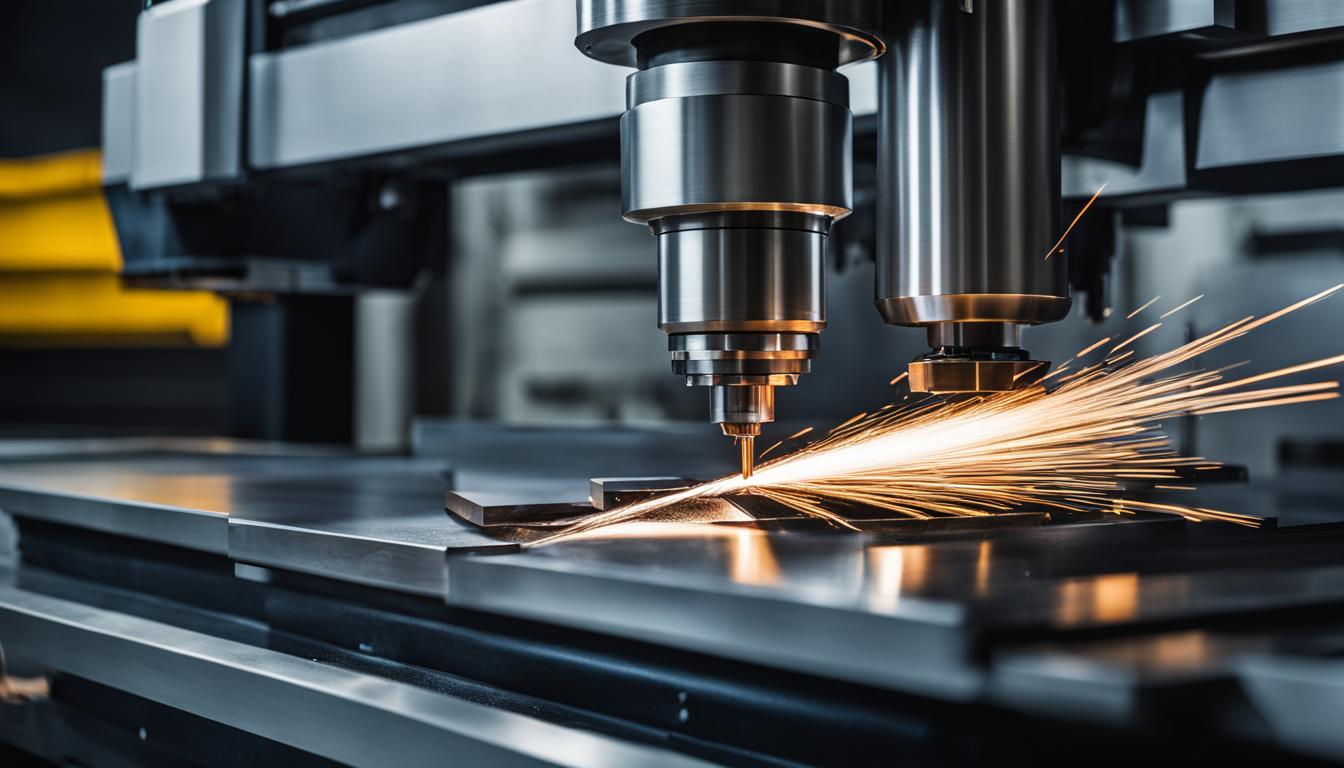
Five-axis CNC machining centers offer significant advantages over traditional 3-axis or 3+2 axis systems, primarily through their ability to manipulate a cutting tool along five distinct axes simultaneously. This enhanced kinematic capability allows for the creation of highly intricate geometries and complex part features in a single machining operation.
These advanced machines integrate three linear axes (X, Y, Z) with two rotational axes (A, B, or C), enabling the tool or workpiece to tilt and rotate. This comprehensive movement allows for multi-surface machining without manual repositioning, drastically improving efficiency and precision across various industries.
The Core Advantages of 5-Axis Machining
Five-axis machining fundamentally transforms manufacturing by providing superior control and access to complex part features. This technology delivers repeatable accuracy at production speed, turning intricate designs into high-quality, profitable components.
Enhanced precision and accuracy are hallmarks of 5-axis systems. Multi-axis motion maintains critical features tied to a single datum in one continuous setup, eliminating cumulative errors that arise from repositioning.
The ability to maintain optimal tool orientation and cutting engagement as contours evolve further stabilizes the machining process. This reduces deflection, vibration, and heat, resulting in smaller feature-to-feature variation and tighter positions across the entire part.
Streamlining Production with Single-Setup Complex Machining
| Parameter | Standard 3-Axis Machining | 5-Axis Simultaneous Machining | Basis/Notes |
|---|---|---|---|
| Limiting Geometric Tolerance | ±0.050 mm (cumulative multi-setup) | ±0.005 mm (single-setup forming) | ISO 286-1:2010 / ASME Y14.5-2018 |
| Surface Roughness (Ra) | Ra 0.8 μm–Ra 1.6 μm | Ra 0.4 μm (precision mirror milling) | ISO 4287 / Mitutoyo calibration |
| Machining Defect Rate | 14.8% (error accumulation) | 2.1% (adaptive compensation) | LS Manufacturing 2025–2026 data |
| Setup Transfer Count | 3-4 separate soft jaws & fixtures | 1 full setup (access to full surface area) | Process optimization |
| CMM Volumetric Verification | Offline sampling inspection (MPEE 3.5 μm) | 100% Zeiss CMM re-inspection (MPEE 0.0009 mm) | Zeiss CMM calibration |
Single-setup complex machining is a primary benefit of 5-axis CNC technology, allowing manufacturers to complete intricate parts in one continuous operation. This ‘done-in-one’ approach eliminates the need for multiple setups, which significantly reduces overall cycle times.
Complex geometries, undercuts, deep pockets, and curved surfaces that would typically require numerous setups on a 3-axis machine become accessible in a single cycle. This capability is crucial for parts with intersecting geometries, such as impeller hubs or orthopedic implants.
Maintaining a single datum throughout the entire machining process prevents re-datuming drift, ensuring consistent dimensional accuracy. This is particularly vital for achieving tight tolerances, with some critical features reaching ±0.005 mm.
Optimizing Costs Through Reduced Fixture Setups
Reduced fixture setup costs represent a significant economic advantage of 5-axis machining. By processing multiple sides of a part in a single setup, the need for complex, custom fixtures and their associated design and manufacturing expenses is drastically minimized.
Eliminating multiple interim setups and manual repositioning directly translates to lower labor costs and decreased risk of human error. This streamlined approach also reduces the amount of handling required for each workpiece, further minimizing scrap and errors.
Project data from 2025–2026 indicates that single-setup precision machining can cut unit costs by over 26% for complex components under AS9100D-controlled routing. This efficiency gain offsets the higher initial investment in 5-axis machinery.
Achieving Superior Surface Finish and Part Quality
Superior surface finish quality is consistently achieved with 5-axis CNC machines due to their ability to maintain optimal tool engagement and orientation. The cutting edge can be kept in its ‘sweet spot’ throughout the tool path, even on steep walls and flowing contours.
Constant contact and controlled engagement reduce visual flaws, chatter, and witness lines, leading to parts with better finishes directly off the machine. This often lessens or eliminates the need for secondary polishing and bench work, saving time and resources.
The ability to use shorter, more rigid tools, by tilting the spindle into tighter areas, further enhances surface quality. Less tool stick-out reduces vibration and deflection, protecting spindle bearings and contributing to a smoother, more precise cut.
Navigating Deep Cavities with Shorter Tool Reach
Deep cavity machining benefits immensely from the kinematic capabilities of 5-axis systems, allowing for the use of shorter, more robust cutting tools. The machine’s ability to tilt the tool or workpiece provides direct access to challenging features like undercuts and deep pockets.
Shorter tools are inherently more rigid, which minimizes tool deflection and vibration during aggressive cuts. This rigidity is critical for maintaining tight tolerances and achieving consistent surface finishes at the bottom of deep features.
By approaching the workpiece from multiple angles, 5-axis machines can effectively ‘reach’ into confined spaces that would be impossible or require specialized, longer tools on 3-axis machines. This reduces tool breakage and improves overall machining stability.
Precision Milling for Aerospace Components
Aerospace component milling is a demanding application where 5-axis CNC machines excel, producing mission-critical parts with extreme precision and reliability. Components such as turbine blades, impellers, structural frames, and landing gear require intricate geometries and stringent tolerances.
Typical dimensional tolerances for aerospace parts often range from ±0.005 mm to ±0.02 mm on interfaces and hole positions, with angular tolerances as tight as ±0.02°–0.05° on mating surfaces. Achieving these specifications consistently is a core strength of 5-axis technology.
Compliance with standards like AS9100D is paramount in aerospace manufacturing, requiring meticulous material traceability, process documentation, and quality management systems. Five-axis machines, with their single-setup capabilities and advanced control, support these rigorous requirements.
Modern 5-axis practices in aerospace include on-machine probing for datum establishment and compensation, along with collision avoidance software to simulate processes and reduce scrap. This holistic approach ensures the production of high-quality, complex aerospace components.