
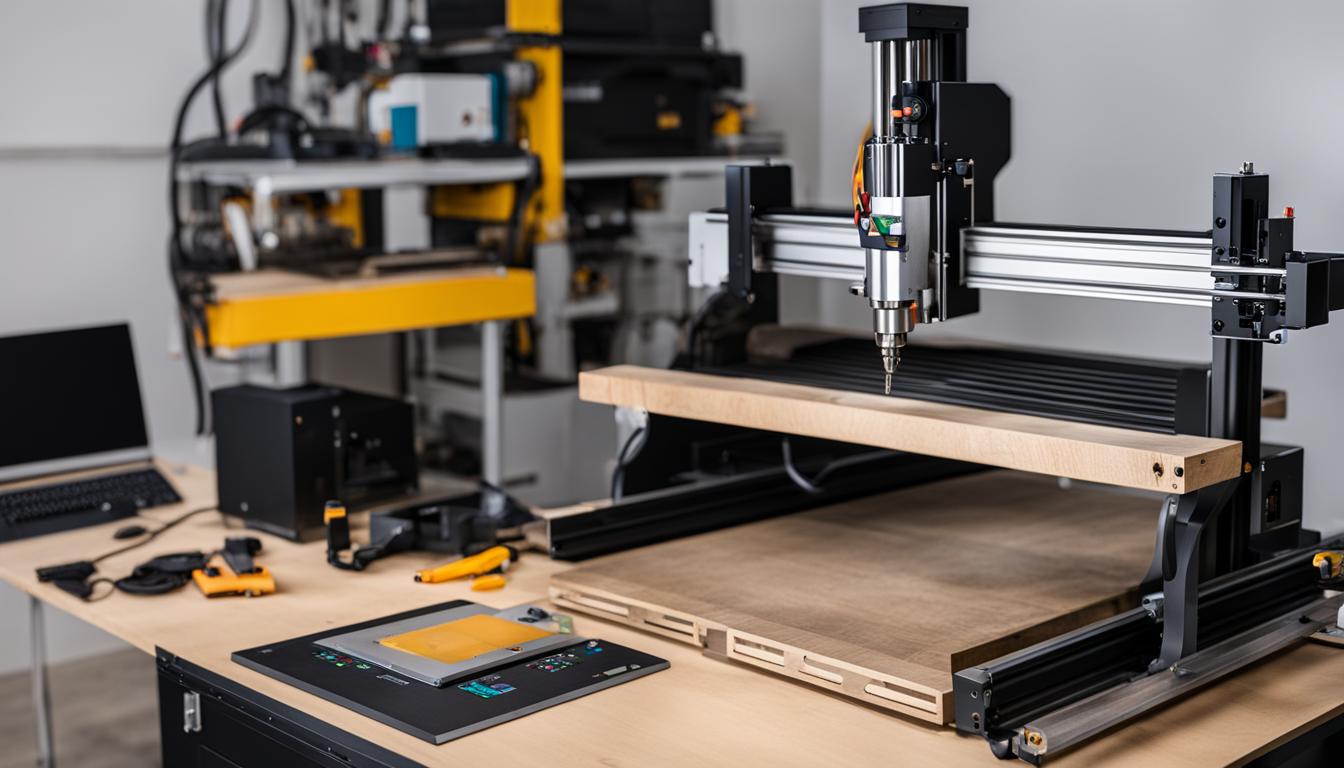
Acquiring a home CNC machine involves evaluating several technical and financial factors beyond the initial purchase price. Understanding the distinctions between various machine types, their power systems, software requirements, and potential assembly efforts is crucial for any serious hobbyist or small business. The market for desktop CNC equipment has expanded significantly, offering a wide spectrum of capabilities and corresponding costs.
Desktop CNC Router Price Ranges
Entry-level desktop CNC routers, primarily designed for light woodworking, plastic machining, and basic engraving, typically fall within a sub-$1,000 price bracket. Machines like the FoxAlien Masuter 3S or Genmitsu 3018-PROVer are common examples, often priced around $150 to $1,000.
These budget-friendly options are ideal for learning CNC fundamentals, offering a compact work area suitable for small projects. They usually feature lightweight frames and less powerful spindles, limiting their capacity for harder materials or demanding continuous operation.
Mid-range desktop CNC routers, suitable for more serious makers and small shops, generally range from $1,399 to $3,699. This category includes machines with upgraded motion components, enhanced structural rigidity, and often more capable spindles, allowing for mixed material processing, including light aluminum work.
Premium desktop and semi-professional routers, sometimes reaching up to $10,000, offer closed-loop precision, larger work areas, and robust frames. These machines are engineered for higher repeatability and the ability to cut tougher materials more consistently, bridging the gap between hobbyist and light industrial applications.
Hobbyist Benchtop Mill Budget Considerations
| Spindle Power (Watts) | Typical RPM Range | Cooling Method | Common Materials |
|---|---|---|---|
| 775 Motor (approx. 100-200W) | 10,000 – 20,000 | Air | Wood, Plastics, PCB (engraving) |
| 500W – 800W | 12,000 – 30,000 | Air/Water | Hardwood, Acrylic, Soft Aluminum |
| 1.5kW – 2.2kW | 18,000 – 24,000 | Water/Air | Aluminum, Brass, Composites, Hardwood |
| 4.5kW – 5.5kW+ | Up to 24,000+ | Water | Steel, Stone, High-volume Aluminum |
Benchtop CNC mills represent a significant step up in capability and cost compared to most desktop routers. These machines are specifically designed for precision machining of metals like aluminum, brass, and even mild steel, offering superior rigidity and accuracy.
Initial investments for hobbyist benchtop mills typically start around $3,000 and can extend to $15,000. While excellent for prototyping, education, and product development, these machines are generally not suited for high-volume production due to their slower speeds and smaller work envelopes.
Machines in this category, such as the HiMill D1S or Nestworks C500, often feature cast-aluminum frames, ball screw motion systems, and more powerful spindles, providing precision levels of ±0.02 mm or better. Their robust construction minimizes vibration, which is critical for achieving fine surface finishes and tight tolerances on metal parts.
For small businesses aiming for revenue generation, an entry-level enclosed Vertical Machining Center (VMC) is often recommended, with prices ranging from $30,000 to $65,000. This contrasts sharply with benchtop mills, which serve primarily as learning tools rather than production workhorses.
Spindle and Motor Power System Costs
The spindle is a core component of any CNC machine, directly influencing cutting accuracy, speed, and the range of materials that can be processed. Spindle power systems vary widely, from basic DC motors to high-frequency electro-spindles with Variable Frequency Drives (VFDs).
Entry-level desktop routers often utilize 775-motor spindles, suitable for light materials. Upgrading to a 500W or 800W air-cooled spindle can significantly enhance cutting capacity for harder woods and soft metals, with kits often including the spindle, VFD, and mounting hardware.
More powerful spindles, ranging from 1.5 kW to 2.2 kW, are common in mid-range and professional hobby machines, offering speeds up to 24,000 RPM or higher. These often come with water-cooling systems for quieter operation and better heat dissipation during extended use, crucial for maintaining tool life and part quality.
For heavy-duty applications or metal machining, spindle power can extend to 5.5 kW or even 9 kW, particularly in larger format or dedicated metal CNC machines. Automatic Tool Changer (ATC) spindles, while adding a premium, drastically reduce manual intervention and improve workflow efficiency for complex, multi-tool operations.
CAM Software Licensing and Ecosystems
Computer-Aided Manufacturing (CAM) software is indispensable for translating CAD designs into machine-readable G-code toolpaths. The licensing models and capabilities of CAM software vary significantly, impacting the overall cost of a home CNC setup.
Many hobbyists begin with free or low-cost options. Autodesk Fusion 360 offers a robust free ‘Personal Use’ license for non-commercial projects, providing integrated CAD/CAM functionality for 2.5D to 3-axis machining. Educational licenses are also available.
Dedicated 2D/2.5D CAM software, such as VCarve Desktop, is popular among woodworkers and sign makers, offering perpetual licenses around $349. The ‘Pro’ version, with broader capabilities, costs approximately $699. These tools are optimized for router-specific workflows and often include libraries of common profiles.
For more advanced or professional applications, subscription-based models or perpetual licenses for high-end CAM software can be substantial. Fusion 360’s standard commercial subscription is around $680 per year, while professional-grade solutions like Mastercam or hyperMILL can range from $6,000 to over $50,000 for full multi-axis suites.
DIY CNC Kit Assembly and Hidden Expenses
DIY CNC kits offer a cost-effective entry point into CNC machining, but the ‘assembly cost’ extends beyond just the kit price. Time investment, additional tools, and potential upgrades contribute to the total expenditure. Many entry-level kits, like the Genmitsu 3018-PROVer, are designed for straightforward assembly, often with pre-assembled core systems.
Beyond the machine itself, users must budget for essential accessories. Tooling, including an initial set of router bits, can cost between $250 and $300, with specialized bits adding $30 to $200 each. Workholding solutions, such as clamps or vises, are also necessary for securing materials.
Dust collection systems are a critical, often overlooked, expense, essential for maintaining a clean workshop and protecting machine components. These systems can range from simple shop vacuums to more elaborate dedicated dust extractors, depending on the scale of operation and materials being cut.
Overall, tooling, workholding, dust collection, and materials can add an estimated 20-30% on top of the base machine price. Considering these ancillary costs upfront prevents unexpected budget overruns and ensures a fully functional and safe home CNC setup.