
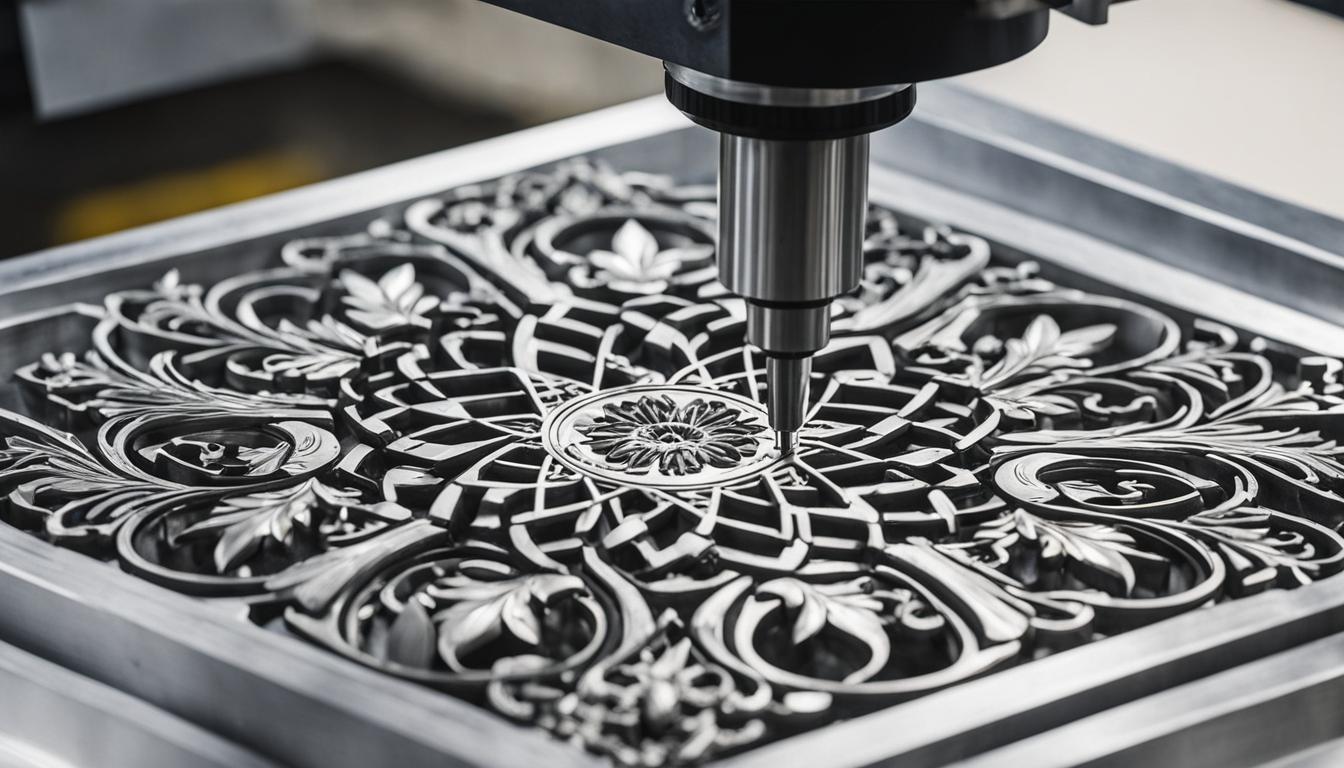
Computer Numerical Control (CNC) machines have fundamentally transformed manufacturing, moving beyond simple automation to deliver unparalleled precision, efficiency, and versatility. These advanced systems are now integral to producing components across diverse industries, from aerospace to medical devices. Their capabilities extend far beyond traditional machining methods, enabling the creation of intricate parts with exceptional quality.
The core strength of CNC technology lies in its ability to combine sophisticated computer programming with mechanical machining. This synergy allows for the production of a vast array of products, ranging from everyday items to highly complex, mission-critical components.
Achieving Sub-Micron Accuracy Levels
Modern CNC machines are engineered to achieve extraordinary levels of precision, often reaching sub-micron accuracy. This capability is critical for industries where even the slightest dimensional deviation can have severe consequences, such as in aerospace and medical device manufacturing.
Spindle runout, positioning accuracy, and repeat positioning accuracy are key metrics defining a CNC machine’s precision. Standard industrial CNC machines typically control spindle runout within 0.005mm, while ultra-precision equipment can achieve less than 0.002mm, crucial for mirror-level finishes.
Typical accuracy levels in CNC milling range from 0.005 inches for general work to 0.001 inches and even 0.0005 inches for high-precision tasks. Factors like machine rigidity, ballscrew quality, backlash compensation, and thermal stability significantly influence the attainable precision.
Surface finish, quantified by parameters like Ra (average roughness), is another critical aspect of precision. A 3.2 µm Ra is a standard finish for general machined surfaces, while finer values down to 0.2 µm Ra are achievable for precision parts requiring exceptional smoothness.
Mastering Complex 3D Contour Milling
| Material | Cutting Speed (SFM) | Feed per Tooth (in/tooth) | Material Removal Rate (in³/min) |
|---|---|---|---|
| Aluminum 6061 | 800-1000 | 0.003-0.005 | 5-12 |
| Steel 1018 | 300-400 | 0.002-0.003 | 1-3 |
| Stainless Steel 304 | 100-150 | 0.001-0.003 | 0.5-2 |
| Titanium Ti-6Al-4V | 60-100 | 0.001-0.002 | 0.3-1 |
| Delrin (Acetal) | 500-800 | 0.004-0.008 | 3-8 |
CNC machines demonstrate exceptional prowess in producing intricate and complex shapes, a capability largely driven by multi-axis machining. Five-axis CNC milling, for instance, allows for simultaneous movement along five different axes, enabling the creation of highly complex 3D contours that would be nearly impossible to achieve manually.
Advanced CAD/CAM software is indispensable for programming these complex geometries. Programs like Autodesk Fusion 360, SolidWorks, and Mastercam integrate design and manufacturing, allowing engineers to effortlessly design, refine, and generate precise toolpaths for intricate surfaces.
These software solutions support a wide range of operations, from 2.5D contours to multi-axis machining, optimizing toolpaths to reduce cutting time and ensure accuracy. Features like advanced roughing and equidistant feed-rate control contribute to longer tool life and significant cycle-time reductions on intricate surfaces.
Enabling Automated Batch Production
Automated batch production, often referred to as ‘lights-out manufacturing,’ represents a significant leap in CNC capabilities. These systems can operate 24/7 without human intervention, leading to substantially higher output and efficiency.
The primary objectives of lights-out manufacturing include minimizing workplace accidents, reducing labor costs, and improving product quality by eliminating human errors and inconsistencies. Automated systems can achieve up to a 30% improvement in output and a 40% reduction in defects.
Machine tending robots play a crucial role in unattended production by automatically loading raw materials and unloading finished parts, maximizing machine utilization during off-hours. This allows production to continue overnight, on weekends, and during holidays.
Facilitating Versatile Material Machining
CNC machines exhibit unparalleled versatility in handling an extensive range of materials. This includes various metals like aluminum, steel, stainless steel, and titanium, as well as engineering plastics, wood, and composites.
Aluminum, particularly grades 6061 and 7075, is highly favored for its excellent machinability, strength-to-weight ratio, and corrosion resistance, making it ideal for aerospace and automotive components. Stainless steel (e.g., 304 and 316) offers high strength and corrosion resistance, crucial for medical and marine applications.
Engineering plastics like Acetal (POM) are chosen for their fatigue resistance, low friction, and dimensional stability, suitable for precision components such as gears and bearings. Titanium, known for its heat and corrosion resistance, is essential for medical implants and aircraft parts.
Optimizing feeds and speeds is paramount for efficient material removal and achieving desired surface finishes across different materials. Softer materials like aluminum can tolerate higher cutting speeds (200-400 m/min), while harder materials such as titanium require lower speeds (30-70 m/min) to prevent tool damage and excessive heat.
Ensuring Continuous 24/7 Operation
The ability of CNC machines to operate continuously for 24 hours a day, seven days a week, is a cornerstone of modern high-volume manufacturing. This ‘lights-out’ capability significantly increases machine uptime and overall production capacity.
Achieving reliable 24/7 operation necessitates robust equipment, comprehensive process monitoring, and a stringent preventive maintenance schedule. Daily checks include coolant levels, hydraulic systems, and chip removal, while weekly and monthly tasks involve lubrication, filter inspections, and spindle checks.
Annual maintenance typically includes inspecting spindle end play, radial issues, and overall machine alignment. Regular calibration of accuracy and precision is also performed semi-annually or annually to detect any drift before it impacts part quality.
Process monitoring systems are often implemented to measure tooling performance, machine condition, and cutting stability during unattended production. These systems detect potential problems like tool wear or temperature fluctuations before they compromise part quality, ensuring consistent output.