
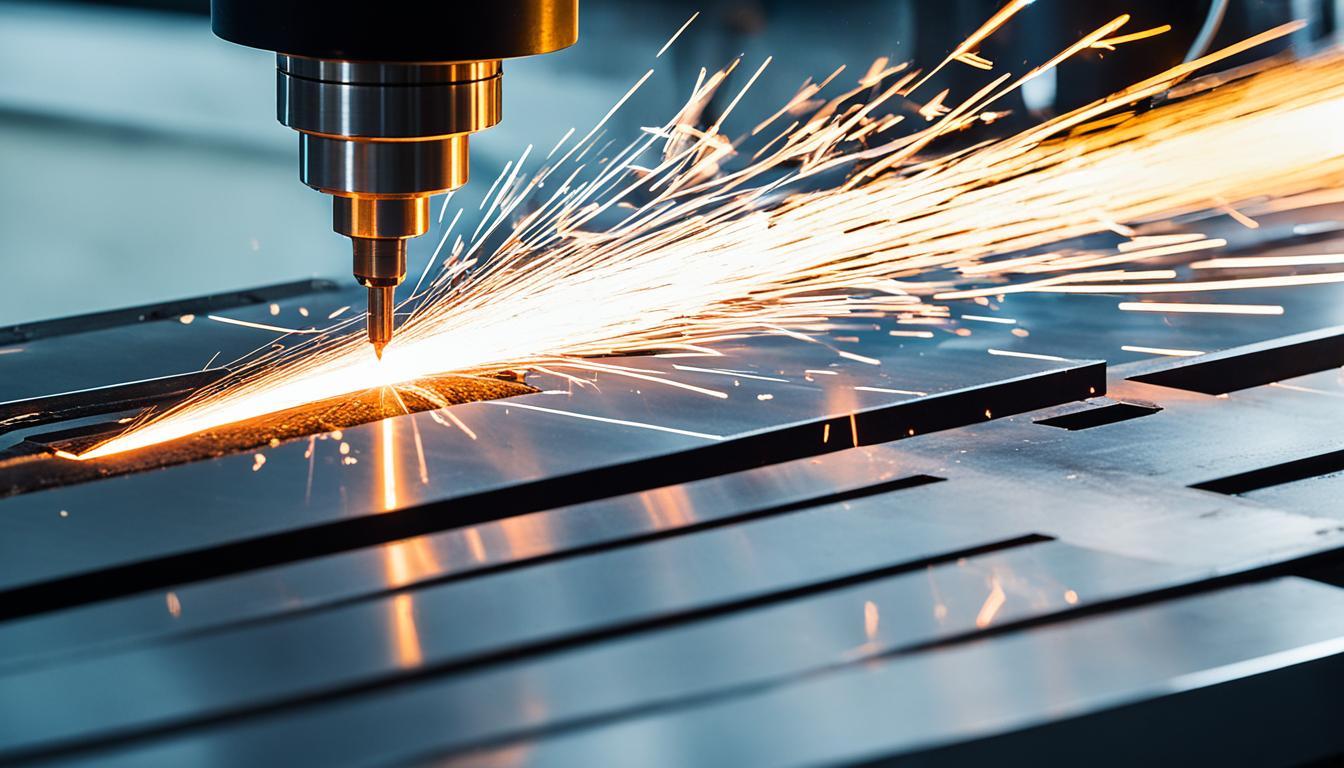
Effective cost per hour calculation is fundamental for sustainable profitability in CNC machining operations. Precise financial modeling allows shops to bid competitively, manage resources efficiently, and identify areas for operational improvement. Ignoring true costs can lead to underpricing, eroding margins, or overpricing, losing valuable contracts.
Understanding the intricate components that contribute to a machine’s hourly operating cost requires a detailed breakdown of both direct and indirect expenses. This technical article outlines the critical elements necessary for a comprehensive and authoritative cost analysis, ensuring accurate financial projections for any CNC facility.
Machine Depreciation: the Foundation of Hourly Cost
Machine depreciation represents the systematic allocation of a CNC machine’s capital cost over its useful life. This non-cash expense is crucial for recovering the initial investment and funding future equipment upgrades. The straight-line depreciation method is widely adopted for its simplicity and consistent expense recognition.
To calculate annual depreciation, subtract the estimated salvage value from the original purchase cost, then divide by the machine’s useful life in years. For instance, a new entry-level vertical machining center (VMC) might cost between $35,000 and $65,000, while high-precision models can exceed $300,000. A standard 2-axis production lathe typically ranges from $130,000 to $300,000.
The useful life of a CNC machine generally spans 10 to 20 years, though some robust machines can last over 30 years with diligent maintenance. Spindle hours are another critical metric, with 15,000 to 25,000 hours often cited before a bearing replacement or rebuild is necessary for an 8,000 rpm spindle. Salvage value, the estimated resale value at the end of its useful life, is typically projected as a percentage of the original cost, often between 10-20%.
Operator Wages and Burden Rate Allocation
| Machine Type | Average Hourly Rate (USD) | Estimated Power Consumption (kW) |
|---|---|---|
| 3-Axis CNC Mill | $35 – $55 | 15 – 25 |
| 4/5-Axis CNC Mill | $75 – $130 | 25 – 40 |
| Standard 2-Axis CNC Lathe | $55 – $85 | 10 – 20 |
| Mill-Turn (Turning Center) | $95 – $140 | 20 – 35 |
Direct labor costs, primarily operator wages, form a significant portion of the hourly rate. The average hourly pay for a CNC machinist in the United States is approximately $23.65 to $25.00 as of September 2026, with experienced machinists earning more. CNC programmers command higher rates, averaging $30.96 to $36.00 per hour.
Beyond the base hourly wage, a comprehensive ‘burden rate’ must be applied to accurately reflect the true cost of labor. This burden includes employer-paid benefits such as health insurance, retirement contributions, payroll taxes, and paid time off. These additional costs can add 25% to 40% or more to the base wage, depending on the benefits package and tax structure.
For example, an operator earning $25.00 per hour with a 35% burden rate effectively costs the company $33.75 per hour. This fully burdened rate should be directly allocated to the machine’s operating hours, ensuring all personnel-related expenses are accounted for in the cost per hour calculation.
Calculating Electricity Consumption Costs
Electricity usage is a variable but substantial component of CNC machining costs. The power consumption of a CNC machine varies significantly based on its size, type, and the intensity of the machining operation. Industrial electricity rates in the U.S. typically range from $0.10 to $0.15 per kilowatt-hour (kWh).
A mid-sized 3-axis CNC mill might consume an average of 15-25 kW during active cutting, while larger 5-axis machines or heavy-duty lathes could draw 25-40 kW or more. To calculate the hourly electricity cost, multiply the machine’s average power consumption in kilowatts by the local industrial electricity rate. For instance, a machine consuming 20 kW at $0.12/kWh costs $2.40 per hour in electricity alone.
Considering the power factor is also important for larger facilities, as a low power factor can lead to additional utility charges. Implementing energy-efficient practices and monitoring systems can help optimize consumption and reduce these operational expenses over time.
Comprehensive Shop Overhead Distribution
Shop overhead encompasses all indirect costs necessary to run the manufacturing facility that cannot be directly tied to a specific part or machine. These include facility rent, utilities (beyond direct machine electricity), insurance, maintenance, and administrative expenses. Overhead can represent 10-15% of total machining costs.
Industrial space rent in the U.S. averages around $10.18 per square foot per year, though this can range from $4.50 to $22 per square foot depending on location and facility class. Manufacturing insurance costs vary widely, from $3,000 to $6,000 annually for small plants, potentially exceeding $100,000 for large operations. A business owner’s policy (BOP) for manufacturers averages $1,517 per year.
To allocate overhead effectively, sum all indirect costs for a given period (e.g., monthly or annually) and divide by the total expected machine operating hours for that same period. This yields an hourly overhead rate that must be added to the direct costs. Regular maintenance, including preventative measures, is a significant overhead component that extends machine life and prevents costly downtime.
Accounting for Cutting Tool Wear Costs
Cutting tool wear is a critical, often underestimated, cost factor in CNC machining. Tools degrade over time, impacting part quality and requiring replacement, which directly affects the cost per part and, by extension, the hourly machine cost. The ‘tooling cost per part’ is calculated by dividing the tool’s cost by its total life in parts.
Factors influencing tool life and cost include the workpiece material, cutting parameters (speed, feed, depth of cut), and the tool’s material and design. While specific hourly costs for individual tools are difficult to generalize, understanding tool life is paramount for accurate cost estimation. A cheaper tool with a short lifespan can ultimately cost more per part due to frequent replacements and associated downtime.
Modern shops utilize tool wear monitoring systems, employing sensors to track cutting forces, vibration, and temperature in real-time. These systems predict tool failure, enable timely replacements, and optimize tool usage, thereby reducing overall tooling expenses and improving part quality. Implementing such technology is a key modern engineering practice for cost control.