
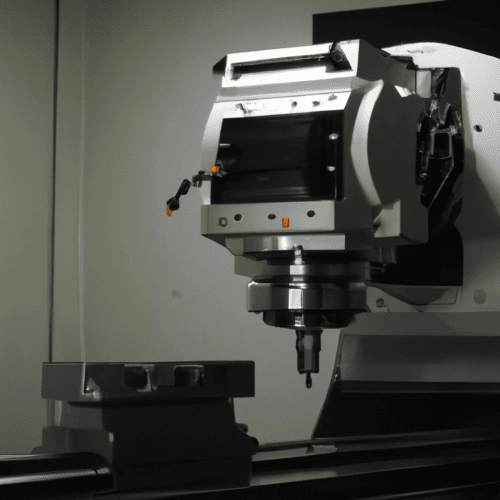
Manufacturing processes fundamentally transform raw materials into finished components. While Computer Numerical Control (CNC) machining represents a significant technological leap, its core principles remain rooted in the established mechanics of conventional, manually operated machine tools. Both methods employ subtractive techniques, removing material to achieve a desired geometry. Understanding their distinctions and commonalities is crucial for modern engineering practices.
The evolution from manual to automated control has dramatically reshaped production capabilities. However, the underlying physics of material removal, tool-workpiece interaction, and chip formation are consistent across both paradigms. This article explores these shared foundations and highlights the critical differences that define each machining approach in contemporary manufacturing.
Control Systems: the Digital Divide
Conventional machine tools rely entirely on direct human interaction for operation. Machinists manipulate handwheels, levers, and cranks to control axis movement, spindle speed, and feed rates. This method demands extensive skill, experience, and continuous attention from the operator to achieve desired part specifications.
In contrast, CNC machine tools operate through pre-programmed computer software, typically G-code, which dictates every aspect of the machining process. This digital control automates tool paths, spindle speeds, and feed rates, minimizing the need for constant human intervention during operation. Modern CNC systems in 2026 often integrate artificial intelligence (AI) and machine learning to optimize cut paths, predict tool failure, and dynamically adjust parameters based on real-time sensor feedback.
The shift to computer numerical control enables complex geometries and multi-axis movements that are impractical or impossible with manual methods. Advanced CNC machines, including 5-axis models with integrated pallet changers, are showcased at industry events like IMTS 2026, demonstrating capabilities for intricate part creation in a single setup.
Fundamental Cutting Mechanics Remain Constant
| Parameter | CNC Machining | Conventional Machining |
|---|---|---|
| Typical Dimensional Tolerance | ±0.05 mm (±0.002 in) standard; ±0.01 mm (±0.0004 in) precision | ±0.13 mm (±0.005 in) typical; operator dependent |
| Repeatability | High; consistent across high volumes | Low; varies with operator skill and fatigue |
| Standard Surface Finish (Ra) | 3.2 µm (125 µin) as-machined; finer options to 0.4 µm | Generally rougher; highly operator and process dependent |
| Part Complexity | High; intricate geometries, multi-axis | Low to moderate; simpler geometries |
| Production Volume Efficiency | High volume, mass production | Low volume, prototyping, one-offs |
Despite the vast differences in control, the physical act of material removal in both conventional and CNC machining adheres to identical principles. A cutting tool, harder than the workpiece material, engages the material, shearing off chips to form the desired shape. This process generates heat and involves specific forces, regardless of how the tool’s motion is governed.
The interaction between the cutting edge and the workpiece material, leading to chip formation, remains consistent. Factors like tool geometry, material properties, and the mechanics of shear deformation are universal. Whether a human hand guides the tool or a computer program directs it, the material responds to the cutting forces in the same fundamental way.
Precision Feeds and Speeds: Automated vs. Manual
Automated control in CNC machining allows for highly precise and consistent application of feeds and speeds. Programmed parameters ensure optimal material removal rates, surface finish, and tool life, which are critical for efficiency and quality in production.
For example, when milling 6061 aluminum with carbide end mills, conservative starting cutting speeds range from 200-500 m/min, with chip loads of 0.05-0.15 mm/tooth. These values are precisely maintained by the CNC controller throughout the operation.
Conversely, manual machining relies on the operator’s judgment and physical dexterity to set and maintain feeds and speeds. While skilled machinists can achieve impressive results, variations are inherent due to human factors like fatigue and subjective interpretation. This makes consistent high-volume production challenging.
Material Removal Physics: an Unchanging Foundation
The underlying physics governing metal cutting, including chip formation, heat generation, and tool wear mechanisms, are identical for both conventional and CNC processes. Material properties, such as hardness, tensile strength, and thermal conductivity, dictate how a material responds to cutting forces. Aluminum alloys, for instance, machine at significantly higher cutting speeds than steel due to their lower density, higher thermal conductivity, and lower shear strength.
Heat dissipation into the workpiece rather than concentrating at the tool tip in aluminum allows for much higher cutting speeds without rapid diffusion wear. The primary challenges in aluminum machining, regardless of control method, involve managing built-up edge (BUE) and ensuring efficient chip evacuation.
Tooling advancements, such as high-performance carbide designs and nano-composite coatings, are universally beneficial, improving wear resistance and surface finish across both manual and automated platforms. These innovations enhance the efficiency of the material removal process itself.
Higher Accuracy vs. Human Limits
CNC machining offers significantly higher accuracy and repeatability compared to conventional methods. Standard CNC tolerances typically range from ±0.05 mm to ±0.13 mm, with precision-grade applications achieving ±0.01 mm or even ±0.005 mm with specialized equipment and process control.
CNC machines achieve this precision through digital control, closed-loop feedback systems, and automated tool paths, which minimize human error and ensure consistent execution of programmed instructions. Repeatability, the ability to produce identical parts across repeated cycles, is a key advantage of CNC, as computer controllers repeat identical motion commands without deviation.
Manual machining accuracy is highly dependent on operator skill, visual alignment, and the condition of mechanical components like lead screws. Experienced machinists might achieve tolerances of approximately ±0.005 inches (±0.127 mm), but maintaining consistency across multiple parts is challenging. Human error, including misreading scales or over-adjusting, introduces variability.
The table below summarizes key technical parameters comparing CNC and conventional machining capabilities.