
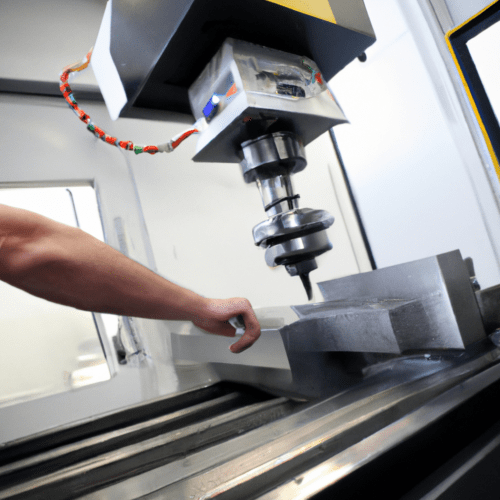
Computer Numerical Control (CNC) machining fundamentally transforms manufacturing by automating processes previously reliant on manual operation. This automation directly translates into substantial increases in production speed and consistency across various industrial applications.
The inherent precision and repeatability of CNC systems allow for optimized material removal rates and minimized idle times, leading to a dramatic reduction in overall cycle times compared to traditional methods. Engineers leverage advanced software to simulate and refine tool paths, ensuring peak efficiency before any material is cut.
Uninterrupted Machining Cycles
Continuous cutting time is a primary differentiator for CNC systems, enabling machines to operate without constant human intervention. Unlike manual machining, where operator fatigue and attention limits dictate pauses, CNC machines can maintain consistent cutting parameters for extended periods, often around the clock.
Modern CNC machines incorporate sophisticated sensors and control algorithms that monitor tool wear, chip evacuation, and coolant flow. This allows for proactive adjustments or automated tool changes, preventing interruptions that would typically halt a manual operation. Such sustained operation maximizes spindle utilization and throughput.
Optimized feeds and speeds, precisely calculated for specific materials and tooling, ensure efficient material removal without compromising surface finish or tool life. For instance, milling aluminum with a 10mm end mill might involve spindle speeds of 8,000-12,000 RPM and feed rates of 1,500-3,000 mm/min, parameters difficult to sustain manually.
High-Speed Non-Cutting Movements
| Feature | Manual Machining | CNC Machining |
|---|---|---|
| Continuous Cutting | Intermittent, operator-dependent | Sustained, automated |
| Rapid Traverse Speeds | Manual positioning, slow | Up to 60-100 m/min+ |
| Automated Tool Change | Minutes per tool, manual | 0.5 to 5 seconds chip-to-chip |
| Setup Delays | High, iterative adjustments | Reduced, programmable, quick-change fixturing |
| Repeatability | Operator skill dependent | High, sub-micron accuracy |
| Typical Tolerance | ±0.05mm to ±0.1mm | ±0.01mm to ±0.005mm |
Rapid traverse speeds significantly contribute to faster cycle times by minimizing the duration of non-cutting movements. These are the swift repositioning of the cutting tool between machining operations or when moving to a new starting point on the workpiece.
Contemporary CNC machining centers boast impressive rapid traverse rates, with many machines achieving speeds between 30 to 60 meters per minute (m/min) on their linear axes. Some high-performance machines can even exceed 100 m/min.
Such rapid axis movements drastically reduce the ‘air cutting’ time, where the tool is not engaged with the material. In contrast, manual machine operators must physically crank handwheels, a process inherently slower and more prone to error, adding considerable time to each part’s production.
Streamlined Tool Management
Automated tool changers (ATCs) are a cornerstone of CNC efficiency, eliminating the time-consuming manual exchange of cutting tools. These systems can store dozens, sometimes hundreds, of different tools in a magazine, ready for immediate deployment.
Tool change times on modern CNC machines are remarkably fast, often ranging from 0.5 to 5 seconds chip-to-chip, depending on the machine’s design and the tool’s position in the magazine.
This rapid exchange capability is crucial for complex parts requiring multiple operations and various tools, such as drilling, tapping, milling, and boring. Without ATCs, each tool change would necessitate stopping the machine, manually swapping tools, and re-establishing offsets, adding minutes to each operation.
Minimizing Downtime and Setup
Reduced setup delays are a critical advantage of CNC machining, stemming from advanced programming and workholding solutions. Initial setup on a CNC machine, while requiring careful planning, is often a one-time investment for a production run.
CAD/CAM software allows engineers to simulate the entire machining process, identify potential collisions, and optimize tool paths offline. This virtual setup drastically reduces the trial-and-error common in manual machining, where physical adjustments and test cuts consume valuable production time.
Quick-change fixturing systems, such as zero-point clamping or modular vises, further accelerate setup times. These systems allow operators to swap workpieces or entire fixture plates in minutes, maintaining high positional accuracy without extensive re-alignment. This minimizes the idle time between batches or part variations.
Optimizing Large-Scale Production
Batch production efficiency is where CNC truly excels, offering unparalleled consistency and scalability. Once a program is proven, the machine can replicate parts with identical precision thousands of times, eliminating the variability inherent in manual operation.
The ability to run ‘lights-out’ manufacturing, where machines operate autonomously overnight or during weekends, significantly boosts overall production capacity without additional labor costs. This continuous operation is a direct result of the reliability and automation built into CNC systems.
CNC machines consistently achieve tighter tolerances than manual methods, typically holding dimensions within ±0.01mm to ±0.005mm, and even finer in high-precision applications. This superior repeatability reduces scrap rates and ensures every part meets stringent quality standards.