
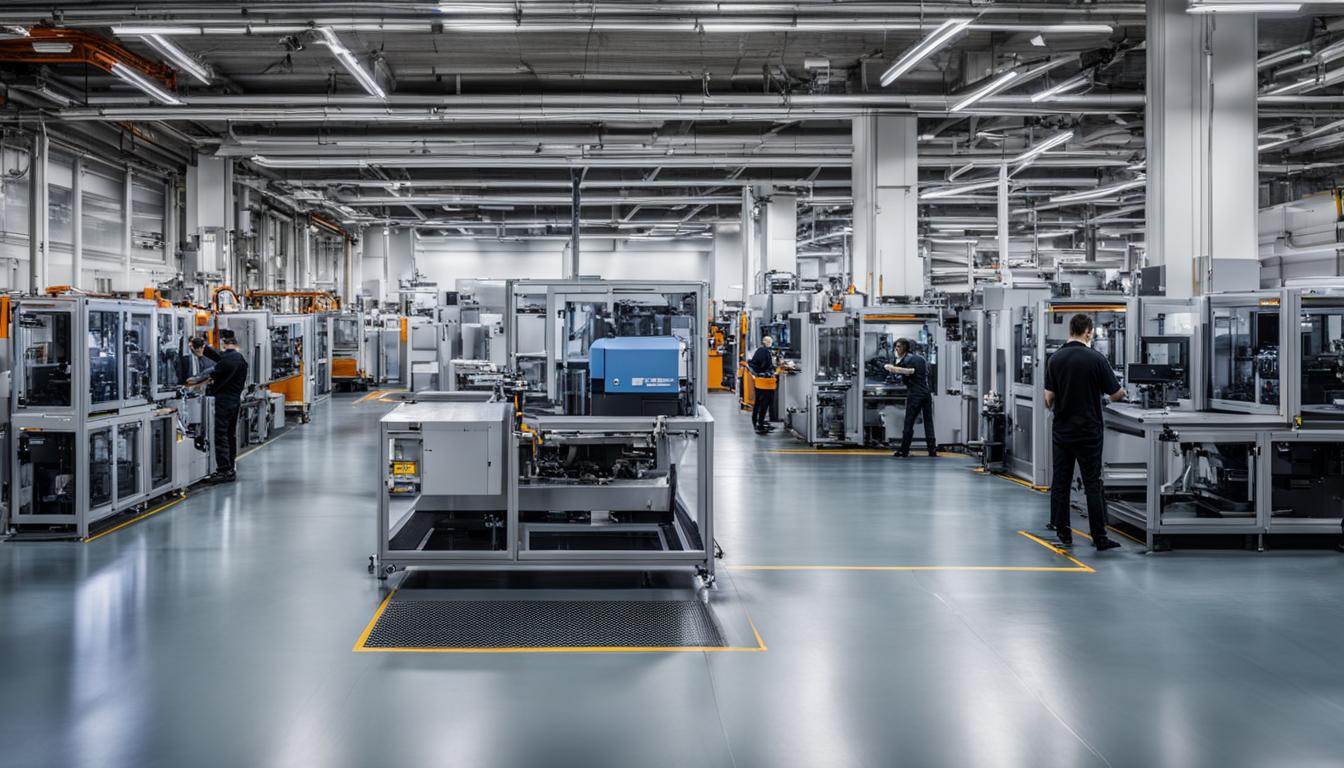
ExOne’s binder jetting technology offers robust solutions for industrial additive manufacturing, encompassing both metal and sand applications. This process fundamentally transforms powdered materials into precision components and complex tooling, enabling significant advancements in various sectors. The company has been a pioneer in this field, developing metal binder jetting systems for over two decades.
Binder jetting operates by selectively depositing a liquid binding agent onto a bed of powder particles, layer by layer, to form an object. This method supports a diverse range of materials, including various metals, sands, glasses, and ceramics. Post-processing steps like curing, depowdering, and sintering are essential to achieve the final part properties.
Metal Binder Jetting Machines and Processes
ExOne’s metal binder jetting machines are designed for industrial production, offering geometric flexibility and precision that often surpasses traditional investment casting. The process begins with a recoater spreading a thin layer of fine metal powder. A printhead then selectively jets a liquid binder onto the powder bed, adhering particles in the desired areas.
After printing, the ‘green part’ is fragile and requires subsequent thermal post-processing. This includes curing to solidify the binder, depowdering to remove unbound material, and critically, sintering. ExOne’s patented Triple ACT advanced compaction technology can achieve final part densities of 97% or more, with dimensional tolerances typically ranging from <1% to 2.5%.
ExOne systems currently process over twenty metal, ceramic, and composite materials, with single-alloy metals constituting more than half of these offerings. Notable materials include stainless steel (e.g., 17-4PH, 316L, 304L), iron, bronze, tungsten, copper, and Inconel 625.
A significant breakthrough in metal binder jetting involves aluminum 6061, achieved through a co-funded project with Ford Motor Company. This patent-pending process delivers final parts with 99% density and material properties comparable to die casting, a long-sought achievement in the industry.
Sand 3D Printing for Casting Molds
| Feature | ExOne S-Print Pro (Sand) | ExOne S-Max Pro (Sand) | ExOne M-Print (Metal) | ExOne Innovent+ (Metal/Ceramic) |
|---|---|---|---|---|
| Build Volume (W x D x H) | 1,200 x 750 x 500 mm | 1,800 x 1,000 x 700 mm | 800 x 500 x 400 mm | 160 x 65 x 65 mm |
| Layer Thickness | 0.10 – 1.00 mm (standard 0.28 mm) | Not specified (prints at 18 sec/layer) | 150 µm | Variable, min 50.0 µm |
| Print Resolution (DPI/µm) | 400 dpi (CoreBoost printhead) | Not specified | X/Y 63.5 µm, Z 150 µm | X/Y 63.5 µm, Z 100.0 µm |
| Build Speed | Full job box in <1 shift | Up to 135 l/h (18 sec/layer) | ~60 seconds/layer | 30–60 seconds/layer |
| Footprint | <12 m² | Not specified | 1675 × 1400 × 1855 mm | 1203 x 887 x 1434 mm |
| Compatible Materials | Furan binder with silica sand; optional CeraBeads, silicon carbide | Furan CHP-bonded sand | Metals (e.g., stainless steel, iron, bronze, tungsten, IN 625) | Metals (e.g., stainless steel, iron, bronze, tungsten, IN 625), sands, glasses, ceramics |
ExOne’s sand 3D printing technology is widely adopted in the foundry industry for producing complex sand molds and cores directly from CAD data. This eliminates the need for physical patterns, significantly shortening lead times and reducing tooling costs. The process is particularly beneficial for prototypes, low-volume production, and intricate designs.
The S-Max® and S-Print® series are prominent ExOne systems for sand binder jetting. For instance, the S-Max Pro™ can print furan CHP-bonded sand at speeds up to 135 l/h, capable of producing two full 1,260-liter job boxes in 24 hours. The recently launched S-Print Pro, designed for small to mid-sized foundries, offers a build volume of 1,200 × 750 × 500 mm and layer thicknesses from 0.10 to 1.00 mm.
Sand 3D printing supports various foundry materials, including silica sand with furan binders, CeraBeads, and silicon carbide. This versatility allows for the creation of molds and cores suitable for casting aluminum, bronze, copper, nickel-based alloys, iron, magnesium, steels, titanium, and zinc.
Industrial Additive Systems and Their Capabilities
ExOne’s industrial additive systems are engineered for high-throughput production and integration into existing manufacturing workflows. These systems offer substantial advantages by reducing reliance on traditional tooling, accelerating product development cycles, and enhancing manufacturing flexibility.
The company’s portfolio includes machines like the Innovent+, used for R&D and material development, and larger production systems such as the X1 160PRO, which features a build envelope of 800 x 500 x 400 mm. The Exerial system, with its dual job boxes, offers a total build platform of 3,168 liters, capable of printing output rates nearly four times faster than the S-Max.
ExOne GmbH and voxeljet GmbH recently merged into a single legal entity, operating as ExOne GmbH. This consolidation brings together over three decades of industrial 3D printing experience, broadening the portfolio and combining expertise in binder jetting solutions.
Complex Core Printing for Advanced Geometries
Binder jetting excels at producing complex sand cores with intricate internal passages, curved channels, and integrated features that are challenging or impossible with conventional core boxes. This capability eliminates the need for multiple core-box elements or complex assembly, reducing labor, errors, and scrap.
The ability to print monolithic sand cores directly from digital data allows for rapid iteration of designs and the creation of highly cored, intricate castings, such as hydraulic valves and transmission components. This process is crucial for industries like automotive, aerospace, and energy, where advanced designs are paramount.
Printed sand cores often exhibit higher mechanical strength compared to shot cores, depending on binder content and sand grain size. The selective application of binder during printing ensures sufficient strength, although a thermal post-treatment is typically required to achieve final strength.
Porosity Sintering Process in Metal Binder Jetting
The sintering process is a critical post-processing step for metal binder jetted parts, transforming the fragile ‘green part’ into a dense, functional metal component. During sintering, high temperatures fuse the metal powder particles, significantly enhancing the part’s strength and integrity.
Controlling porosity is a key aspect of sintering. ExOne’s binder jetting, combined with advanced compaction technologies, aims for high final part densities. For certain applications, infiltration with a secondary metal, such as bronze into stainless steel, can further reduce porosity and achieve densities up to 95%.
Simulation software, developed in partnership with companies like ANSYS, helps predict sintering behavior, allowing manufacturers to adjust process parameters for optimal results. This reduces trial and error, streamlining the design and production of metal parts.