
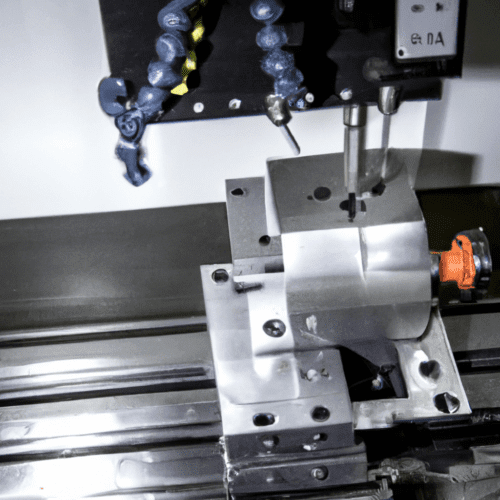
Manufacturing processes rely on a diverse array of machinery, each engineered for specific material manipulation and production goals. Understanding the fundamental distinctions between these machine types is essential for optimizing production workflows and achieving desired product specifications. From material removal to additive construction, the capabilities of modern industrial equipment are vast and continually evolving.
Subtractive Machine Tools
Subtractive manufacturing involves removing material from a workpiece to create a desired shape, a cornerstone of traditional machining. These tools encompass a broad spectrum, including mills, lathes, drills, and saws, each designed for precise material removal through cutting, drilling, or turning operations. Computer Numerical Control (CNC) systems now dominate this sector, offering unparalleled accuracy and repeatability in complex part production.
Modern CNC milling machines, for instance, can achieve positional accuracies often within ±0.0002 inches (±0.005 mm) and repeatability within ±0.0001 inches (±0.0025 mm) for high-precision applications. Typical surface finishes for milled aluminum can range from 32 to 125 microinches Ra, while steel components might achieve 63 to 250 microinches Ra, depending on tooling and machining parameters.
Feeds and speeds are critical parameters dictating material removal rates, tool life, and surface finish. For machining 6061-T6 aluminum with a 1/2-inch carbide end mill, common cutting speeds range from 600 to 1200 surface feet per minute (SFM), with feed rates between 0.003 and 0.008 inches per tooth (IPT). Conversely, harder materials like 4140 steel require lower cutting speeds, typically 200-400 SFM, and feed rates of 0.002-0.005 IPT for similar tooling, to manage heat generation and tool wear effectively.
Additive 3D Printers
| Machine Type | Primary Function | Typical Tolerance (inches) | Common Materials |
|---|---|---|---|
| CNC Mill | Material Removal (Milling) | ±0.0002 – ±0.005 | Aluminum, Steel, Plastics |
| FDM 3D Printer | Additive Layering | ±0.005 – ±0.020 | PLA, ABS, PETG |
| Stamping Press | Metal Forming | ±0.005 – ±0.020 | Sheet Steel, Aluminum |
| MIG Welder | Metal Joining | N/A (Joint Strength) | Mild Steel, Stainless Steel |
| Surface Grinder | Abrasive Finishing | ±0.0001 – ±0.0005 | Hardened Steel, Cast Iron |
Additive manufacturing, commonly known as 3D printing, builds objects layer by layer from a digital design, adding material rather than removing it. This technology has revolutionized prototyping and low-volume production, enabling the creation of intricate geometries and customized parts that are often impossible with traditional methods. Fused Deposition Modeling (FDM), Stereolithography (SLA), and Selective Laser Sintering (SLS) are prominent processes within this category.
FDM printers extrude thermoplastic filaments, such as PLA or ABS, with typical layer heights ranging from 0.05 mm to 0.4 mm, influencing part resolution and build time. SLA technology utilizes UV lasers to cure liquid photopolymer resins, achieving finer details and smoother surfaces with layer heights as low as 0.025 mm. SLS printers employ a laser to fuse powdered materials like nylon or metals, producing strong, functional parts without support structures, often with layer thicknesses around 0.06 mm to 0.15 mm.
Metal additive manufacturing, including processes like Direct Metal Laser Sintering (DMLS) and Electron Beam Melting (EBM), produces high-strength components from materials such as titanium alloys, stainless steel, and nickel-based superalloys. These advanced techniques are increasingly used in aerospace and medical industries for critical parts, offering design freedom and material efficiency.
Forming and Forging Machinery
Forming and forging machinery reshape materials through plastic deformation, applying force to alter a workpiece’s geometry without material removal or addition. These processes are crucial for producing high-strength components, often with improved grain structure and mechanical properties compared to machined parts. Common examples include stamping presses, bending machines, rolling mills, and forging hammers.
Metal stamping presses use dies to cut, punch, bend, or form sheet metal into desired shapes, widely employed in automotive and appliance manufacturing. Bending machines, such as press brakes, precisely form angles and curves in sheet metal, with modern CNC press brakes achieving angular accuracies of ±0.5 degrees. Rolling mills reduce the thickness or change the cross-section of metal stock through compressive forces exerted by a pair of rolls, producing sheets, plates, and structural shapes.
Forging processes, including open-die and closed-die forging, involve heating metal to a plastic state and then shaping it with localized compressive forces. Closed-die forging, for instance, forces metal into a die cavity, producing parts with excellent strength-to-weight ratios and tight dimensional tolerances, often within ±0.010 to ±0.030 inches for critical dimensions. These methods are vital for components requiring high fatigue strength and impact resistance, such as crankshafts and connecting rods.
Metal Joining Equipment
Metal joining equipment permanently unites two or more metal pieces, forming a single assembly. Welding, brazing, and soldering are the primary categories, each employing different heat sources and filler materials to create strong, durable bonds. The selection of a joining method depends on the materials, desired joint strength, and application requirements.
Gas Metal Arc Welding (GMAW), commonly known as MIG welding, uses a continuously fed wire electrode and a shielding gas to protect the weld pool from atmospheric contamination. It is favored for its speed and versatility across various metals, including steel, aluminum, and stainless steel. Typical tensile strengths for MIG welds in mild steel can exceed 60,000 psi.
Gas Tungsten Arc Welding (GTAW), or TIG welding, employs a non-consumable tungsten electrode and an inert shielding gas, producing high-quality, precise welds with excellent aesthetic appeal. TIG welding is ideal for thin materials and critical applications in aerospace and medical industries, offering superior control over the weld puddle. Laser welding provides extremely high energy density, resulting in narrow, deep welds with minimal heat-affected zones (HAZ) and distortion, suitable for high-speed, automated production.
Abrasive Grinding Tools
Abrasive grinding tools remove material using abrasive particles bonded into wheels or belts, achieving high precision and superior surface finishes. Grinding is often a finishing operation, following other machining processes, to meet stringent dimensional tolerances and surface quality requirements. Common types include surface grinders, cylindrical grinders, and centerless grinders.
Surface grinders produce flat, smooth surfaces by traversing a rotating abrasive wheel across a workpiece. They are capable of achieving flatness tolerances within 0.0001 inches (0.0025 mm) and surface finishes as fine as 4 to 8 microinches Ra, critical for precision components like machine ways and gauge blocks.
Cylindrical grinders are designed for external and internal cylindrical surfaces, producing highly accurate diameters and concentricity. These machines can hold diameter tolerances within ±0.00005 inches (±0.00125 mm) and achieve surface finishes of 2 to 4 microinches Ra on hardened steel. Centerless grinding is a high-volume process for external cylindrical surfaces, where the workpiece is supported by a work rest blade and regulated by a regulating wheel, eliminating the need for centers.
The choice of abrasive material, such as aluminum oxide, silicon carbide, or cubic boron nitride (CBN), depends on the workpiece material’s hardness and the desired finish. CBN wheels are particularly effective for grinding hardened steels and superalloys, offering long life and maintaining sharp cutting edges. Diamond abrasives are preferred for grinding carbides, ceramics, and other extremely hard materials.