
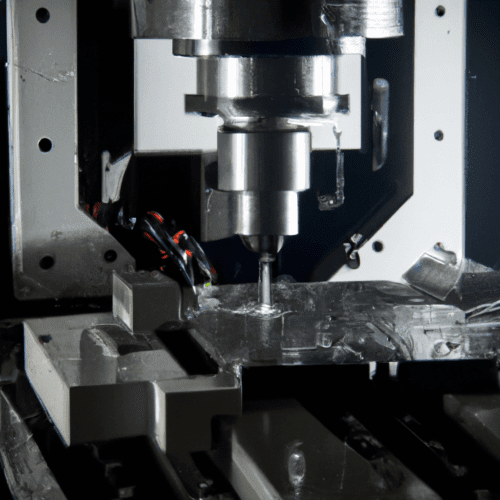
Selecting the appropriate CNC machine is a critical engineering decision, directly impacting production efficiency and part quality. Engineers must evaluate numerous technical specifications and operational factors to ensure optimal manufacturing outcomes. This choice extends beyond initial cost, encompassing long-term reliability and precision.
Evaluating Top CNC Machine Brands
Haas Automation and DMG Mori represent two prominent manufacturers in the global CNC machine market, each with distinct strengths. Haas machines are widely recognized for their robust construction and user-friendly controls, often favored by job shops and for general-purpose machining. Their accessibility and extensive service network make them a popular choice for many operations.
DMG Mori, conversely, targets the high-precision and complex machining sectors, offering advanced multi-axis capabilities and integrated automation solutions. These machines typically feature superior build quality and cutting-edge technology, catering to industries like aerospace and medical device manufacturing. The investment in a DMG Mori often reflects a need for extreme accuracy and sophisticated processing.
Reliability data for 2026 indicates both brands maintain high operational uptimes, though their target markets influence specific performance metrics. Haas machines generally offer excellent value for their price point, providing consistent performance for a broad range of applications. DMG Mori machines, while more expensive, deliver exceptional repeatability and surface finishes required for critical components.
Matching Machine to Application Demands
| Feature | Haas Automation | DMG Mori |
|---|---|---|
| Typical Application Focus | General purpose, job shops, education | High-precision, aerospace, medical, complex parts |
| Standard Positional Accuracy | ±0.0002″ to ±0.0004″ (±0.005mm to ±0.010mm) | ±0.00008″ to ±0.00016″ (±0.002mm to ±0.004mm) |
| Max Spindle Speed (VMC) | 10,000 – 15,000 RPM (up to 30,000 RPM optional) | 12,000 – 20,000 RPM (up to 60,000 RPM optional) |
| Machine Rigidity | Solid cast iron, good for general machining | Heavy-duty cast iron, advanced dampening, superior for hard metals |
| Control System | Haas CNC (user-friendly, proprietary) | CELOS (Siemens, Fanuc, Mitsubishi options) |
Application-specific selection is paramount, dictating the necessary machine configuration and capabilities. High-volume production of simple parts might benefit from a dedicated 3-axis vertical machining center (VMC) with rapid tool changes. Conversely, intricate geometries and single-setup machining often necessitate 5-axis simultaneous machines.
Aerospace components, for instance, frequently require machines capable of processing tough materials like titanium and Inconel with tight tolerances. These applications demand high torque at lower RPMs, robust machine structures, and advanced thermal compensation systems. Medical device manufacturing similarly prioritizes precision and surface finish on smaller, complex parts.
For large-scale mold making or heavy industrial components, horizontal machining centers (HMCs) often prove more efficient due to their pallet changing capabilities and superior chip evacuation. Turn-mill centers combine turning and milling operations, significantly reducing setup times and improving accuracy for complex cylindrical parts.
Spindle Performance and Structural Rigidity
Spindle speed and rigidity are fundamental to machining performance, directly influencing material removal rates and surface finish. High-speed spindles, reaching upwards of 30,000 RPM, are essential for small-diameter tools and light cuts in aluminum or plastics, minimizing cycle times and improving surface quality. These often feature ceramic bearings for reduced friction.
Heavy-duty machining of hard metals requires high-torque spindles, typically operating at lower RPMs (e.g., 6,000-12,000 RPM) but with substantial power output. The spindle’s taper size, such as CAT40, CAT50, or HSK63, directly correlates with its rigidity and ability to resist deflection under heavy cutting loads. A larger taper provides greater tool holding strength.
Machine tool rigidity, derived from the casting design and guideway construction, prevents vibration and chatter during cutting operations. Cast iron frames with wide, box-way designs offer superior dampening characteristics compared to linear guide systems for heavy material removal. This structural integrity is critical for maintaining tool life and achieving consistent part accuracy.
Achieving Precision Tolerance Requirements
Precision tolerance capabilities are a defining characteristic of high-end CNC machines, directly impacting part functionality and assembly. Standard machining tolerances for general purpose parts typically range from ±0.002 inches to ±0.005 inches (±0.05 mm to ±0.13 mm). Achieving tighter tolerances requires specialized machines and meticulous process control.
High-precision applications, such as those in optics or medical implants, often demand tolerances as tight as ±0.0002 inches (±0.005 mm) or even finer. These machines incorporate advanced linear scales, thermal compensation, and vibration isolation systems. Environmental control, including temperature and humidity, also becomes critical for maintaining such tight specifications.
Geometric Dimensioning and Tolerancing (GD&T) principles guide the specification of these critical features, ensuring functional requirements are met. Machine accuracy is often quantified by parameters like positioning accuracy and repeatability, measured according to ISO 230-2 standards. Repeatability, the machine’s ability to return to a programmed point, is often more critical than absolute accuracy for consistent production.
Assessing Manufacturer Support and Service
Customer support quality significantly influences the total cost of ownership and operational continuity. A manufacturer’s ability to provide prompt technical assistance, spare parts availability, and skilled service technicians is invaluable. Downtime due to machine issues can be extremely costly in a production environment.
Haas Automation is known for its extensive global dealer network and readily available parts, often facilitating quicker repairs and maintenance. Their online resources and training programs are also comprehensive, empowering users to perform routine diagnostics and troubleshooting. This widespread support infrastructure is a key selling point for many businesses.
DMG Mori offers premium support services, often including predictive maintenance programs and dedicated application engineers for complex setups. While their service might be more specialized, it ensures that high-value, high-precision machines operate at peak performance. Access to expert application support can optimize programming and machining strategies for challenging parts.