
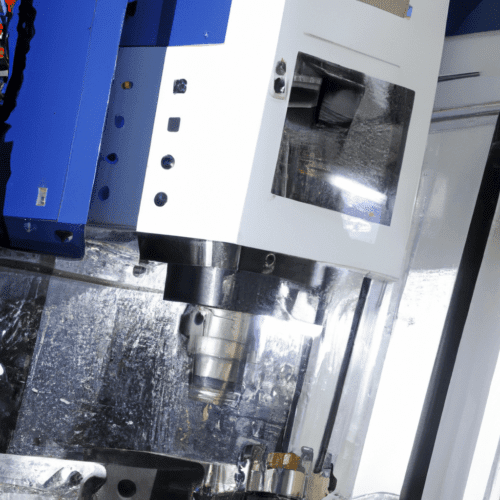
Computer Numerical Control (CNC) machines represent a fundamental shift in manufacturing, enabling automated, precise, and repeatable production processes. These sophisticated systems interpret digital instructions, typically G-code, to control machine tool movements and operations. The diversity of CNC technology allows for specialized applications across various industries, from aerospace to medical device manufacturing.
Each CNC machine type is engineered for specific material removal or shaping tasks, utilizing different tooling and operational principles. Understanding these distinctions is crucial for selecting the appropriate equipment for a given manufacturing challenge. Modern advancements continually refine these machines, enhancing their speed, accuracy, and versatility.
CNC Milling Machines
CNC milling machines are subtractive manufacturing workhorses, primarily used for shaping solid materials by removing material with rotating multi-point cutting tools. These machines typically operate on three to five axes, allowing for complex geometries and intricate features. Common applications include creating molds, dies, prototypes, and precision components from metals, plastics, and composites.
Modern milling centers often feature high-speed spindles, reaching up to 30,000 RPM or more, facilitating rapid material removal and superior surface finishes. Tool changers automate the selection of various end mills, face mills, and drills, optimizing production efficiency. Standard positional tolerances for high-precision CNC mills can be as tight as ±0.0002 inches (±0.005 mm), with repeatability often within ±0.0001 inches (±0.0025 mm).
Feeds and speeds for milling vary significantly based on material hardness, tool material, and desired surface finish. For instance, machining 6061 aluminum with a 1/2-inch carbide end mill might involve spindle speeds around 8,000-12,000 RPM and feed rates of 40-80 inches per minute (IPM), while harder steels require lower speeds and feeds. Advanced control systems and adaptive machining strategies dynamically adjust these parameters for optimal performance and tool life.
CNC Turning Centers
| Machine Type | Primary Function | Typical Materials | Common Tolerances |
|---|---|---|---|
| CNC Milling Machine | Material removal (3D shaping) | Metals, plastics, composites | ±0.0002 – ±0.0005 inches |
| CNC Turning Center | Cylindrical part creation | Metals, plastics | ±0.0002 – ±0.0005 inches |
| CNC Router | Cutting, carving, engraving | Wood, plastics, foam, composites | ±0.001 – ±0.005 inches |
| CNC Plasma Cutter | Thermal cutting (conductive) | Steel, aluminum, stainless steel | ±0.010 – ±0.020 inches |
| CNC Laser Cutter | Thermal cutting (various) | Metals, plastics, wood, fabric | ±0.001 – ±0.005 inches |
CNC turning centers, often called lathes, are designed to create cylindrical or conical parts by rotating a workpiece against a stationary or moving cutting tool. These machines are fundamental for producing shafts, bushings, bolts, and other rotational components. Modern turning centers frequently incorporate live tooling, allowing for secondary operations like milling, drilling, and tapping without re-fixturing the part.
Multi-axis turning centers, including turn-mill machines, combine turning and milling capabilities, significantly reducing setup times and improving part accuracy. These machines can feature C, Y, and B axes in addition to the standard X and Z axes, enabling off-center drilling and complex contouring. Positional accuracy for turning centers typically ranges from ±0.0002 to ±0.0005 inches (±0.005 to ±0.0127 mm).
Typical cutting speeds for turning steel might range from 300-800 surface feet per minute (SFM) with feed rates of 0.005-0.015 inches per revolution (IPR), depending on the specific alloy and insert geometry. For softer materials like aluminum, SFM can exceed 1,500, with higher feed rates. Automated bar feeders and part catchers further enhance productivity in high-volume production environments.
CNC Routers
CNC routers are versatile machines primarily used for cutting, carving, and engraving softer materials such as wood, plastics, foams, and composites. They operate similarly to milling machines but are generally optimized for larger work envelopes and lighter material removal rates. Common applications include cabinetry, sign making, prototyping, and artistic endeavors.
These machines typically feature a gantry-style design, where the cutting head moves across a stationary bed. Spindle speeds on CNC routers can range from 10,000 to 24,000 RPM, accommodating various router bits for different materials and finishes. Positional accuracy for industrial CNC routers is often within ±0.001 to ±0.005 inches (±0.025 to ±0.127 mm), suitable for most woodworking and plastic fabrication tasks.
Feed rates for routing wood can vary widely, from 100 IPM for roughing cuts in softwoods to 300 IPM or more for finishing passes in plywood or MDF. Tooling includes straight bits, spiral bits, V-bits, and specialized profile cutters. Vacuum hold-down systems are commonly employed to secure sheet materials, ensuring stability during high-speed cutting operations.
CNC Plasma and Laser Cutters
CNC plasma and laser cutters are non-contact thermal cutting machines used for processing sheet materials. Plasma cutters utilize an ionized gas stream at high temperatures to melt and blow away conductive materials like steel, aluminum, and stainless steel. Laser cutters, conversely, employ a focused high-power laser beam to melt, burn, or vaporize material, suitable for a broader range of materials including metals, plastics, wood, and fabric.
Plasma cutting is generally faster and more cost-effective for thicker metals (up to several inches), offering good edge quality for many industrial applications. Laser cutting provides superior precision, finer kerf widths, and excellent edge quality, making it ideal for intricate designs and applications requiring tight tolerances. Fiber lasers are particularly prevalent in modern metal cutting due to their efficiency and speed.
Typical cutting speeds for a 1/4-inch mild steel plate with a 100-amp plasma cutter can be around 100-150 IPM, while a 6kW fiber laser can cut the same material at 300-500 IPM or faster. Positional accuracy for both types of machines can be very high, with laser cutters often achieving ±0.001 to ±0.002 inches (±0.025 to ±0.05 mm).
Electrical Discharge Machines (EDM)
Electrical Discharge Machines (EDM) are non-conventional machining processes that remove material through a series of rapidly recurring electrical discharges between an electrode and the workpiece. This process is particularly effective for machining hard or difficult-to-machine conductive materials, such as hardened tool steels, titanium, and superalloys, regardless of their hardness.
Two primary types of EDM exist: wire EDM and sinker (or ram) EDM. Wire EDM uses a continuously fed thin wire as the electrode to cut intricate 2D and 3D profiles, similar to a band saw. Sinker EDM employs a pre-shaped electrode to create complex cavities, blind holes, or intricate forms by eroding the workpiece material. Both methods produce excellent surface finishes and can achieve very tight tolerances.
Modern EDM machines can achieve extremely high precision, with typical positional accuracies ranging from ±0.0001 to ±0.0002 inches (±0.0025 to ±0.005 mm) and surface finishes as fine as Ra 0.1 µm (4 µin). The process is slow compared to conventional machining but offers unparalleled capability for creating fine features, sharp internal corners, and complex geometries in materials that would be impossible to machine otherwise. EDM is indispensable in mold making, die manufacturing, and aerospace component production.