
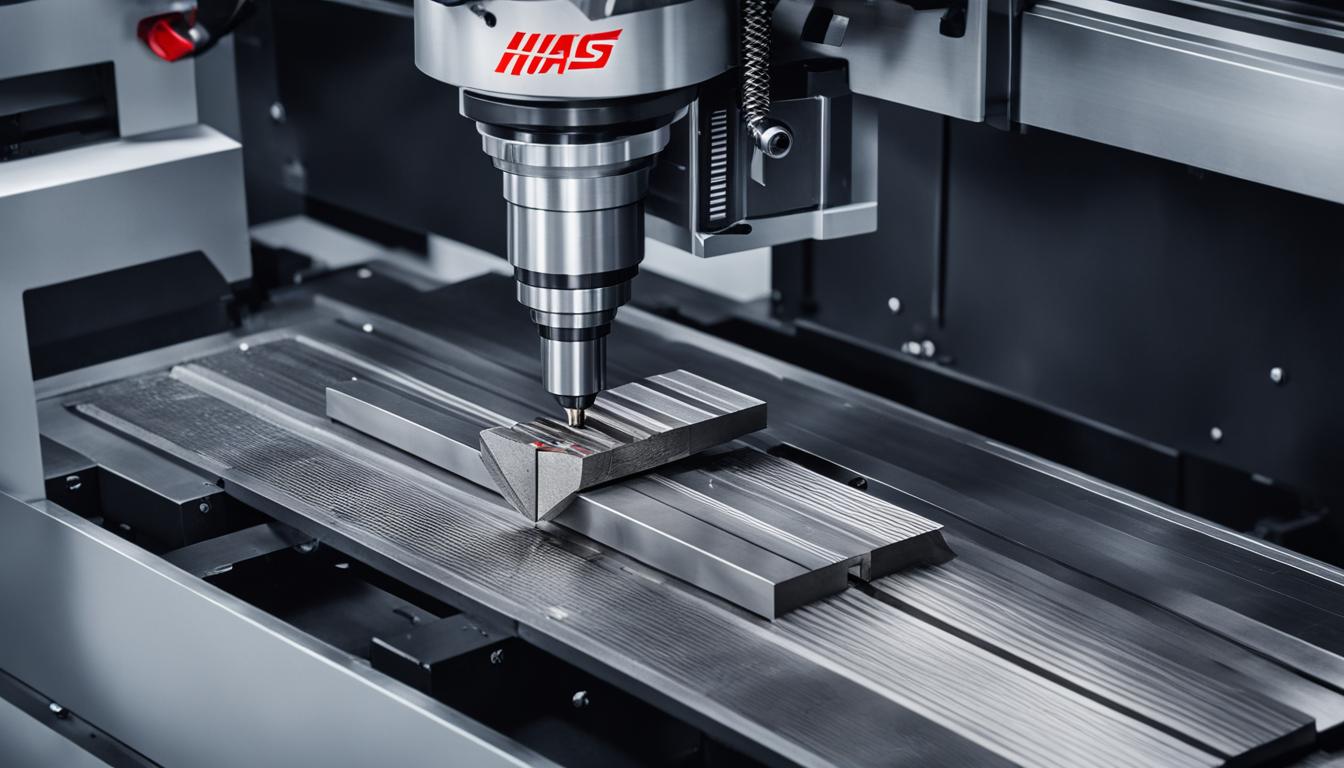
Haas Automation’s VF series vertical machining centers are foundational to modern precision engineering, offering robust performance and consistent accuracy for diverse manufacturing applications. These machines are engineered with rigid cast iron construction, minimizing vibration during high-speed cutting operations and ensuring dimensional stability.
The VF series incorporates oversized ballscrews and linear guides, exceeding typical industry standards to enhance reliability and maintain accuracy even under demanding workloads. This design philosophy contributes significantly to the machines’ ability to hold tight tolerances, crucial for complex part geometries and high-quality surface finishes.
Haas VF Vertical Mill Series: Precision and Performance
The Haas VF vertical mill series encompasses a wide range of models, from compact solutions like the VF-0 to larger machines such as the VF-12, accommodating various part sizes and production requirements. Each model is designed for optimal performance, featuring advanced spindle systems with thermal management to ensure consistent accuracy during extended operations.
Super-Speed (‘SS’) variants within the VF series, such as the VF-2SS, VF-4SS, and VF-6SS, are equipped with 12,000 RPM inline direct-drive spindles and ultra-fast side-mount tool changers. These enhancements facilitate high-volume production and significantly reduce cycle times, particularly beneficial for machining materials like aluminum and mild steel.
Standard positioning accuracy for VF-series machines is typically 0.0002 inches, with repeatability often specified at 0.0001 inches. While these figures represent machine movement without cutting, a true position of 0.0005 inches is considered excellent during actual metal cutting operations, especially in challenging materials like steel.
Here is a comparison of key specifications for popular Haas VF Super-Speed models:
The Haas Control: Intuitive Power for Machinists
| Model | X-Axis Travel | Y-Axis Travel | Z-Axis Travel | Spindle Speed (RPM) | Tool Capacity | Rapid Traverse (IPM) |
|---|---|---|---|---|---|---|
| VF-2SS | 30.0 in (762 mm) | 16.0 in (406 mm) | 20.0 in (508 mm) | 12,000 | 24+1 or 30+1 | 1400 (35.6 m/min) |
| VF-4SS | 50.0 in (1270 mm) | 20.0 in (508 mm) | 25.0 in (635 mm) | 12,000 | 24+1 or 30+1 | 1400 (35.6 m/min) |
| VF-6SS | 64.0 in (1626 mm) | 32.0 in (813 mm) | 30.0 in (762 mm) | 12,000 or 15,000 | 30+1 | 900-1400 (22.9-35.6 m/min) |
The Haas CNC control system, including the Next Generation Control (NGC), is developed entirely in-house, ensuring seamless integration with Haas machine tools. This proprietary design allows Haas to take full responsibility for the entire machine, simplifying support and troubleshooting for users.
Operators benefit from a user-friendly interface featuring a touchscreen display, dedicated keypad, and a multi-function jog handle. Navigation is intuitive, with consistent cursor key functionality and accessible icons that provide quick access to machine features and options.
The control supports advanced programming capabilities, including the Visual Programming System (VPS) for creating G-code programs using templates, and the ability to create custom macros for automating repetitive tasks. Standard features like 1 GB program memory, Ethernet, WiFi connectivity, and HaasConnect remote monitoring enhance productivity and machine management.
Wireless Intuitive Probing System (WIPS): Enhancing Efficiency
The Haas Wireless Intuitive Probing System (WIPS) is a comprehensive package designed to significantly reduce job setup times and improve part quality. It includes a spindle probe, a tool setting probe, and a radio frequency (RF) machine interface, eliminating the need for line-of-sight communication.
WIPS guides operators through setup with easy-to-use templates, allowing for rapid definition of work offset coordinates and precise setting of tool length offsets. This system can reduce setup time by up to five times, enabling operators to multitask while automatic probing routines execute.
Beyond initial setup, WIPS facilitates in-process inspection, monitoring tool wear and detecting breakage to prevent scrap and maintain part tolerances throughout production. The system integrates seamlessly with the Haas Visual Programming System and supports advanced features like Renishaw’s Inspection Plus software for complex inspection routines.
American CNC Manufacturing: a Haas Legacy
Haas Automation, Inc. is a prominent American machine tool builder, headquartered in Oxnard, California. The company was founded in 1983 by Gene Haas and introduced its first vertical machining center, the VF-1, in 1988, which significantly impacted the accessibility of CNC technology.
Haas manufactures a comprehensive line of CNC equipment, including vertical and horizontal machining centers, lathes, and rotary products, with most components produced in-house. This vertical integration, coupled with extensive use of automated manufacturing systems at its 1.1 million-square-foot facility, ensures stringent quality control and cost efficiency.
The company’s commitment to American manufacturing is further demonstrated by its ongoing expansion, including a new 2.4 million-square-foot factory under construction in Henderson, Nevada. This investment underscores Haas’s dedication to supporting the U.S. economy and providing reliable, American-made machine tools globally.
Value-Priced Shop Machines: Accessibility and Capability
Haas Automation pioneered the concept of affordable CNC machines, making advanced manufacturing technology accessible to a broader range of shops. This commitment continues with an extensive product line designed to offer exceptional value without compromising on features or performance.
For smaller operations, start-up shops, or educational institutions, Haas offers machines like the Mini Mill series and Toolroom Mills. These compact machining centers deliver full-size features in smaller footprints, providing economical solutions for small-parts machining or as dedicated ‘second-op’ machines.
The Haas VF-2, for instance, is often recommended as an excellent entry-level or small-shop workhorse due to its intuitive controls, proven reliability, and versatility. These value-priced machines can run on single-phase power, making them suitable for diverse workshop environments, including smaller garages.