
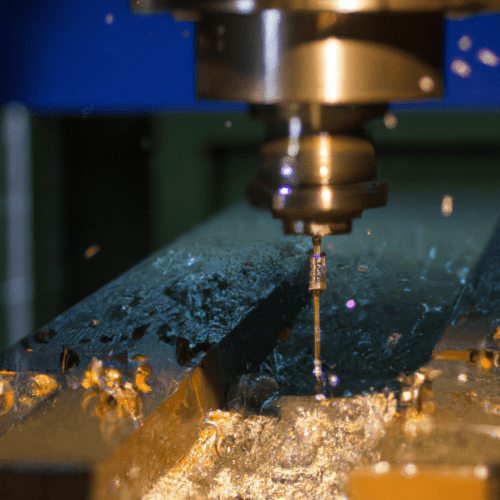
Metal milling is a fundamental subtractive manufacturing process that precisely removes material from a workpiece using rotating multi-point cutting tools. This method is essential for creating complex geometries, intricate features, and high-tolerance components across numerous industries.
Unlike additive manufacturing, which builds objects layer by layer, subtractive methods begin with a solid block of raw material and systematically cut away excess to achieve the desired shape. This high-precision machining relies on computer-aided design (CAD) models translated into machine-literate instructions via computer-aided manufacturing (CAM) software.
The Fundamentals of Metal Milling
Subtractive metal cutting involves the controlled removal of material from a solid workpiece to achieve a precise form. This process is critical for producing rugged, high-precision parts from various materials, including metals, plastics, wood, and composites.
Historically, subtractive machining was performed manually, but modern advancements have integrated Computer Numerical Control (CNC) technology, revolutionizing precision and automation. CNC milling machines, available as both horizontal and vertical machining centers, are widely used due to their ability to create detailed sizes and shapes.
These machines are equipped with advanced features such as automatic tool changers, tool carousels, and sophisticated coolant systems. They can produce precision components from a wide array of materials, including aluminum, steel, brass, titanium, and various engineering plastics.
Rotary Multi-Point Tooling and Mechanics
| Material | Machinability Rating (vs. C36000 Brass) | Typical Spindle Speed (RPM) Guidelines | Standard CNC Milling Tolerance |
|---|---|---|---|
| Aluminum (6061-T6) | 90–95% | 600-1200+ RPM (higher for softer alloys) | ±0.005″ (0.13 mm) |
| Stainless Steel (304) | 30–40% | 200-400 RPM (lower for harder alloys) | ±0.005″ (0.13 mm) |
| Brass (C36000) | 100% | Higher RPMs possible due to excellent machinability | ±0.005″ (0.13 mm) |
| Titanium (Grade 5) | 20–25% | Lower RPMs, specialized tooling | ±0.005″ (0.13 mm) |
Milling utilizes rotary multi-point cutting tools, commonly known as end mills, to remove material. These tools possess the unique ability to cut in lateral, axial, and radial directions, offering versatility for profiling, slotting, and contouring operations.
The selection of the appropriate cutting tool is paramount for achieving dependable CNC machining results, directly influencing surface finish, tool life, and machining accuracy. Tool materials like solid carbide, high-speed steel (HSS), and cobalt are chosen based on the workpiece hardness and machine capabilities.
Carbide tools, made from cemented carbide, are significantly harder and more heat resistant than HSS, allowing for higher cutting speeds and longer tool life. The number of flutes on an end mill also impacts performance; fewer flutes allow for better chip evacuation in softer materials, while more flutes increase tool strength for harder materials and finer finishes.
Feeds and speeds are critical parameters that directly influence cutting performance, tool wear, and surface finish. ‘Speed’ refers to the cutting tool’s rotational velocity (RPM), while ‘feed rate’ dictates how quickly the tool advances through the material. Proper calculation and adjustment of these parameters are essential to prevent tool breakage, poor finishes, or excessive wear.
Achieving High Precision and Surface Finish
High precision tolerance is a hallmark of modern CNC milling, enabling the production of parts with extremely tight dimensional control. Standard CNC machining tolerances typically range from ±0.127 mm to ±0.254 mm (±0.005″ to ±0.010″).
Precision machining services can achieve tighter tolerances, often within ±0.0254 mm to ±0.0508 mm (±0.001″ to ±0.002″). For critical applications in aerospace and medical devices, industry leaders routinely hold tolerances of 1-3 microns (±0.0001″ or better).
Surface finish generation is another critical aspect, measured commonly by Ra (roughness average) in micrometers (µm) or microinches (µin). A standard ‘as-machined’ surface finish for CNC milling typically falls around Ra 3.2 µm (125 µin), which is suitable for many general mechanical components.
Achieving smoother finishes, such as Ra 1.6 µm or better, requires fine stepovers, sharp carbide cutters, and optimized spindle speeds. Ultra-smooth finishes, like Ra 0.4 µm (often called a ‘mirror finish’), usually necessitate post-processing techniques like grinding, honing, or lapping, rather than standard milling alone.
Coolant Management and Chip Evacuation
Coolant chip flushing is a vital function of metalworking fluids in milling, alongside cooling and lubrication. Coolants reduce heat buildup in the cutting zone, minimize friction between the tool and workpiece, and effectively flush chips and abrasive particles away from the work area.
Various types of coolants are employed, including straight oils, soluble oils, semi-synthetics, and synthetics, each offering a different balance of cooling and lubrication properties. Water-based coolants excel at cooling and chip flushing, making them ideal for aluminum and high-speed milling.
Oil-based coolants, conversely, provide superior lubrication, which is crucial for difficult-to-machine alloys and operations like tapping or deep hole drilling. Proper coolant concentration, filtration, and consistent flow are essential for extending tool life and maintaining machining performance.
Modern Milling Practices and Tolerances
Modern CNC milling machines leverage advanced control systems and multi-axis capabilities, with many operating on three to five axes. This allows for sophisticated machining of extremely complex geometries that would be practically impossible with manual tooling.
Advanced roughing strategies, such as dynamic milling, optimize toolpaths by adapting the cutting tool’s arc of contact and average chip load. These techniques increase roughing speeds, control process temperature, and allow for higher feeds and depths of cut, significantly shortening machining cycle times.
Material selection is critical for CNC milling success, with common choices including aluminum, stainless steel, and brass. Aluminum (e.g., 6061-T6) is highly versatile due to its machinability and corrosion resistance, while stainless steel (e.g., 304, 316) offers high strength and corrosion resistance, albeit being harder to machine.
Brass (C36000) is considered one of the easiest metals to machine, providing excellent surface finishes and producing short, clean chips. The machinability rating, often referenced against C36000 brass at 100%, helps engineers select appropriate materials and adjust machining parameters.