
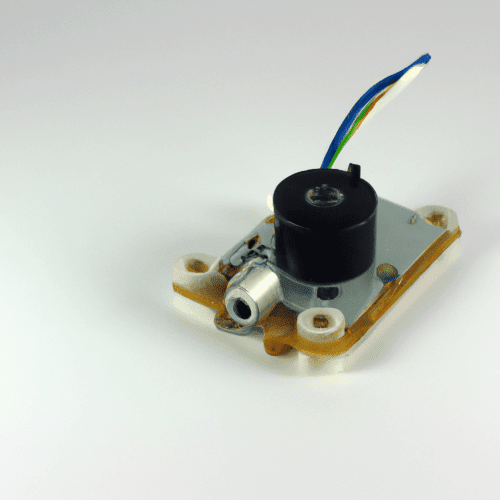
Selecting the appropriate motor for a Computer Numerical Control (CNC) system is critical for achieving desired precision, speed, and cost-effectiveness. Stepper motors and servo motors represent the two primary choices, each offering distinct operational characteristics and performance envelopes. Understanding their fundamental differences is essential for any tooling engineer designing or upgrading CNC machinery.
These motor types employ vastly different control philosophies, impacting everything from positional accuracy to dynamic response. The choice often hinges on the specific application requirements, including the required acceleration, maximum velocity, and the acceptable level of positional error.
Open-Loop versus Closed-Loop Feedback Systems
Stepper motors typically operate in an open-loop system, meaning the controller sends a series of electrical pulses, and the motor is expected to move a corresponding number of steps. There is no direct feedback mechanism to confirm if the motor actually reached the commanded position or if it encountered any resistance that prevented it from doing so.
This open-loop simplicity contributes to lower system cost and easier implementation. However, it also introduces the risk of ‘step loss’ if the motor’s load exceeds its torque capacity, leading to cumulative positional errors without the system’s knowledge. For applications where absolute position is critical and loads are unpredictable, this can be a significant drawback.
Servo motors, conversely, are integral components of closed-loop feedback systems. They incorporate an encoder, resolver, or Hall effect sensor that continuously monitors the motor’s actual position and velocity. This feedback is sent back to the servo drive, which then compares it to the commanded position.
Any discrepancy between the commanded and actual position generates an ‘error signal,’ prompting the servo drive to adjust the motor’s current and voltage to correct the position. This continuous feedback loop ensures high accuracy and dynamic response, making servo systems inherently more precise and reliable in demanding applications.
Holding Torque and Low-Speed Performance
| Feature | Stepper Motor | Servo Motor |
|---|---|---|
| Control Loop | Open-loop (typically) | Closed-loop (always) |
| Feedback | None (open-loop), Optional encoder (closed-loop stepper) | Encoder/Resolver (mandatory) |
| Holding Torque | High at standstill/low speed, passive | High across speed range, active control |
| High RPM Performance | Torque drops significantly, risk of step loss | Maintains torque, high velocity efficiency |
| Step Loss Detection | None (open-loop), Detected by encoder (closed-loop stepper) | Continuous error correction |
| Positional Accuracy | Good for light loads, can accumulate error | Excellent, real-time correction |
| Cost | Lower initial cost | Higher initial cost |
| Driver Complexity | Simpler (open-loop), Moderate (closed-loop stepper) | High, PID control |
| Typical Resolution | 1.8° (200 steps/rev) to 0.9° (400 steps/rev) full step, microstepping for finer resolution | Encoder dependent, often 10,000+ counts/rev for high precision |
Stepper motors exhibit excellent holding torque at standstill and very low speeds, even without active current regulation. This inherent characteristic is due to their design, where the rotor’s magnetic poles align with the stator’s energized poles, effectively ‘locking’ the motor in place.
This high static holding torque is advantageous for applications requiring precise positioning without constant power consumption, such as indexing tables or small-scale pick-and-place machines. As speed increases, however, a stepper motor’s available torque typically decreases significantly due to back EMF and inductance effects.
Servo motors, while also capable of high holding torque, achieve it through active current control within their closed-loop system. The servo drive continuously adjusts current to maintain the commanded position against external loads. This active control allows for precise torque delivery across a wider speed range.
At very low speeds, servo motors maintain their commanded position with high accuracy, actively compensating for disturbances. Their ability to deliver consistent torque across a broad speed spectrum makes them suitable for applications requiring both precise low-speed control and high-speed dynamic movements, such as contouring in CNC milling.
High RPM Velocity Efficiency and Step Loss Detection
When operating at higher rotational speeds (RPMs), servo motors generally demonstrate superior velocity efficiency. Their design allows them to maintain a significant portion of their rated torque even at high RPMs, enabling rapid acceleration and sustained high-speed operation. This makes them ideal for applications requiring fast traverse rates and quick cycle times, common in modern CNC machining centers.
Stepper motors, by contrast, experience a substantial drop in available torque as their speed increases. Beyond a certain RPM threshold, often referred to as the ‘pull-out torque’ limit, the motor can lose synchronization with the incoming pulses, resulting in step loss. This phenomenon severely limits their effective high-speed performance in demanding applications.
Step loss detection is a critical differentiator. In an open-loop stepper system, step loss goes undetected by the controller, leading to cumulative positional errors. Some advanced stepper drives incorporate ‘closed-loop stepper’ or ‘stepper with encoder’ systems, which add an encoder for position verification, mitigating this risk.
Servo systems inherently detect and correct positional errors, including those that would be equivalent to ‘step loss’ in a stepper motor. The continuous feedback loop ensures that any deviation from the commanded position is immediately identified and corrected by the servo drive, maintaining high accuracy throughout the operation.
Cost and Driver Complexity Considerations
The initial cost of stepper motor systems is generally lower than that of servo motor systems. Stepper motors themselves are simpler in construction, and their open-loop drivers are less complex, requiring fewer components and less sophisticated control algorithms. This makes them an attractive option for hobbyist CNC machines, 3D printers, and other cost-sensitive applications where extreme precision or high speeds are not paramount.
However, the total cost of ownership can sometimes narrow the gap, especially if advanced stepper drivers with closed-loop features are considered. These ‘closed-loop steppers’ bridge the performance gap but also increase the system’s complexity and price point, approaching entry-level servo systems.
Servo motor systems typically involve a higher initial investment due to the motor’s more complex construction, the integrated encoder, and the sophisticated servo drive. The servo drive itself is a powerful controller, executing complex Proportional-Integral-Derivative (PID) algorithms to manage the feedback loop and ensure precise control.
Despite the higher upfront cost and increased driver complexity, servo systems often offer better long-term value in industrial settings. Their superior performance, efficiency, and reliability can lead to higher productivity, reduced downtime, and lower maintenance costs over the lifespan of the machinery. The advanced diagnostics capabilities of servo drives also simplify troubleshooting.