
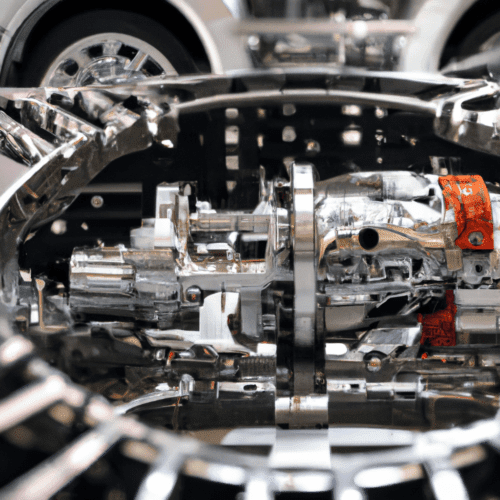
The electric vehicle industry relies heavily on advanced manufacturing processes to achieve its ambitious goals of efficiency and performance. Computer Numerical Control (CNC) machining stands as a cornerstone technology, enabling the production of intricate, high-precision components essential for modern EVs.
Lightweight EV Battery Enclosures
Manufacturing lightweight EV battery enclosures demands exceptional precision and material expertise. These enclosures, often crafted from aluminum alloys like 6061 or 7075, require complex machining to integrate cooling channels, mounting points, and sealing surfaces. CNC milling machines with high-speed spindles are critical for efficiently removing material while maintaining structural integrity.
Achieving tight dimensional tolerances, typically ±0.05mm to ±0.1mm for critical features, is paramount for battery safety and thermal management. Modern CNC strategies employ advanced toolpath optimization and dynamic milling techniques to minimize cycle times and tool wear. Specialized cutting tools with optimized geometries are used to manage chip evacuation and prevent material adhesion during high-volume production.
The design of these enclosures often incorporates thin walls and intricate internal structures to reduce weight without compromising strength. Five-axis CNC machining centers are frequently utilized to access complex geometries in a single setup, reducing fixturing requirements and improving overall accuracy. This multi-axis capability is vital for creating the integrated thermal management features necessary for optimal battery performance.
Electric Motor Rotor Machining
| Component Type | Typical Material | Key CNC Process | Standard Tolerance (Critical Features) |
|---|---|---|---|
| Battery Enclosure | Aluminum (6061, 7075) | 5-Axis Milling | ±0.05mm – ±0.1mm |
| Motor Rotor | Electrical Steel Laminations | High-Speed Turning/Grinding | ±0.005mm – ±0.01mm |
| Chassis Structural | Aluminum (6061-T6, 7075-T6) | Gantry Milling | ±0.1mm – ±0.2mm |
| Powertrain Gear | Case-Hardened Alloy Steel | Hobbing, Grinding | AGMA Quality 8-10 |
| Inverter Housing | Aluminum Die Castings | Multi-Spindle Milling | ±0.1mm – ±0.15mm |
Electric motor rotors are precision components that directly impact an EV’s efficiency and power output. Machining these parts, often involving laminated steel stacks or solid magnetic materials, requires specialized CNC techniques to achieve the necessary balance and concentricity. High-speed milling and turning operations are common for shaping the rotor’s outer diameter and internal features.
Maintaining extremely tight tolerances on rotor dimensions, often within microns, is crucial for minimizing air gap variations and preventing vibrations at high rotational speeds. Dynamic balancing, frequently integrated into the machining process or performed immediately after, ensures smooth operation and extends motor lifespan. Advanced CNC machines with integrated metrology systems can verify critical dimensions in-process.
The materials used for EV motor rotors, such as electrical steel laminations, present unique machining challenges due to their abrasive nature. Specialized carbide tooling with specific coatings is employed to withstand wear and maintain sharp cutting edges. Precision grinding operations are often used as a finishing step to achieve the required surface finish and dimensional accuracy for optimal electromagnetic performance.
Aluminum Structural Chassis Manufacturing
Aluminum structural chassis components are fundamental to reducing the overall weight of electric vehicles, directly impacting range and performance. CNC machining plays a vital role in producing these large, complex parts, which often include subframes, suspension mounts, and crash structures. Alloys like 6061-T6 and 7075-T6 are commonly machined due to their high strength-to-weight ratios.
Large-format gantry-style CNC milling machines are frequently employed for these components, capable of handling significant part sizes while maintaining high accuracy. Machining strategies focus on efficient material removal rates using high-feed milling cutters and robust workholding solutions to prevent deflection. Tolerances for critical mounting points and interfaces typically range from ±0.1mm to ±0.2mm.
The integration of multiple features, such as mounting bosses, threaded holes, and complex contours, often necessitates multi-axis machining capabilities. This allows for complete part machining in fewer setups, reducing cumulative errors and improving throughput. Advanced CAD/CAM software is essential for generating optimized toolpaths that account for material properties and machine kinematics.
Precision Gear Manufacturing
Precision gear manufacturing is indispensable for EV powertrains, ensuring efficient power transfer and quiet operation. CNC hobbing, shaping, and grinding machines are central to producing the helical and spur gears found in single-speed transmissions and reduction gearboxes. These processes demand exceptional accuracy in tooth profile, lead, and pitch.
Modern gear manufacturing often involves hard finishing processes like CNC gear grinding after heat treatment to achieve superior surface finishes and extremely tight tolerances. Profile and lead deviations are typically controlled to AGMA quality levels 8-10 or higher for optimal performance. Specialized cutting tools and grinding wheels are designed for specific gear geometries and materials.
Materials such as case-hardened alloy steels (e.g., 8620, 9310) are commonly used for EV gears due to their high strength and wear resistance. The precision of CNC machines allows for the consistent production of complex gear geometries, including internal gears and splines, which are critical for compact and efficient EV drivetrains. In-process measurement systems ensure continuous quality control.
High-Volume EV Components
Producing high-volume EV components necessitates highly automated and efficient CNC machining solutions. This includes parts like motor housings, inverter cases, brake components, and various brackets. The focus shifts to maximizing throughput, minimizing cycle times, and ensuring consistent quality across millions of units.
Multi-spindle and multi-pallet CNC machining centers are standard in high-volume EV production, allowing for continuous operation and reduced idle times. Robotic automation for part loading, unloading, and tool changes is widely implemented to further enhance efficiency and reduce labor costs. Lights-out manufacturing is a common goal in these facilities.
Tooling strategies for high-volume production emphasize long tool life, rapid tool change capabilities, and robust process stability. Predictive maintenance and tool monitoring systems are integrated to prevent unexpected downtime. Standardized fixtures and quick-change tooling systems are also crucial for maintaining production schedules.