
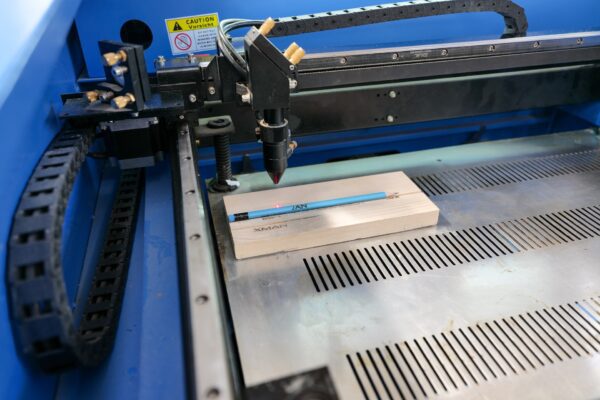
Computer Numerical Control (CNC) machines have fundamentally transformed manufacturing, offering unparalleled precision and repeatability across diverse applications. These automated systems execute complex machining tasks with minimal human intervention, significantly enhancing efficiency and accuracy compared to traditional methods. Modern CNC systems provide multi-axis coordinated control, tool position compensation, and real-time monitoring, enabling the production of intricate geometries and high-precision components.
The versatility of CNC technology extends from industrial-scale production to small business and hobbyist applications. Users can leverage these machines to work with a wide array of materials, including various metals, plastics, and composites. This adaptability makes CNC machines indispensable for companies aiming to improve product quality and streamline their operational workflows.
Empowering Custom Furniture Design
CNC routers are instrumental in modern furniture manufacturing, allowing for the creation of highly customized designs with exceptional precision. Designers can translate intricate digital models into physical components, achieving complex carvings, unique angles, and seamless joinery that would be challenging or impossible with manual techniques. This capability supports both bespoke furniture pieces and consistent mass production.
Material versatility is a significant advantage, as CNC routers effectively process hardwoods, softwoods, plywood, MDF, and laminated woods. The automated control ensures consistent quality across all pieces, minimizing inconsistencies often found in handcrafted items. This precision also optimizes material usage, reducing waste and contributing to more cost-effective and sustainable production practices.
Specific tooling, such as ball nose bits for contouring and 3D carving, and spiral bits for straight cuts, further expands design possibilities. Typical spindle speeds for woodworking range from 16,000 to 18,000 RPM for general-purpose cutting with 1/4″ bits, with feed rates between 80-120 IPM for hardwoods and 100-140 IPM for plywood.
Precision for Automotive Replacement Parts
| Material | Typical Spindle Speed (RPM) | Typical Feed Rate (IPM) | Standard Tolerance (mm) |
|---|---|---|---|
| Hardwood | 16,000-18,000 | 80-120 | ±0.13 (Router) |
| Plywood | 16,000-18,000 | 100-140 | ±0.13 (Router) |
| Aluminum (6061) | 16,000-24,000 | 20-50 | ±0.05 (Milling) |
| Engineering Plastics | 18,000-24,000 | 60-120 | ±0.05 (Milling) |
CNC machining is critical for producing automotive components that demand high precision, smooth finishes, and tight tolerances. These parts must withstand constant vibration, heat, and wear, making repeatable dimensional accuracy essential for proper fit, sealing, and long-term performance. CNC systems are utilized for both prototyping and mass production of vehicle parts.
Common raw materials for CNC automotive machining include aluminum alloys, stainless steel, carbon steel, brass, titanium, and engineering plastics like POM, nylon, and PEEK. Aluminum is frequently chosen for lightweight housings and brackets, while stainless steel offers corrosion resistance for fasteners and exposed components.
Achieving precise tolerances is paramount in automotive applications. Many critical features on CNC auto components can be held to tolerances around ±0.01 mm to ±0.05 mm, depending on the material, part geometry, and machine setup. For instance, a sensor seat often requires tighter control than a decorative trim bracket.
Accelerating In-House Product Prototyping
In-house CNC prototyping offers significant advantages over outsourcing, particularly in terms of speed and control over design iterations. Rapid prototyping with CNC machines allows product designers to quickly fabricate and test physical models directly from 3D CAD files, drastically shortening development cycles. This immediate feedback loop is invaluable for refining designs efficiently.
CNC machining excels in creating prototypes from solid, functional materials, providing mechanical properties highly similar to those of final production parts. This contrasts with some additive manufacturing methods, where material properties might differ. A wide range of strong materials, including various metals and engineering plastics, can be used for prototypes.
While the initial investment in CNC machinery can be substantial, the ability to iterate quickly and maintain intellectual property control often justifies the cost for businesses with consistent prototyping needs. However, it is important to consider that CNC machines require a dedicated workspace and more operational knowledge compared to desktop 3D printers.
Generating Revenue with a Side Business
A CNC machine can be a powerful tool for generating significant side business revenue, with the global CNC machine market projected to reach over $250 billion by 2034. Profitable opportunities often involve creating customizable, easy-to-reproduce products with high perceived value. Custom woodworking services, metal processing, and prototype fabrication are among the most lucrative areas.
Custom wooden signs remain a consistently popular product, with demand from homeowners, businesses, and event organizers. Other successful ventures include personalized gifts, engraved items, and small-batch machining services for local businesses. The ability to offer unique, personalized items allows for premium pricing and differentiation in the market.
Scaling a CNC side business involves optimizing production time and exploring various niches. Many successful CNC makers focus on business-to-business (B2B) clients, who often provide larger and more consistent orders for items like reception signs, lobby branding, and trade show displays.
Significant Reduction in Outsourced Part Costs
Bringing CNC machining in-house can lead to substantial cost reductions, particularly for high-volume and stable demand production. While outsourcing may seem cheaper for low-to-mid volume parts due to avoided equipment and labor costs, in-house production becomes cost-competitive when machine utilization consistently exceeds 70%. Many small manufacturers achieve a break-even point within 18-24 months.
Outsourcing often involves hidden costs such as setup fees, programming charges, material markups, and risks associated with quality control and lead time dependency. In-house operations eliminate these variables, providing direct control over the entire production process and reducing the risk of costly errors or delays.
A formal ‘make-or-buy’ analysis is recommended if annual outsourcing spend on a single machine platform exceeds $400,000-$500,000. This threshold often indicates that the fixed costs of an in-house setup would be offset by the variable cost savings and increased operational efficiency.
Key Technical Considerations for CNC Operations
Optimizing CNC operations requires a thorough understanding of feeds, speeds, and tooling. Spindle speed (RPM), feed rate (IPM or mm/min), and depth of cut (DOC) are critical parameters that must be balanced for efficient material removal, desired surface finish, and tool longevity. Incorrect settings can lead to poor cut quality, tool wear, or even breakage.
Modern CNC machines often feature automatic tool changers, auto probing, integrated cameras, and intelligent software, which enhance precision and reduce setup times. Selecting the right machine configuration, spindle performance, and tool capacity is crucial for matching specific part dimensions, materials, and production demands.
Standard machining tolerances typically range from ±0.005″ (±0.127 mm) for general-purpose parts to ±0.002″ (±0.051 mm) for high-precision applications. For critical features like reamed holes, tolerances can be as tight as ±0.0005″ (±0.0127 mm). These values vary based on material, geometry, and the specific CNC process employed.
These parameters are starting points; actual optimal settings depend on specific tooling, machine rigidity, and desired surface finish. Always conduct test cuts in scrap material and adjust settings based on observed chip shape and cut quality. Proper chip evacuation and cooling are also vital, especially when machining metals like aluminum, to prevent material melting and tool clogging.