
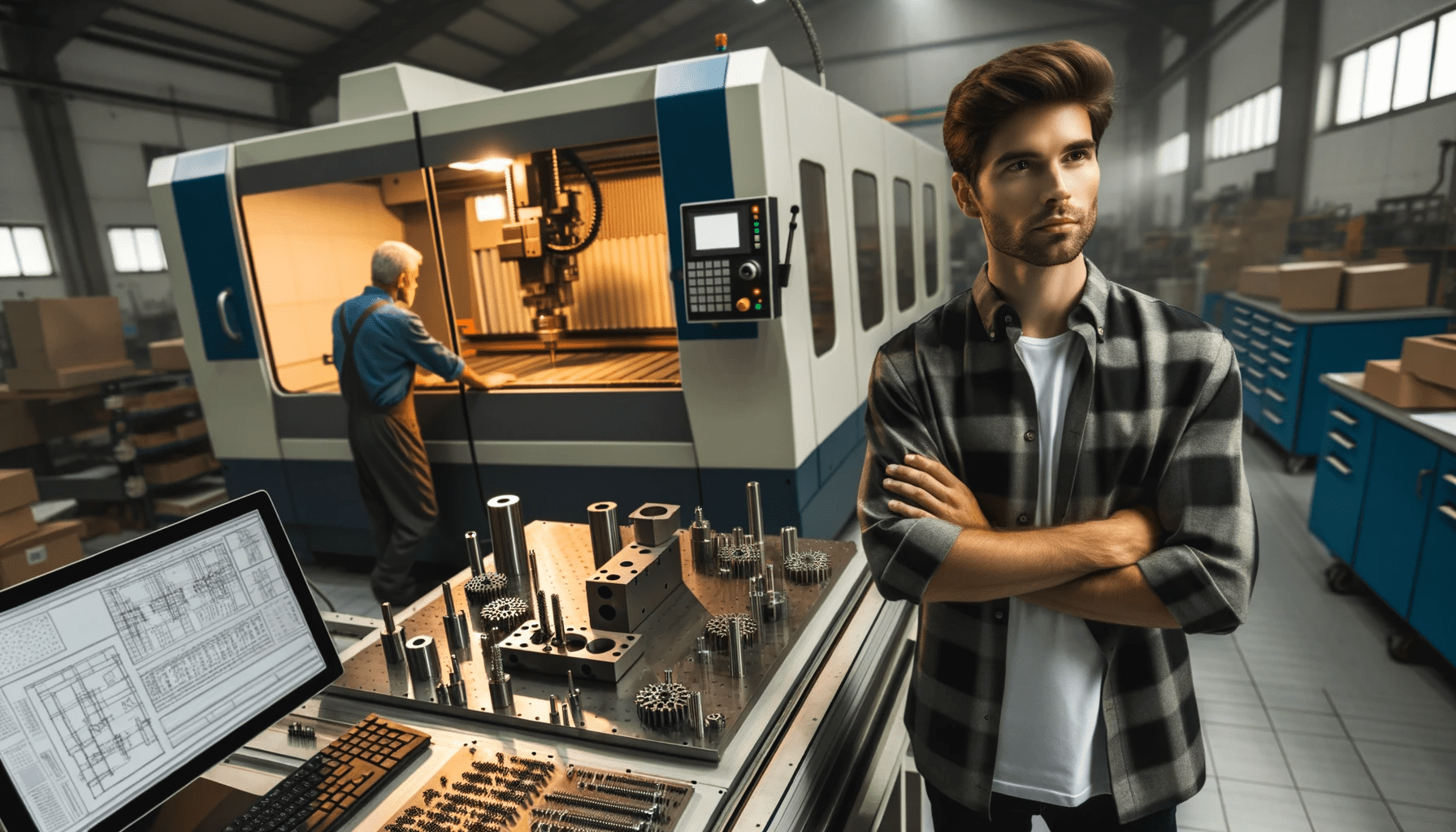
The CNC machining industry continues its rapid digital transformation, with 2023 marking significant advancements in automation and connectivity. Manufacturers are increasingly integrating intelligent systems to enhance efficiency, reduce costs, and maintain a competitive edge in the global market. This shift is driven by the need for 24/7 production capabilities, improved consistency, and enhanced safety across various manufacturing sectors.
Robotic Cell Loading and Automated Part Handling
Robotic cell loading systems are becoming a cornerstone of modern CNC operations, enabling continuous, unattended production. These systems utilize industrial robots or collaborative robots (‘cobots’) to load and unload workpieces, significantly increasing machine availability and reducing downtime.
Automated part loading extends beyond simple robotic arms, incorporating various mechanisms like gantries, conveyors, and pallet changers. These solutions streamline material handling, ensuring a consistent flow of parts to and from CNC machines. Systems like the LineLoad Conveyor System even enable automated loading for 5-axis CNC machines, bringing parts within reach of spindle grippers.
Integrating these automated solutions allows operators to manage multiple CNC machines simultaneously, shifting their focus from repetitive manual tasks to higher-value activities. This optimization of labor resources contributes to overall productivity gains and improved workplace safety.
Many robotic loading systems are designed with modular architectures, allowing for scalability and flexibility. Manufacturers can expand pallet spaces, add machines, or adapt to varying part shapes and sizes, making them suitable for both high-volume series production and small batch runs with high part variety.
Cloud-Connected CNC Systems
| Process | Standard Tolerance (mm) | Standard Tolerance (inches) | Precision Tolerance (mm) | Precision Tolerance (inches) |
|---|---|---|---|---|
| 3-axis CNC Milling | ±0.13 | ±0.005 | ±0.025 – ±0.01 | ±0.001 – ±0.0004 |
| 5-axis CNC Milling | ±0.13 | ±0.005 | ±0.025 – ±0.01 | ±0.001 – ±0.0004 |
| CNC Lathe/Turning | ±0.13 | ±0.005 | ±0.025 – ±0.01 | ±0.001 – ±0.0004 |
| Angular Tolerances | ±0.5° | ±0.5° | ±0.25° | ±0.25° |
Cloud-connected CNC systems represent a significant leap in manufacturing intelligence, centralizing data management and enabling real-time operational visibility. This connectivity allows machines to share data continuously, providing insights into performance, temperature, vibration, and tool wear.
These systems facilitate remote monitoring and diagnostics, allowing manufacturers to track machine status, job progress, and operator activity from anywhere. This real-time data flow helps identify issues proactively, preventing costly downtime and optimizing production schedules.
Cloud-based platforms also support predictive maintenance by analyzing machine condition data and trends, triggering alerts or work orders before failures occur. This proactive approach minimizes unplanned stoppages and extends the lifespan of valuable equipment.
Furthermore, cloud CNC/CAM software enhances programming efficiency by centralizing tool data, offering AI-assisted machining strategies, and providing on-demand compute for simulations. This reduces programming time and ensures consistent outputs across different teams and facilities.
Smart Shop Floor Integration
Smart shop floor integration is the seamless connection of all machines, systems, sensors, and user interfaces within a manufacturing environment. This creates a cohesive ecosystem where data flows freely, enabling informed decision-making and optimized production workflows.
This integration often involves connecting CNC machines with Manufacturing Execution Systems (MES) and Enterprise Resource Planning (ERP) software. MES acts as a bridge, translating ERP work orders into executable schedules and collecting real-time production data from the shop floor.
Artificial intelligence (AI) and machine learning (ML) play a growing role in optimizing smart shop floor operations. AI-driven algorithms analyze vast amounts of data to identify patterns, predict maintenance needs, and optimize cutting parameters, leading to reduced downtime and increased productivity.
A fully integrated smart shop floor improves overall equipment effectiveness (OEE), enhances traceability, and ensures consistent process control. It moves beyond manual data collection, providing live, automated insights that drive continuous improvement and operational resilience.
Industrial IoT Sensors for Enhanced Machining
Industrial Internet of Things (IIoT) sensors are critical components in achieving enhanced machining capabilities by providing real-time data on machine and process parameters. These sensors are embedded directly into CNC machines or retrofitted to existing equipment.
Various sensor types are deployed, including vibration sensors for spindle monitoring, temperature sensors for thermal compensation, and current sensors for power consumption analysis. Acoustic emission sensors can also detect subtle changes indicative of tool wear or impending issues.
The data collected from these sensors is processed using machine learning algorithms to optimize machining parameters, predict tool wear, and inform predictive maintenance schedules. This proactive monitoring significantly reduces waste, increases efficiency, and improves product quality.
IoT sensor integration also contributes to improved precision and automation. Some CNC machines can even adjust themselves based on real-time sensor data for optimal performance, ensuring consistent quality and reducing the need for manual intervention.
Modern Engineering Practices and Tolerances
Modern CNC machining demands increasingly tighter tolerances, with precision manufacturing capabilities now extending into the micron range. Achieving these stringent requirements relies heavily on advanced machine capabilities and sophisticated engineering practices.
Standard CNC machining tolerances typically range from ±0.125 mm (±0.005 inches) for most linear dimensions, while precision machining services operate within ±0.0254 mm to ±0.0508 mm (±0.001 inches to ±0.002 inches). Industry leaders can achieve tolerances as tight as ±0.0025 mm (±0.0001 inches) or even 1-3 microns for critical applications in aerospace and medical devices.
Optimizing feeds and speeds is crucial for achieving desired tolerances, surface finishes, and tool life. This involves balancing factors like material properties, tool geometry, chip load, and coolant management. Data-driven adjustments and simulations are increasingly used to fine-tune these parameters.
Advanced CNC toolpath strategies, often generated by AI-powered CAM software, maintain consistent tool engagement and cutting forces. This reduces vibration, minimizes tool deflection, and controls heat buildup, all of which are critical for achieving high precision.