
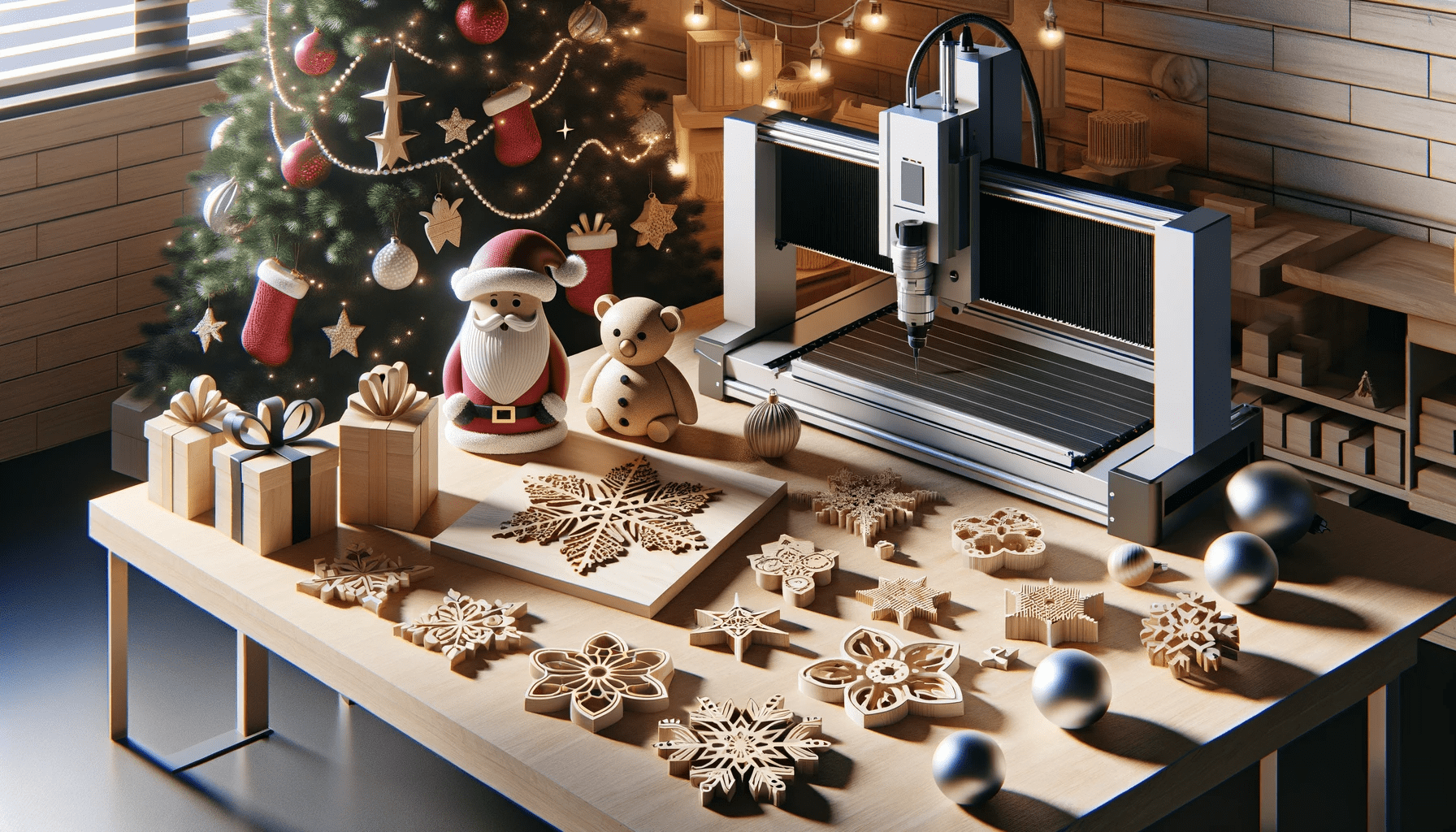
The holiday season presents a significant opportunity for CNC shops to generate substantial revenue through specialized product manufacturing. Consumer spending on Christmas decorations and gifts reached $729.1 billion in 2019, indicating a robust market with built-in demand for unique, festive items.
Leveraging CNC technology allows for the efficient production of both custom and batch-processed holiday decor, catering to diverse customer needs from individual personalized ornaments to large-scale commercial installations. Precision and repeatability are inherent advantages, ensuring high-quality output across all product lines.
Leveraging CNC for Holiday Product Manufacturing
CNC routers and mills are indispensable tools for holiday product manufacturing, offering unparalleled accuracy and speed in material processing. Shops can quickly transition from design concepts to physical products, meeting tight seasonal deadlines. This capability is crucial for capitalizing on peak demand periods.
Material selection plays a vital role in holiday decor, with wood and acrylic being primary choices. Wood, including pine, cedar, birch plywood, and MDF, provides a rustic aesthetic, while acrylic offers modern finishes with vibrant colors and excellent light-catching properties.
Crafting Exquisite CNC Wood Ornaments
| Material | Bit Type (Example) | Spindle Speed (RPM) | Feed Rate (IPM) | Depth of Cut (DOC) | Notes |
|---|---|---|---|---|---|
| Plywood (1/4″ Baltic Birch) | 1/8″ Downcut / Compression | 16,000 – 18,000 | 100 – 140 | Up to full thickness (compression bit) | Use compression bits for clean top/bottom edges. |
| Hardwood (Oak, Maple) | 1/4″ Upcut Spiral | 16,000 – 18,000 | 80 – 120 | 0.5x bit diameter | Avoid dwelling to prevent burn marks. |
| Cast Acrylic (3mm) | Single Flute End Mill | 12,000 – 18,000 | Fast enough for chip evacuation | 1 – 2 mm (shallow passes) | Air assist is essential to prevent melting. |
| MDF | 1/4″ Upcut Spiral | 16,000 – 18,000 | 100 – 140 | Up to 1x bit diameter | Generates dust; check bit heat. |
Creating intricate wood ornaments with a CNC router requires careful consideration of material, tooling, and machine parameters. Baltic birch plywood, typically 1/8-inch or 3-4mm thick, is a popular choice due to its stability and fine grain, making it ideal for detailed cuts.
Router bit selection is critical for achieving clean edges and intricate designs. V-groove bits are excellent for crisp lettering and fine lines, while engraving bits provide precision for detailed patterns. For 3D carving, ball nose bits are essential for smooth contours. Compression bits are recommended for plywood to prevent delamination on both top and bottom surfaces.
Optimal feeds and speeds are paramount to prevent burning, chipping, or tool breakage. For general-purpose cutting with 1/4-inch bits in wood, spindle speeds typically range from 16,000 to 18,000 RPM. Feed rates for hardwoods like oak or maple are often between 80-120 IPM, while plywood can handle 100-140 IPM.
The depth of cut (DOC) should generally not exceed the bit’s diameter for softwoods and 0.5x the bit diameter for hardwoods. For slotting (full-width cuts), reducing DOC to 0.5x diameter is advisable to manage tool load. Maintaining an appropriate chip load, the amount of material removed per tooth per revolution, is key to efficient cutting and tool longevity.
Standard tolerances for decorative wood items are less stringent than for functional components, typically falling within ±0.005 inches (±0.127 mm). However, for parts requiring precise assembly or intricate interlocking features, tighter tolerances of ±0.002 inches (±0.050 mm) may be necessary.
Innovative Festive Craft Ideas with CNC
Beyond traditional ornaments, CNC machines enable a wide array of festive craft projects. Custom signs with V-carved lettering, personalized gift boxes, multi-layered wall art, and even intricate advent calendars are highly marketable items. Materials like basswood and walnut are excellent for 3D carved nativity scenes, utilizing roughing passes with flat end mills and finishing passes with ball nose bits.
Acrylic also offers unique possibilities for holiday crafts, including light-up displays and layered ornaments. When engraving acrylic, medium spindle speeds (12,000–18,000 RPM) and shallow passes (1–2 mm) are recommended to prevent melting and ensure smooth edges. Air assist is crucial for cooling and chip evacuation during both cutting and engraving operations.
For laser engraving acrylic, cast acrylic is preferred as it frosts white, making designs sharp and visible. Extruded acrylic is better for cutting. Optimal laser settings for engraving typically involve 100% power and speeds of 500–1500 mm/min, while cutting requires slower speeds or multiple passes with air assist.
Commercial Holiday Decor Production Strategies
Scaling production for commercial holiday decor demands efficient strategies, particularly in workholding and finishing. Custom jigs and fixtures are essential for securing workpieces, ensuring repeatable positioning, and streamlining batch processing. These tools reduce human error and significantly increase efficiency for large runs.
Designing effective fixtures involves confirming critical tolerances, applying the 3-2-1 principle for workpiece constraint, and ensuring clamps are placed on rigid sections away from tool paths. Proper chip evacuation and unambiguous loading mechanisms are also vital for continuous operation.
Finishing processes are critical for the aesthetic appeal and durability of commercial holiday decor. Options include sanding, wood wax oil, painting, and clear coats. For V-carved projects, sealing the surface before paint-filling prevents bleed, and scuff-sanding after curing ensures a smooth finish.
The commercial holiday decor market is substantial, with companies offering custom design services for large-scale installations in municipalities, shopping centers, and businesses. These often involve durable, weather-resistant materials like commercial-grade fiberglass for outdoor displays, ensuring longevity across multiple seasons.
Small Shop Seasonal Profit Maximization
Small CNC shops can maximize seasonal profits by focusing on unique, eye-catching products and optimizing their production workflow. Personalized items, such as ornaments with engraved names or dates, command higher price points and foster repeat business.
Effective marketing through online platforms, local craft fairs, and direct-to-business sales channels is crucial. Pricing strategies should account for material costs, machine time, labor, and perceived value, rather than solely relying on cost-plus formulas.
Optimizing machine time involves nesting multiple parts on a single sheet of material to reduce waste and increase output. Efficient toolpath generation and proper feeds and speeds minimize cycle times and extend tool life, directly impacting profitability. Diversifying product offerings beyond simple ornaments to include larger decor items or custom gifts can also expand market reach.