
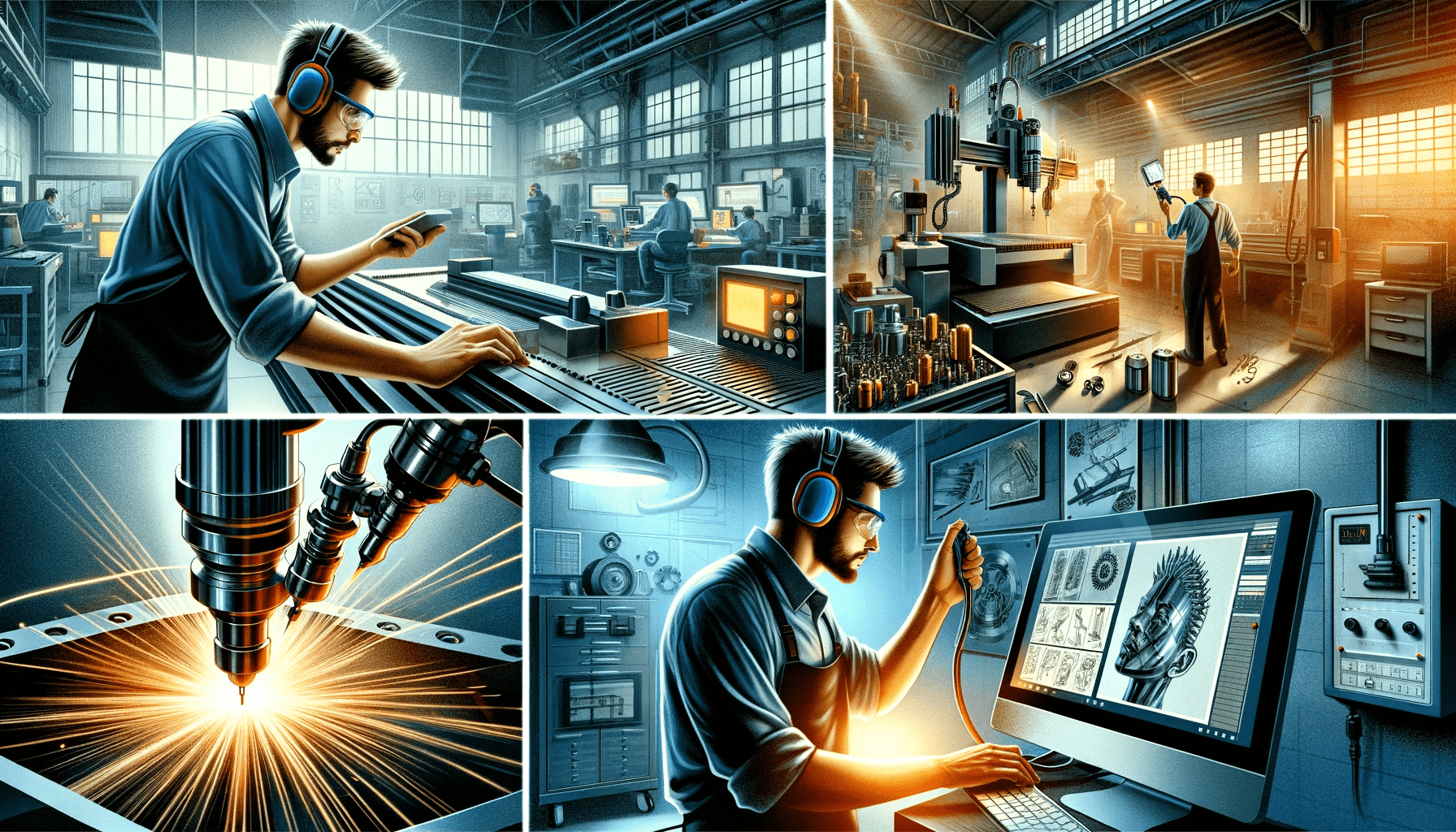
Manufacturing medical devices demands uncompromising precision and reliability, directly impacting patient safety and treatment efficacy. CNC machining stands as a cornerstone technology, enabling the creation of intricate components with the exacting tolerances required for implantable devices and surgical instruments.
The stringent requirements of the medical sector necessitate advanced machining strategies, specialized tooling, and a deep understanding of biocompatible materials. Every stage, from design to final inspection, must adhere to rigorous quality management systems to ensure consistent, high-quality output.
Micro-Machining for Intricate Medical Tools
Micro-machining techniques are essential for producing the minute, complex features found in many modern medical tools and implants. These processes often involve working with feature sizes in the micron range, demanding exceptional machine stability and precise motion control. Typical applications include components for catheters, endoscopic instruments, and micro-surgical tools.
Achieving these minute geometries requires specialized micro-end mills, micro-drills, and custom cutting tools, often with diameters below 0.1 mm. Tool runout must be minimized to nearly zero, and spindle speeds can reach upwards of 50,000 RPM to maintain optimal surface finish and chip evacuation.
Surface finish is critically important in micro-machined medical parts, as even microscopic imperfections can affect device performance or biocompatibility. Ra values often need to be below 0.2 µm, sometimes even lower, necessitating careful selection of cutting parameters and post-machining polishing or deburring processes.
Adhering to ISO 13485 Quality Standards
| Material | Cutting Speed (m/min) | Feed Rate (mm/tooth) | Tool Material | Coolant Type |
|---|---|---|---|---|
| Ti-6Al-4V ELI | 30-70 | 0.05-0.15 | Carbide (PVD coated) | High-pressure flood (water-soluble) |
| PEEK | 150-300 | 0.08-0.20 | Carbide (uncoated/DLC) | Air blast or flood (water-soluble) |
| 316L Stainless Steel | 80-150 | 0.06-0.18 | Carbide (TiAlN coated) | Flood (water-soluble) |
Compliance with ISO 13485 is non-negotiable for medical device manufacturers and their suppliers, including CNC machining facilities. This international standard outlines comprehensive requirements for a quality management system specific to the medical device industry, ensuring product safety and effectiveness.
Machining operations must incorporate robust process validation, demonstrating that the manufacturing process consistently produces parts meeting specifications. This includes documenting machine setup, tooling, environmental controls, and operator training. Traceability of materials, processes, and personnel is also a fundamental requirement.
Risk management is integrated throughout the machining workflow, identifying potential failures and implementing controls to mitigate them. Continuous improvement initiatives, driven by data analysis and feedback, are vital for maintaining compliance and enhancing manufacturing efficiency and product quality over time.
Advanced Machining of Complex Spinal Implants
Spinal implants, such as pedicle screws, rods, and interbody fusion devices, present significant machining challenges due to their complex geometries, tight tolerances, and critical surface finish requirements. These devices often feature intricate threads, anatomical curves, and porous structures designed for bone ingrowth.
Materials like titanium alloys (e.g., Ti-6Al-4V ELI) and PEEK (polyether ether ketone) are commonly used for spinal implants due to their biocompatibility and mechanical properties. Machining these materials requires specific strategies to manage heat generation, tool wear, and chip control, which can be particularly challenging with titanium’s low thermal conductivity.
Multi-axis CNC machining, particularly 5-axis simultaneous machining, is indispensable for creating the complex contours and undercuts found in spinal implants. This allows for complete part machining in fewer setups, reducing cumulative error and improving overall accuracy and surface integrity.
High-Precision Swiss Machining for Small Components
Swiss-type machining, also known as Swiss turning, is a highly effective method for producing small, intricate medical components with exceptional accuracy and surface finish. These machines feature a sliding headstock and a guide bushing, providing rigid support close to the cutting zone, which minimizes deflection and vibration.
This machining approach is ideal for parts requiring tight diameter and concentricity tolerances, often within ±0.005 mm (±0.0002 inches) or even tighter. Common medical applications include bone screws, dental implants, connectors for surgical instruments, and components for drug delivery systems.
Modern Swiss machines often incorporate multiple axes and live tooling, enabling complex milling, drilling, and tapping operations to be performed simultaneously with turning. This capability reduces the need for secondary operations, streamlining production and enhancing overall part quality and consistency.
Biocompatible Materials and Their Machinability
The selection of biocompatible materials is paramount in medical device manufacturing, dictating both the device’s function and its interaction with the human body. Common materials include titanium alloys, stainless steels (e.g., 316L), cobalt-chrome alloys, and high-performance polymers like PEEK. Each presents unique machining characteristics.
Titanium alloys, particularly Ti-6Al-4V ELI (Extra Low Interstitial), are widely used for implants due to their excellent strength-to-weight ratio and corrosion resistance. However, their low thermal conductivity and high chemical reactivity with cutting tools necessitate low cutting speeds, high feed rates, and abundant coolant to prevent work hardening and tool wear.
PEEK is a high-performance thermoplastic known for its radiolucency, mechanical properties similar to bone, and chemical inertness. Machining PEEK requires sharp tools, moderate cutting speeds, and careful chip management to avoid melting or burr formation. Air blast or water-soluble coolants are typically employed to dissipate heat effectively.