
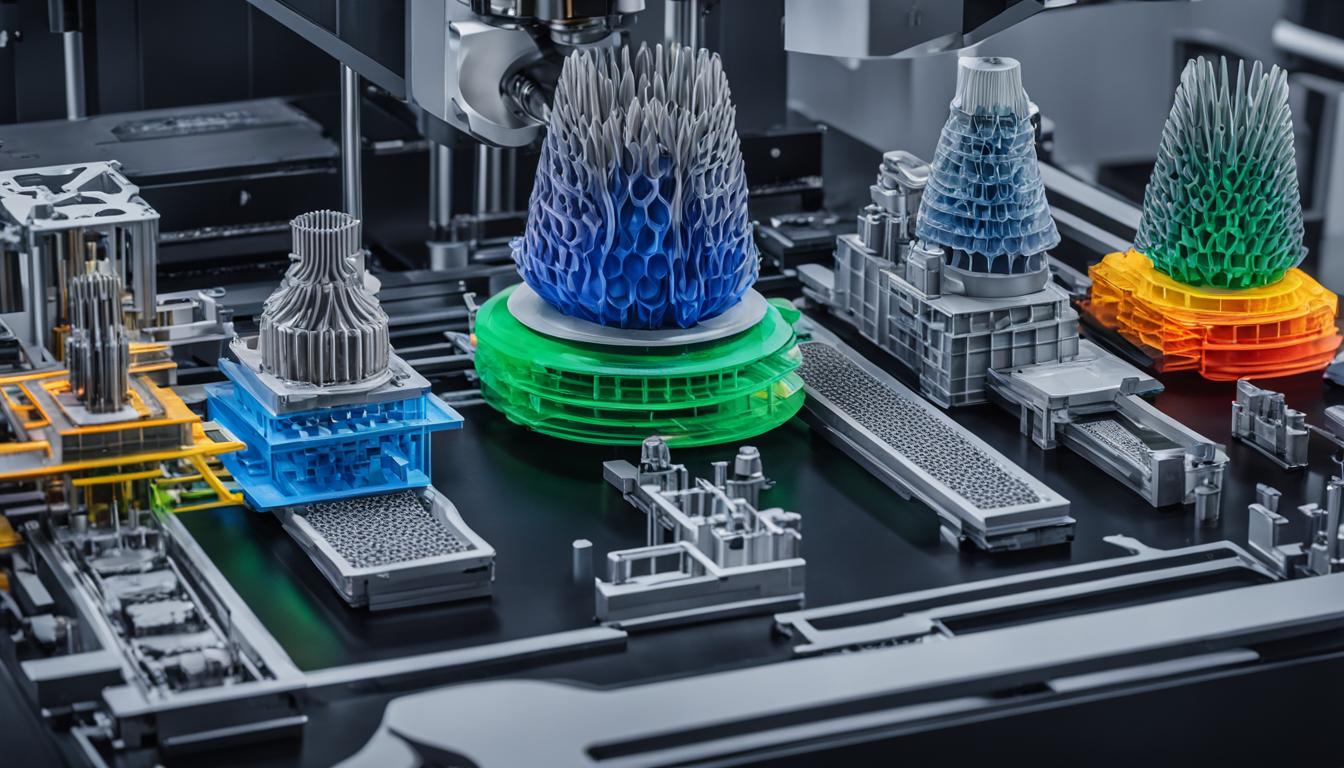
3D Systems Corporation, co-founded by Chuck Hull, the inventor of stereolithography, has been a driving force in additive manufacturing since its inception in 1986. The company engineers, manufactures, and sells 3D printers, materials, and application engineering services globally.
This pioneering firm creates product concept models, precision prototypes, master patterns for tooling, and production parts for direct digital manufacturing. Their comprehensive portfolio of technologies provides a seamless, customizable workflow, optimizing products and processes while accelerating outcomes across various industries.
The Genesis of Stereolithography
Stereolithography (SLA) stands as the first commercialized 3D printing technology, a groundbreaking invention by Chuck Hull in the early 1980s. Hull filed his patent for the Stereolithography Apparatus (SLA) in 1984, leading to the co-founding of 3D Systems in 1986 to commercialize this innovation.
The SLA process utilizes an ultraviolet laser to precisely cure photopolymer cross-sections, transforming liquid resin into solid layers. Parts are built directly from CAD data, layer-by-layer, forming prototypes, investment casting patterns, tools, and end-use components. Post-processing typically involves cleaning in a solvent solution and further curing in a UV oven.
Modern SLA systems, such as 3D Systems’ SLA 750 and SLA 750 Dual, offer significant advancements. The SLA 750 Dual, for instance, is the world’s first synchronous dual-laser SLA printer, capable of delivering up to twice the speed and triple the throughput of earlier SLA models. These machines integrate proprietary scan algorithms like Hyper-Scan™ vector technology for enhanced efficiency.
Another notable SLA variant is 3D Systems’ Figure 4 technology, which employs projector-based imaging and non-contact membrane technology. This approach cures an entire layer of liquid resin simultaneously, enabling ultra-fast print speeds and high-resolution output, particularly for direct digital production of precision plastic parts.
Advancements in Selective Laser Sintering
| Technology | Typical Tolerance (Small Features) | Typical Layer Thickness | Key Material Types |
|---|---|---|---|
| SLA (Stereolithography) | ±0.1 – 0.2 mm | 50-150 µm | Photopolymers (resins) |
| SLS (Selective Laser Sintering) | ±0.2 mm or ±0.3% | 80-150 µm | Nylon (PA11, PA12), TPE, TPU, PP |
| DMP (Direct Metal Printing) | ±0.1 – 0.2 mm | 20-60 µm | Titanium, Stainless Steel, Maraging Steel, Cobalt Chrome, Aluminum, Nickel Alloys |
Selective Laser Sintering (SLS) is another foundational additive manufacturing technology, with its patent issued in 1989. This powder bed fusion method uses a high-power laser to sinter small particles of polymer powder, typically nylon, into solid structures layer by layer.
SLS technology is highly valued for producing tough, functional parts with excellent mechanical properties, resolution, and surface finish. A significant advantage of SLS is its ability to print without support structures, as the unsintered powder acts as its own support, allowing for complex geometries and functional moving parts without assembly.
3D Systems’ SLS 380 printer exemplifies current SLS capabilities, offering production-grade nylon materials and advanced software workflows for direct 3D production. This system provides consistent mechanical properties and high production speeds, up to 2.7 liters per hour.
The SLS 380 also features closed-loop thermal management with eight zone heater control and an integrated high-resolution IR camera. This ensures consistent thermal uniformity throughout the build process, leading to improved dimensional and mechanical performance for batch jobs and higher yields.
Precision in Direct Metal 3D Printing
Direct Metal 3D Printing (DMP), often referred to as Direct Metal Laser Sintering (DMLS), is an additive manufacturing technology that builds high-quality, complex metal parts from 3D CAD data. A high-precision laser selectively melts metal powder particles, creating thin horizontal layers.
This technology enables the production of metal parts with challenging geometries that are often impossible to achieve with traditional subtractive or casting methods. DMP offers complete design freedom, allowing for lightweight, durable, and high-performing components.
3D Systems’ DMP printers utilize a vacuum chamber architecture to maintain oxygen exposure below 25ppm during the entire print build, which is critical for materials like titanium alloys. This controlled environment ensures consistent part properties and nearly 100% powder usage.
Standard tolerances for metal 3D printing (DMLS/SLM) typically range from ±0.1–0.2 mm, with layer thicknesses commonly between 20–60 µm. Achieving tighter tolerances often requires careful design, part orientation, and post-processing, including finish machining for critical surfaces.
Transforming Medical Healthcare with Additive Solutions
3D Systems has leveraged decades of 3D printing experience to provide industry-leading surgical planning, implants, instrumentation, and medical education solutions. These innovations help medical device manufacturers and healthcare providers accelerate innovation and transform patient care.
The company’s VSP® surgical planning solutions combine best-in-class digital workflows with a broad additive manufacturing portfolio. This enables comprehensive patient-matched solutions, translating virtual surgery into the operating room and personalizing outcomes for improved patient experiences.
Applications for point-of-care 3D printing are extensive, including individualized cranial and orbital plates, cutting guides for corrective osteotomy or tumor resection, and patient-matched bolus for radiotherapy targeting. Anatomic models for patient education and surgical planning are also routinely produced.
3D Systems offers a range of biocompatible and sterilizable materials for healthcare applications, which have undergone extensive quality and regulatory testing. Their expertise extends to bioprinting technologies, pushing the limits of regenerative medicine by enabling the fabrication of living tissues.
Enterprise-Grade Additive Manufacturing Systems
Enterprise additive systems from 3D Systems are designed for industrial-scale production, offering robust solutions for various manufacturing needs. These systems provide the accuracy, reliability, repeatability, and uptime typically associated with traditional molding processes, but without the time or cost of tooling.
The Figure 4 platform, for example, delivers ultra-fast additive manufacturing with expandable capacity, enabling direct digital production of precision plastic parts. This technology complements traditional production methods, offering tool-less alternatives to injection molding or urethane casting.
For metal additive manufacturing, the DMP Factory 500 represents a workflow-optimized solution for massive scalability. It produces repeatable, high-quality metal parts up to 500 mm x 500 mm x 500 mm, emphasizing high throughput and a low total cost of ownership.
3D Systems’ comprehensive solutions portfolio includes advanced hardware, software like 3D Sprint and Oqton, and a vast library of over 130 high-performance materials. This integrated approach connects technologies and machines across multiple sites, providing complete traceability and visibility for manufacturing operations.