
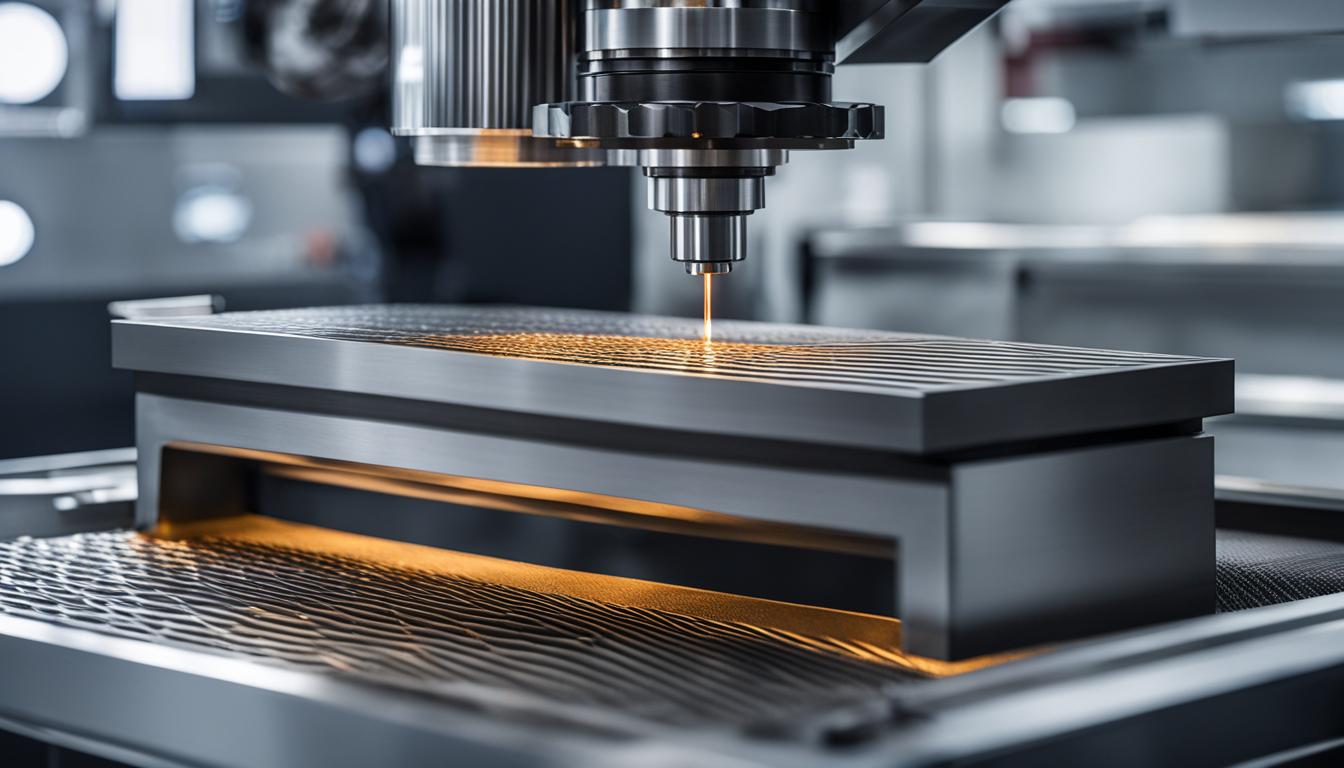
Material science continues its rapid advancement, profoundly influencing CNC milling capabilities and opening new avenues for component design and manufacturing. Engineers are now leveraging novel alloys and composites that push the boundaries of strength, weight, and thermal performance. These innovations demand refined machining strategies and specialized tooling to unlock their full potential.
Precision in CNC machining is paramount, with standard tolerances typically ranging from ±0.1mm to ±0.254mm (±0.005″ to ±0.010″) for general parts. High-precision applications, particularly in aerospace and medical fields, often require tolerances as tight as ±0.0025mm (±0.0001″) or even 1-3 microns. Achieving these tight specifications with advanced materials necessitates a deep understanding of their unique properties and machining behaviors.
High-Entropy Alloys (HEAs) in Advanced Milling
High-entropy alloys (HEAs) represent a paradigm shift in metallurgy, comprising five or more elements in near-equiatomic proportions. This unique composition leads to exceptional mechanical properties, including superior strength, hardness, and resistance to wear, corrosion, and high temperatures. Their high mixing entropy, lattice distortion, and sluggish diffusion effects contribute to a more homogeneous and stable atomic structure.
Milling HEAs presents significant challenges due to their inherent high hardness and strength, which can lead to poor surface roughness, excessive machining temperatures, and accelerated tool wear. Research indicates that ultrasonic-assisted milling techniques can significantly improve cutting performance and surface quality when machining HEAs like FeCoNiCrMnx. Optimizing parameters such as spindle speed, feed rate, and radial cutting depth is crucial for successful HEA machining.
Carbon-Nanotube Composites and Machining Considerations
| Material Type | Typical Spindle Speed (RPM) | Typical Feed Rate (mm/min) | Depth of Cut (mm) | Tooling Recommendation | Key Machining Consideration |
|---|---|---|---|---|---|
| High-Entropy Alloys | Moderate to High (application-specific) | Low to Moderate | Shallow | Coated Carbide, PCD, CBN | Ultrasonic assistance, heat management |
| Carbon-Nanotube Composites | Moderate (for grinding) | Slow (for grinding) | Increased (for grinding) | CNT-infused CBN grinding wheels | Dispersion uniformity, structural integrity |
| Ultra-Hard Tool Steels (e.g., D2, M2) | Low to Moderate (200-400 RPM for steel) | Low | Shallow | Carbide, CBN, PCD | Often machined pre-heat treatment, high rigidity |
| Lightweight Magnesium Alloys | High (up to 10,000 RPM for aluminum, similar for Mg) | High (0.6125 mm/tooth for ZE41) | Moderate (2.5 mm for ZE41) | Solid Carbide, PCD, TiAlN/TiN coated | Fire safety, mineral oil coolant, chip evacuation |
| Advanced Thermal Ceramics (e.g., Alumina, Zirconia) | High (40,000-60,000 RPM for fine features) | Very Low (5-30 mm/min) | Very Shallow (0.01-0.05 mm) | Diamond, CBN | Brittleness, thermal shock, dust control |
Carbon-nanotube (CNT) composites, particularly those reinforced with titanium matrices, offer enhanced hardness, wear resistance, and an improved strength-toughness balance over traditional titanium alloys. The integration of CNTs can significantly boost material removal rates, with studies showing improvements of over 60% in grinding titanium alloys with 7% CNT-infused cubic boron nitride (CBN) wheels.
Machining these composites, however, faces challenges related to achieving homogeneous CNT distribution and controlling interfacial reactions. Non-uniform dispersion can lead to inconsistent tool performance and uneven wear. Protecting the CNTs’ structural integrity during processing is essential to maintain their high strength and modulus advantages.
Ultra-Hard Tool Steels for Demanding Applications
Ultra-hard tool steels are engineered for extreme durability, offering exceptional hardness, stiffness, and abrasion resistance. Grades like D2, A2, O1, H13, S7, and M2 are critical for manufacturing cutting tools, dies, and molds. D2 tool steel, for instance, is renowned for its wear resistance and ability to retain hardness up to 425 °C.
Machining these materials often requires specialized approaches. Many tool steels are cut in a softer state before heat treatment to achieve their final hardness. M2 high-speed steel is a popular choice for drill bits and milling cutters due to its ‘red hardness,’ maintaining its cutting ability even at high temperatures generated by friction.
Lightweight Magnesium Alloys: Machinability and Safety
Magnesium alloys are highly valued for their exceptional strength-to-weight ratio, making them ideal for aerospace, automotive, and electronics applications where weight reduction is critical. They are considered easy-to-cut materials, requiring less power than aluminum alloys and generally extending tool life.
Despite their machinability, magnesium alloys pose significant safety challenges due to their flammability, especially when producing fine metal shavings. Proper chip management, continuous chip evacuation, and the exclusive use of mineral oil-based coolants are crucial to prevent fire hazards. Water-based coolants should be avoided as they can react with magnesium to produce flammable hydrogen gas.
Optimized machining parameters for magnesium alloys, such as ZE41, include cutting speeds around 550 m/min, feed per tooth of 0.6125 mm, and depth of cut at 2.5 mm, using a 25 mm tool diameter. These parameters aim to balance cost, energy efficiency, and surface quality.
Advanced Thermal Ceramics in CNC Milling
Advanced thermal ceramics, including alumina, zirconia, silicon carbide, and silicon nitride, are indispensable for applications demanding high-temperature resistance, chemical stability, and electrical insulation. These materials excel where metals would typically experience creep, oxidation, or accelerated wear.
Machining ceramics is inherently challenging due to their extreme hardness and brittleness. Diamond or cubic boron nitride (CBN) tools are essential, with conservative cutting speeds typically ranging from 120-350 m/min for diamond tools. Feed rates are light, often 5-30 mm/min, and depth of cut is minimal, usually 0.01-0.05 mm, to prevent chipping and brittle fracture. Maintaining strict thermal and vibration control is critical to avoid part failure.
The table below outlines typical machining parameters for various advanced materials: