
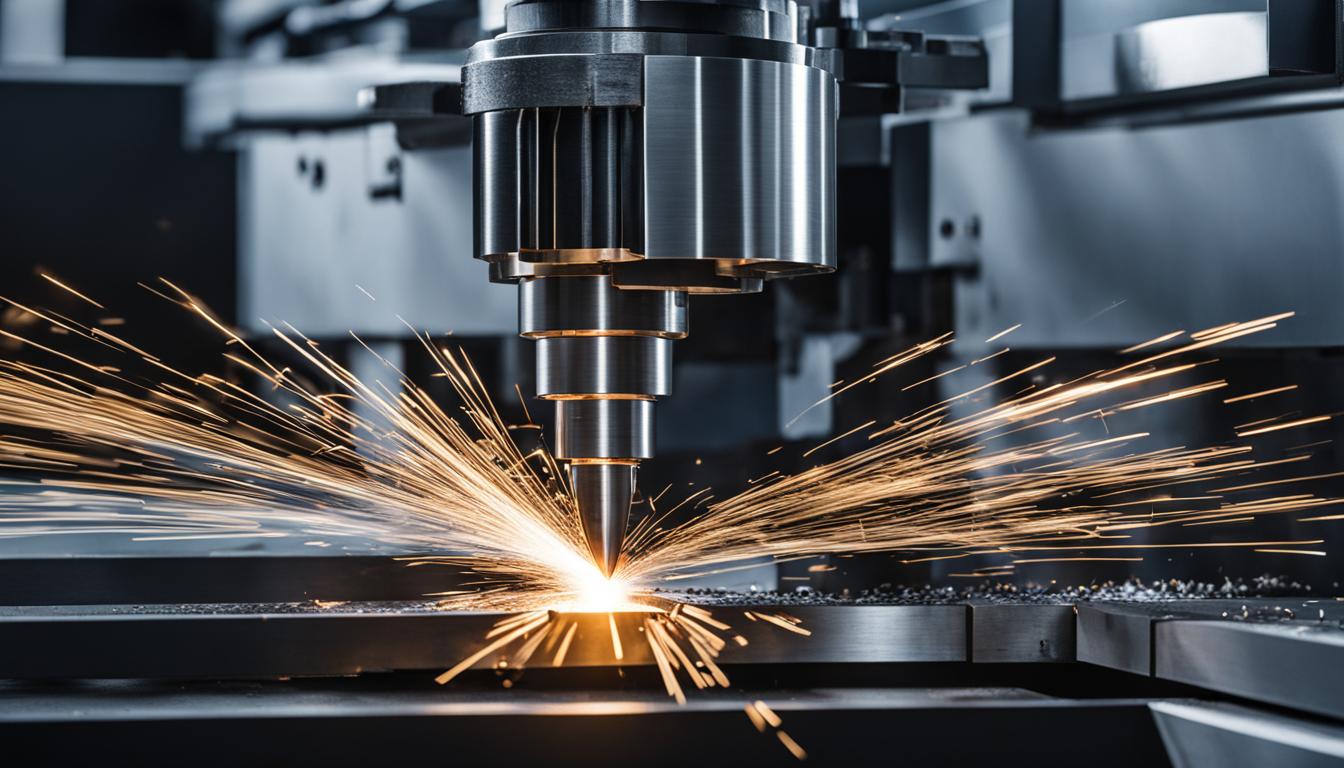
The global landscape of CNC machine tool manufacturing is dominated by a select group of companies renowned for their precision, innovation, and extensive product lines. These manufacturers continually push the boundaries of subtractive manufacturing, integrating advanced automation, artificial intelligence, and digital twin technologies to meet the evolving demands of industries such as aerospace, automotive, and medical device production. Their commitment to research and development ensures high-performance solutions for complex machining challenges.
Modern CNC machining practices emphasize efficiency and accuracy, with trends pointing towards increased automation, smart manufacturing, and AI adoption. Robotic part loading and unloading, automated tool changers, and lights-out machining operations are becoming standard, significantly enhancing productivity and consistency.
Haas Automation: American Manufacturing Powerhouse
Haas Automation, a prominent American manufacturer, is recognized for producing cost-effective, high-performance CNC machine tools. Their product range includes vertical machining centers (VMCs), horizontal machining centers (HMCs), turning centers, and rotary products, catering to a wide array of industries from general job shops to aerospace and medical device manufacturing.
The Haas control system, designed and built in-house, is optimized specifically for Haas machines, offering a user-friendly interface with intuitive navigation. This control supports standard Fanuc-style G-code and features like the Wireless Intuitive Probing System (WIPS) for automated tool and part setting, significantly reducing setup times and improving accuracy.
Haas machines are known for their robust construction and consistent performance. Typical rapid traverse rates for their DT series can reach up to 1,400 inches per minute (IPM), with high-speed automatic tool changers achieving a 2.8-second chip-to-chip time. The Next Generation Control (NGC), standard on new Haas machines, incorporates color graphics, faster processing, and enhanced networking capabilities.
DMG Mori: Global Innovation in Machine Tools
| Manufacturer | Control System | Typical Spindle Speed (Milling) | Typical Rapid Traverse (X/Y/Z) | Key Technology Focus |
|---|---|---|---|---|
| Haas Automation | Haas NGC | 8,000 – 15,000 RPM | Up to 1,400 IPM | User-friendly controls, cost-effectiveness, WIPS probing |
| DMG Mori | CELOS X | 12,000 – 20,000 RPM | Up to 60 m/min (2,362 IPM) | Digital transformation, automation, integrated software |
| Yamazaki Mazak | MAZATROL SmoothAi | 12,000 – 20,000 RPM | Up to 56 m/min (2,200 IPM) | Multi-tasking, AI-driven control, thermal compensation |
| Okuma Corporation | OSP Control | 8,000 – 15,000 RPM | Up to 50 m/min (1,968 IPM) | Thermo-Friendly Concept, mechatronics, collision avoidance |
| DN Solutions (Doosan) | Fanuc-based (often) | 8,000 – 12,000 RPM | Up to 48 m/min (1,890 IPM) | Diverse product range, global network, value proposition |
DMG Mori stands as a global leader, offering a comprehensive portfolio of machine tools that includes advanced milling, turning, and multi-axis machines. The company is at the forefront of integrating digital transformation into manufacturing, exemplified by its CELOS X ecosystem.
CELOS X provides a consistent, app-based machine control system across all DMG Mori control variants, facilitating the administration, documentation, and visualization of order, process, and machine data. This platform supports real-time monitoring, energy efficiency, and the integration of third-party applications, driving enhanced productivity and sustainable production.
DMG Mori machines are engineered for high precision and efficiency, often featuring advanced automation solutions and additive manufacturing capabilities. Their focus on innovation extends to user experience, with features like the SMARTride control for ergonomic and efficient machine operation.
Yamazaki Mazak: Pioneering Multi-Tasking Technology
Yamazaki Mazak is globally recognized for its pioneering work in multi-tasking machine technology, which integrates turning, milling, and other operations into a single machine. This ‘DONE-IN-ONE’ approach significantly reduces production lead times, minimizes setups, and enhances overall machining accuracy.
The INTEGREX series exemplifies Mazak’s multi-tasking prowess, capable of handling complex workpieces with full 5-axis milling and powerful turning operations. Their MAZATROL SmoothAi CNC system provides advanced control, leveraging AI and digital twin technology for faster, higher-precision control and enhanced automation capabilities.
Mazak machines often feature high-speed milling spindles, with options up to 20,000 min-1 for aluminum and small diameter machining, alongside robust turning spindles. The Ai Thermal Shield technology actively suppresses changes in cutting edge position due to temperature fluctuations, ensuring stable continuous machining accuracy.
Okuma Corporation: Precision with Thermal Stability
Okuma Corporation is a leading manufacturer known for its comprehensive range of CNC lathes, vertical and horizontal machining centers, and multitasking machines. A key differentiator is their in-house developed OSP control system, which is designed from the ground up with the machine’s structure and thermal characteristics in mind.
The Okuma Thermo-Friendly Concept is a unique technology that minimizes the effects of thermal expansion on dimensional accuracy. Instead of fighting thermal growth, Okuma’s approach accepts predictable deformation and compensates for it automatically, eliminating the need for machine warm-up operations and manual adjustments.
This mechatronics approach, blending mechanical engineering and electronic control, ensures optimal communication between the machine and the OSP control, leading to unrivaled dimensional stability over long, continuous runs. Okuma machines are widely used in demanding sectors like machine building, energy, and general engineering.
DN Solutions (Doosan): Diverse Range and Global Presence
DN Solutions, formerly known as Doosan Machine Tools, is a South Korean company that has established itself as a global leader in the machine tool industry, ranking third worldwide by sales as of 2023. The company offers a diverse and comprehensive product range, including turning centers (under the ‘PUMA’ brand), machining centers, NC boring machines, and Swiss-type lathes.
With an extensive global network of sales offices and technical centers across 66 countries, DN Solutions provides robust support and rapid response to customer demands. Their product lineup, consisting of approximately 400 items, caters to a broad spectrum of industrial needs, from compact operations to large, complex machining tasks.
The company is actively pursuing future-oriented business models, including smart factory technologies and metal additive manufacturing equipment, alongside its traditional subtractive manufacturing strengths. DN Solutions’ commitment to technology and customer satisfaction underpins its strong market position.
Key Technical Parameters and Modern Engineering Practices
Achieving precise dimensions in CNC machining relies heavily on adhering to strict tolerances and optimizing feeds and speeds. Standard CNC machining tolerances typically range from ±0.005 inches (±0.127 mm) for most metals, achievable with conventional tooling. For precision applications, tolerances can tighten to ±0.001 to ±0.002 inches (±0.0254 mm to ±0.0508 mm), while high-precision work, such as for aerospace or medical devices, demands ±0.0005 inches (±0.012 mm) or even tighter, down to 1-3 microns.
Modern engineering practices in CNC machining are increasingly driven by automation, artificial intelligence, and digital connectivity. Technologies like digital twins allow for virtual simulation of production, validating toolpaths and optimizing cycle times before any material is cut. AI algorithms are used to optimize cutting parameters, predict tool wear, and monitor quality in real-time, leading to fewer unplanned stops and more consistent surface finishes.
Feeds and speeds are critical parameters that directly influence surface finish, tool life, and material removal rates. These values depend on the material type, tool material, and machine rigidity. For instance, milling aluminum often uses cutting speeds between 200-400 m/min and feed rates of 300-500 mm/min, while mild steel requires slower speeds of 80-150 m/min and feed rates of 200-400 mm/min.
For turning stainless steel (e.g., 304), cutting speeds typically range from 150-220 m/min with coated carbide inserts, while roughing feed rates are 0.20-0.40 mm/rev. Finishing operations require lower feed rates, around 0.05-0.15 mm/rev, to achieve surface finishes better than Ra 1.6 µm. Proper coolant strategy, often high-pressure flood coolant, is essential for chip breaking and extending tool life in challenging materials.