
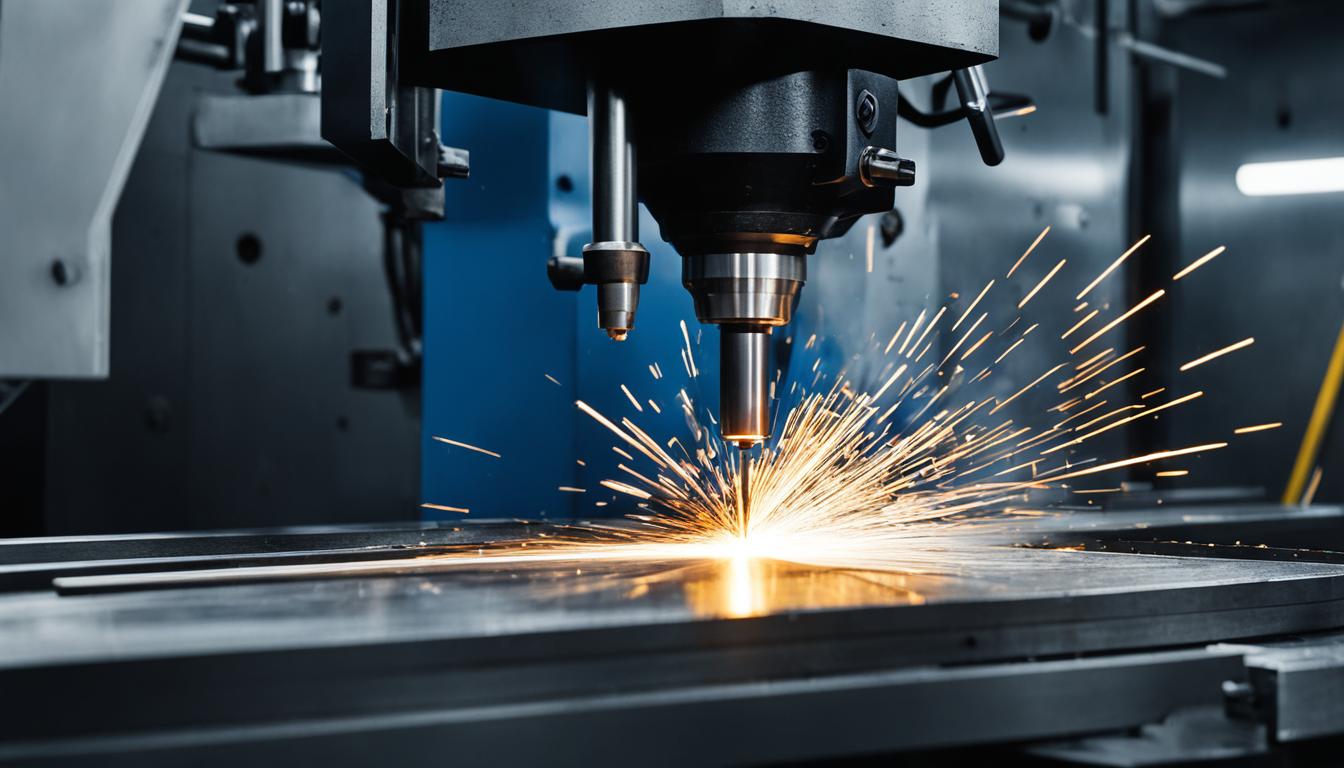
Milling is a fundamental subtractive manufacturing process that precisely shapes solid materials by removing unwanted stock with rotating multi-point cutters. This versatile machining method is integral across diverse industries, including automotive, aerospace, and medical technology, due to its capability for high precision and repeatability.
Unlike additive manufacturing, which builds parts layer by layer, milling begins with a solid workpiece and carves away excess material to achieve the desired geometry. Computer Numerical Control (CNC) systems automate these operations, ensuring consistent results and enabling the production of complex components with tight tolerances.
Milling As a Foundational Subtractive Process
Subtractive manufacturing techniques, including milling, turning, drilling, and grinding, are essential for transforming raw materials into finished parts. This process involves the controlled removal of material from a solid block, billet, or sheet, guided by CAD models and CAM-generated toolpaths.
The core principle of milling involves a rotating cutting tool engaging a stationary or moving workpiece, systematically shearing away material. This method is highly valued for its ability to achieve exceptional surface finishes, tight tolerances, and robust material performance across various metals, plastics, and composites.
Achieving High-Precision Flat Surfaces
| Operation | Material | Cutting Speed (SFM / m/min) | Feed Rate (IPR / mm/tooth) | Notes |
|---|---|---|---|---|
| Drilling | Aluminum | 200-300 SFM (HSS)1000+ SFM (Carbide) | 0.006-0.015 IPR | Reduce for deep holes (>3x diameter) |
| Drilling | Mild Steel | 80-150 m/min | 0.004-0.010 IPR | Lower speeds for larger drills |
| Tapping | Aluminum 6061 | 20-50 m/min | Pitch (e.g., 0.050″ for 1/4″-20) | Forming taps may be ideal |
| Tapping | Mild Steel | 8-18 m/min (HSS/Cobalt)40-80 SFM | Pitch (e.g., 0.050″ for 1/4″-20) | Use cutting oil |
| Tapping | Stainless Steel | 3-9 m/min (HSS/Cobalt)20-40 SFM | Pitch (e.g., 0.050″ for 1/4″-20) | Avoid dwell, use cutting oil |
One primary purpose of milling is to create perfectly flat surfaces with precise plane geometry. Face milling, a common operation, uses a cutting tool with a flat or slightly angled face to machine the top or bottom surface of a workpiece, establishing a smooth and parallel finish.
Achieving optimal flatness in CNC milling depends on several factors, including spindle true runout, table flatness, consistent toolpath overlap, and workpiece rigidity during the cut. Standard 3-axis milling can reliably hold flatness tolerances in the 0.05-0.1 mm range over several hundred millimeters.
For applications demanding greater accuracy, precision machining can achieve flatness tolerances of 0.01 mm or less. These tight tolerances are critical for mating surfaces, sealing faces, and mounting plates where even minor deviations can lead to assembly issues or compromised performance.
Creating Defined Slots, Pockets, and Contours
Milling machines excel at cutting various features such as slots, grooves, and pockets, which are crucial for mechanical parts and components. Slotting operations, for instance, involve creating narrow channels, while pocketing removes material from an enclosed area to form a cavity.
Effective chip evacuation is paramount during slotting and pocketing, especially in deep cuts, to prevent chip packing and tool breakage. For aluminum 6061-T6, a 3-flute carbide end mill is often recommended for optimal chip clearance in narrow slots.
When slotting aluminum, a conservative starting depth of cut might be around 0.005 inches, gradually increasing to about 0.030 inches per pass. Maintaining a depth-to-width ratio of no more than 3:1 is crucial for tool stability and preventing excessive wall taper.
Machining Intricate 3D Profiles with Advanced Systems
Milling is indispensable for crafting complex 3D profiles and intricate contours, a capability vital for industries like aerospace and mold manufacturing. This involves cutting along the X, Y, and Z axes, often utilizing sophisticated CNC machines and specialized tools to achieve desired precision and surface quality.
Five-axis CNC machining significantly enhances this capability by adding two rotational axes to the traditional three linear axes. This allows the cutting tool to approach the workpiece from multiple angles without manual repositioning, enabling the creation of highly complex geometries, undercuts, and compound curves in a single setup.
- Reduced Setups: Parts can be machined from multiple sides in one operation, minimizing repositioning errors and saving time.
- Enhanced Precision: Tighter tolerances are achievable due to less movement and optimal tool angles.
- Improved Surface Finish: The tool can maintain optimal cutting angles, leading to smoother surfaces and reduced post-processing.
- Extended Tool Life: Smart angling reduces stress and heat on the cutting tool, prolonging its operational lifespan.
Machining complex 3D features requires careful attention to machine motion and toolpath generation, often necessitating CNC controls capable of handling high volumes of G-code. Modern advancements in multi-axis machining, coupled with AI and machine learning, further optimize tool paths and enhance precision.
Integrated Drilling and Threading Operations
Milling machines are frequently used for precision drilling and boring tasks, creating holes of varying diameters and depths with remarkable accuracy. Standard CNC drills typically hold diameter tolerances in the ±0.05 mm range, while reaming can achieve ±0.01 mm or tighter for precision fits.
Tapping, the process of creating internal threads, is also a common milling operation. The fundamental principle for CNC tapping feed rate calculation dictates that the feed per revolution must equal the thread pitch.
Selecting appropriate feeds and speeds is critical for drilling and tapping to ensure tool longevity and part quality. For aluminum, drilling speeds often range from 200-300 surface feet per minute (SFM) for HSS drills, with carbide drills running significantly faster. Tapping aluminum can utilize cutting speeds between 20-50 m/min, while steel typically requires 40-80 SFM.