
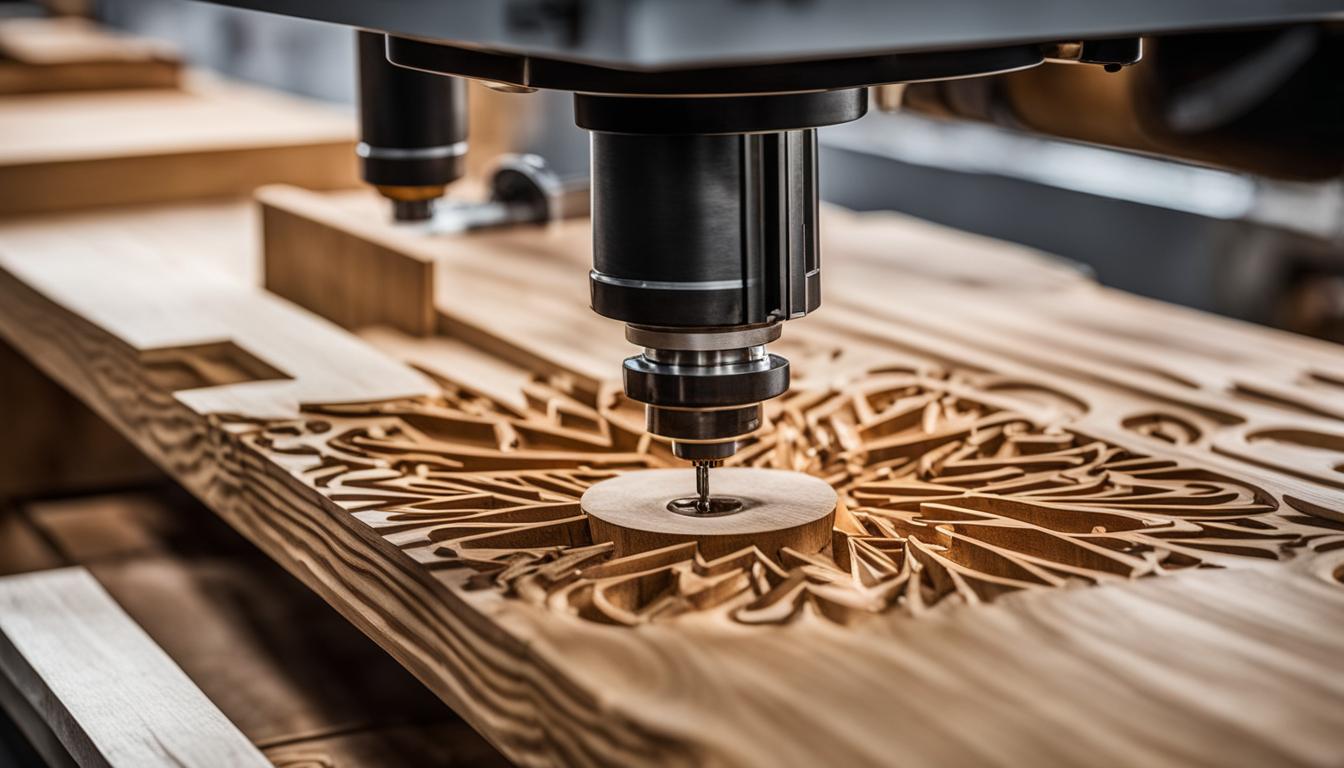
Wood CNC machines precisely automate cutting, shaping, and carving operations on various wood-based materials. These computer-controlled routers execute complex designs with high accuracy, significantly improving production efficiency and part consistency. They are indispensable tools in modern woodworking, enabling intricate joinery, custom furniture, and large-scale panel processing.
Optimizing Sheet Material Nesting
Sheet material nesting is a critical process in CNC woodworking, focusing on arranging multiple parts onto a raw panel to maximize material utilization and minimize waste. This optimization is crucial for industries like cabinetry and furniture manufacturing, directly impacting material cost savings and overall production efficiency.
Advanced nesting software employs sophisticated algorithms to calculate the most efficient arrangement of parts on a panel. These programs consider various factors, including part geometry, panel size, and the specific cutting tools to be used. Accurate input of part dimensions, material type, and grain direction is essential for optimal results.
Effective nesting strategies often involve ‘true-shape nesting’ for irregular parts, allowing for complex geometries to be tightly packed. Rotational nesting, where parts can be rotated to fit better, and ‘common line cutting’, which reduces redundant tool paths, further enhance material yield. Maintaining appropriate spacing between parts, typically around 19mm, and a 5mm buffer on the sheet edges, is vital for cutter clearance and preventing edge defects.
Precision in Flat-Pack Cabinet Carving
| Parameter | Typical Value / Range | Notes |
|---|---|---|
| Standard CNC Router Tolerance | ±0.005″ (0.13 mm) | Default for most features |
| Precision CNC Router Tolerance | ±0.001″ (0.025 mm) | For critical mating surfaces |
| General Spindle Speed (Wood) | 16,000 – 24,000 RPM | Varies with bit diameter and material |
| 1/4″ Upcut Bit Feed Rate (Hardwood) | 80 – 120 IPM | For 16,000-18,000 RPM, 0.003-0.004 IPT chip load |
| 1/4″ Compression Bit Feed Rate (Plywood) | 325 – 396 IPM | For 18,000 RPM, 0.009-0.011 IPT chip load |
| CNC Dust Collector CFM (at cutter) | 500 – 1,000 CFM | Required for effective dust capture |
| CNC Dust Collector Static Pressure | ≥ 14 inches W/C | To overcome system resistance |
| Vacuum Pump Level (High Vacuum) | 20 – 28 inHg | For sealed fixtures, less porous materials |
| Vacuum Pump Flow (High CFM) | 3 – 16 CFM (Dry Vane) | For porous spoilboards, constant leakage |
CNC machines are fundamental to modern flat-pack cabinet manufacturing, enabling the precise and repeatable production of components. These machines accurately cut, drill, and dado all necessary parts from sheet goods like plywood or MDF, ensuring consistent dimensions for easy assembly. This automation drastically reduces manual labor and potential human error.
Achieving clean, chip-free edges on laminated or veneered sheet materials is paramount for cabinet quality. Compression router bits are specifically designed for this task, featuring both upcut and downcut flutes that compress the material at the top and bottom surfaces simultaneously. This design prevents tear-out on both faces during through-cuts, provided the depth of cut engages both flute sections.
Standard tolerances for CNC routing typically fall within ±0.005 inches (0.13 mm) for most linear dimensions. For critical mating features in cabinet construction, tighter tolerances of ±0.002 inches (0.050 mm) may be specified to ensure snug fits and robust joinery. Precision work, such as bearing bores, can achieve even tighter limits, though this increases machining time and cost.
Crafting Decorative 3D Wood Reliefs
Wood CNC machines excel at creating intricate decorative 3D wood reliefs, transforming digital models into tangible artistic pieces. This capability allows for complex contours, textures, and detailed carvings that would be exceptionally difficult or impossible to achieve by hand. The machine’s ability to follow precise toolpaths ensures fidelity to the original design.
Specific router bits are essential for effective 3D carving. Ball nose bits, particularly tapered ball nose bits, are ideal for shaping smooth curves and flowing contours, minimizing tool marks and capturing fine details. V-groove bits are used for crisp lettering and sharp lines, while engraving bits provide precision for intricate designs.
Feeds and speeds for 3D relief carving require careful calibration to balance cut quality and tool longevity. For hardwoods, a 1/4″ 2-flute upcut bit might run at 16,000-18,000 RPM with a feed rate of 80-120 IPM, maintaining a chip load of 0.003-0.004 IPT. Depth of cut (DOC) is typically reduced for finishing passes to achieve smoother surfaces, often using climb milling for superior results.
Essential Dust Extraction Setups
Effective dust extraction is non-negotiable in CNC woodworking environments, crucial for operator health, machine longevity, and fire prevention. CNC routers generate significant volumes of fine wood dust and chips, which can quickly accumulate, posing respiratory hazards and increasing wear on machine components.
Properly sized dust collection systems for CNC machines require substantial airflow, typically ranging from 500 to 1,000 CFM at the cutter head. Equally important is static pressure, which measures the system’s ability to overcome resistance from ductwork and filters. A minimum of 14 inches of water column (W/C) static pressure is recommended for CNC applications to ensure efficient chip and dust transport.
Industrial dust collectors often feature cyclone separators that efficiently remove larger particles before they reach the filters, extending filter life and maintaining consistent airflow. Main trunk lines should be sized to maintain an air velocity of 4,000-4,500 feet per minute (FPM) for larger particles and 3,500-4,000 FPM for finer dust, preventing clogs and ensuring optimal collection.
Optimizing Vacuum Table Workholding
Vacuum tables provide a highly effective workholding solution for CNC wood machining, securing workpieces without mechanical clamps that could obstruct tool paths or mar the material. This method is particularly advantageous for large, flat panels and nested-based manufacturing, ensuring stability throughout the cutting process.
Several vacuum table designs are prevalent, including ‘gasketed’ systems that create a sealed area around the workpiece, concentrating vacuum where needed. ‘Flow-through’ tables utilize a porous spoilboard, typically MDF, allowing vacuum to be pulled through the entire surface, which is ideal for through-cuts and nested parts. ‘Grid’ and ‘hole matrix’ tables offer versatile vacuum distribution across the work surface.
Selecting the appropriate vacuum pump is critical for effective workholding. Regenerative blowers offer high airflow (CFM) but lower vacuum levels, suitable for porous materials like MDF where constant leakage occurs. Rotary vane pumps and claw pumps provide higher vacuum levels, often 20-28 inHg, with moderate to strong airflow, making them ideal for sealed fixtures or less porous materials.
Vacuum tables often incorporate zoning capabilities, allowing operators to direct suction to specific areas of the table. This feature enhances holding power for smaller workpieces or when machining multiple parts simultaneously. Calculating clamping force involves multiplying the vacuum gauge reading (inHg) by the workpiece surface area (sq.in.) and a factor of 0.5.