
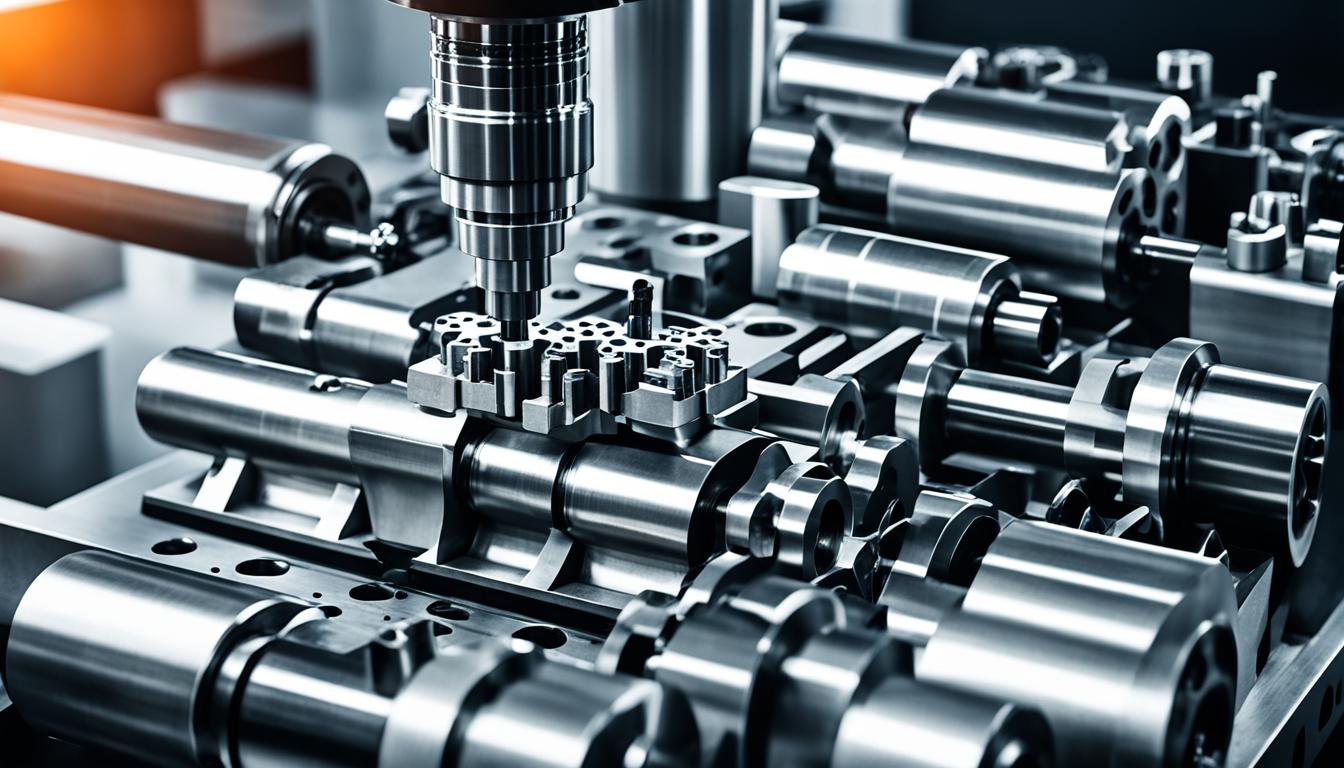
Computer Numerical Control (CNC) machining has become an indispensable technology across a vast array of manufacturing sectors. Its ability to deliver exceptional precision, repeatability, and efficiency makes it critical for producing complex components that meet stringent performance and safety requirements. The global CNC machine tools market was estimated at around $95–110 billion, with the precision machining market projected to reach $193.5 billion in 2025.
This advanced manufacturing method transforms raw materials into finished products through controlled material removal, encompassing processes like milling, turning, drilling, and tapping. Multi-axis CNC machines are particularly adept at creating intricate geometries and complex surfaces, often achieving tolerances that are unattainable with traditional manual methods.
Aerospace Component Manufacturing
The aerospace industry demands unparalleled precision and reliability, making CNC machining a cornerstone technology. Components such as turbine blades, structural airframe parts, landing gear assemblies, and hydraulic fittings are routinely produced using CNC processes.
Aerospace materials often include high-strength aluminum alloys, titanium alloys (like Ti-6Al-4V), and nickel-based superalloys such as Inconel. These materials offer superior strength-to-weight ratios and resistance to extreme temperatures and corrosion, but they are notoriously challenging to machine.
Tolerances in aerospace machining are exceptionally tight, frequently ranging from ±0.001″ (25 µm) to ±0.0005″ (12.7 µm) for flight-critical features. Some applications even demand tolerances as fine as ±0.0001″ (2.54 µm) or better. Achieving these micro-precision standards requires advanced CNC machines, rigorous process control, and often 5-axis machining capabilities to reduce setups and enhance accuracy.
Automotive Supply Chains
| Industry Sector | Typical Materials | Standard Tolerances (Linear) | Key Applications |
|---|---|---|---|
| Aerospace | Titanium alloys, Inconel, Aluminum alloys | ±0.001″ to ±0.0005″ (25-12.7 µm) | Turbine blades, landing gear, structural frames |
| Automotive | Steel, Aluminum, Cast Iron, Engineering Plastics | ±0.005″ to ±0.0001″ (127-2.5 µm) | Engine blocks, transmission housings, molds |
| Medical Devices | Titanium (Ti-6Al-4V ELI), 316LVM Stainless Steel, PEEK | ±0.005 mm to ±0.0001″ (5-2.54 µm) | Implants, surgical instruments, diagnostic equipment |
| Defense & Energy | High-strength alloys, Superalloys, Composites, Stainless Steel | ±0.001″ to ±0.0001″ (25-2.54 µm) | Weaponry, turbine components, drilling equipment |
Automotive manufacturing heavily relies on CNC machining for high-volume production of critical components. The industry’s demand for precision and efficiency drives the widespread adoption of CNC technology for parts like engine blocks, transmission housings, and various molds and tooling.
Production volumes in the automotive sector can reach hundreds of thousands or even millions of parts annually, necessitating highly automated CNC systems. These systems often include horizontal machining centers (HMCs), Swiss-type lathes, and multi-spindle machines, optimized for continuous, lights-out manufacturing.
Materials commonly machined for automotive applications include steel alloys (e.g., 1018, 1045, 4140), aluminum, and cast iron. Tolerances are typically measured in microns, with high-volume production capable of consistently holding ±0.0001 inches (±2.5 µm) across entire runs.
Medical Device Fabrication
The medical device industry requires extreme precision, biocompatibility, and stringent regulatory compliance, making CNC machining an essential manufacturing method. Components range from surgical instruments and orthopedic implants to diagnostic equipment housings.
Biocompatible materials like titanium alloys (e.g., Ti-6Al-4V ELI), medical-grade stainless steel (316LVM), PEEK, and various medical-grade plastics are routinely machined. These materials must withstand sterilization processes and interact safely with human tissue.
Tolerances for medical devices are exceptionally tight, often down to ±0.005 mm for high-precision implant interfaces and ±0.01 mm for surgical tools. Articulating surfaces on implants may require ultra-smooth finishes (Ra < 0.05 µm), while bone-contacting zones need controlled roughness (Ra 3–6 µm) for osseointegration. Cleanroom environments and comprehensive traceability are also critical.
Consumer Electronics Enclosures
CNC machining plays a significant role in the consumer electronics sector, particularly for producing high-quality enclosures, heatsinks, and intricate internal components. The demand for sleek designs, tight assembly fits, and rapid prototyping drives the use of precision machining.
Common materials include aluminum and magnesium alloys for lightweight yet durable enclosures, as well as various engineering plastics and composites. High-speed machining centers are frequently employed to achieve smooth aesthetic finishes and meet the high production volumes characteristic of this industry.
Precision is crucial for ensuring components fit together seamlessly and for managing thermal properties within compact devices. CNC machining enables the creation of complex geometries and fine details, which are vital for both functionality and the premium feel of consumer electronics products.
Defense and Energy Sectors
The defense and energy industries rely on CNC machining for mission-critical components that must perform reliably under extreme conditions. This includes parts for weaponry, military vehicles, naval vessels, aircraft, and equipment for oil and gas exploration, nuclear power, and renewable energy systems.
Materials used are typically robust metals and alloys such as titanium, high-strength steels, superalloys (e.g., Inconel, Molybdenum), and composites, chosen for their resistance to high temperatures, pressure, and corrosion.
Components often feature complex geometries and require exceptional durability. Examples include turbine blades, engine parts, armor plating, valve bodies, downhole drilling tools, and structural supports for naval craft. Tolerances are extremely tight, often in the micron range, to ensure perfect fit and reliable operation in hazardous environments.
The energy sector, encompassing both fossil fuels and renewables, utilizes CNC for large-scale components like hydropower turbine parts, wind turbine hubs, gears, and generator frames. These parts demand high accuracy and endurance to withstand tremendous pressures and environmental damage.