
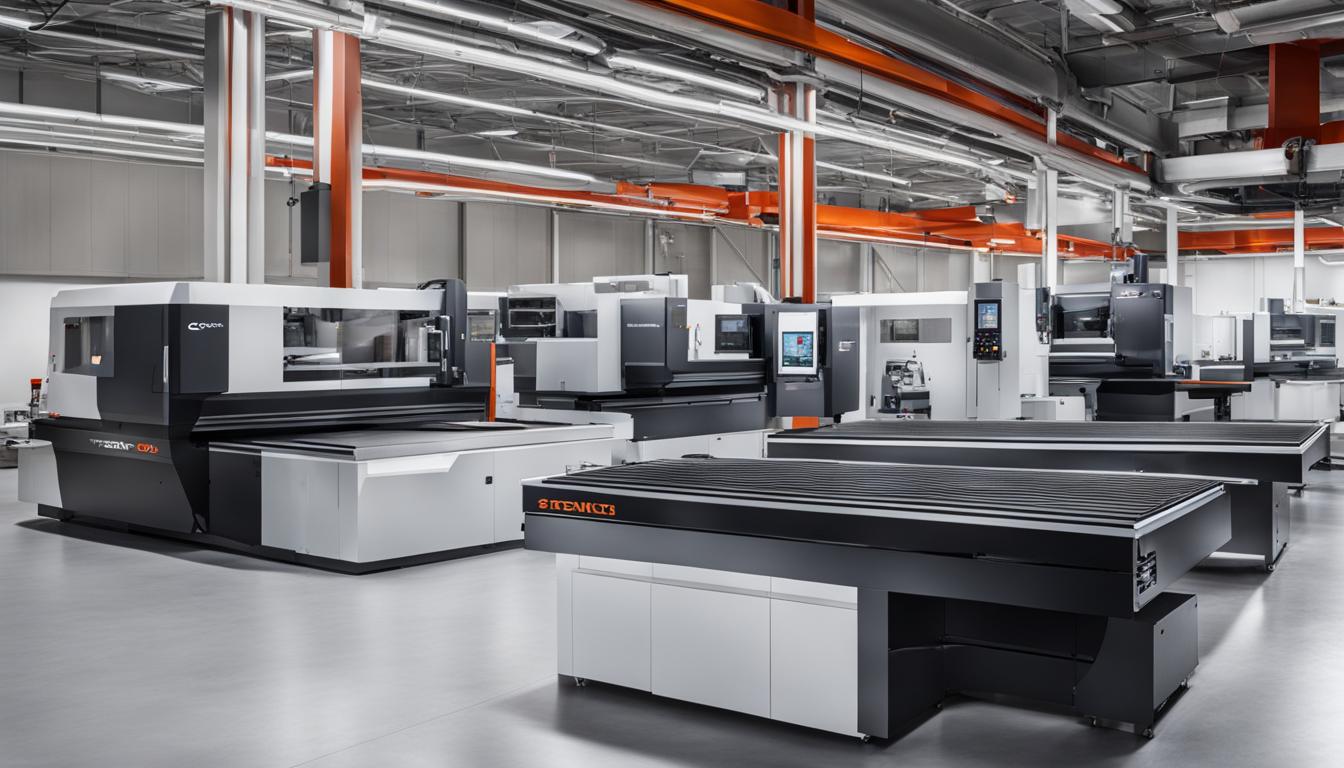
Selecting a Computer Numerical Control (CNC) machine requires a thorough understanding of technical specifications, operational reliability, and long-term value. The global CNC machine tool market, exceeding $85 billion, features diverse manufacturers catering to various industrial demands.
Machine performance directly impacts productivity and part quality, making an informed decision critical for any manufacturing operation. This guide examines key factors influencing machine selection in 2026, from brand reputation to spindle capabilities and market resale trends.
Leading CNC Machine Brands and Their Market Focus
The CNC machine market is dominated by several key players, each with distinct strengths and regional specializations. Brands like Mazak, Haas, DMG Mori, Okuma, and Hurco consistently rank among the top builders for milling and turning applications.
Japanese manufacturers, including Mazak and Okuma, are recognized for their leadership in multi-axis reliability and high production throughput. German firms, such as DMG Mori, excel in precision engineering, advanced 5-axis capabilities, and Industry 4.0 integration.
Haas Automation maintains a significant presence, particularly in the North American market, by offering user-friendly and cost-effective solutions tailored for small-to-medium enterprises (SMEs). Their extensive product refresh includes new vertical mills, lathes, and gantry machines, making automation more accessible.
Doosan and Hurco also provide robust offerings, with Doosan machines like the VC430 and DNM4500 known for reliability and performance in aerospace, automotive, and medical sectors. Hurco emphasizes its WinMax control system, designed for intuitive programming and increased efficiency across its 3-axis, 5-axis, and turning centers.
Achieving Precision and Reliability in Modern Machining
| Brand/Model Example | Spindle Power (Continuous/Peak) | Max Spindle RPM | Spindle Taper | Typical Application |
|---|---|---|---|---|
| Haas VF-2SS | Not specified/15 HP (11.2 kW) | 12,000 RPM | CAT 40 | High-volume production, aluminum, drill/tap |
| Mazak VCN-510 (Class) | 10 HP (7.5 kW)/25 HP (18.5 kW) | 12,000 RPM | BT40 | General-purpose milling, job shop |
| Hurco VMX42SRT | 48 HP (36.5 kW) | 12,000 RPM | CAT 40 | 5-axis versatility, secondary operations |
| Doosan Lynx 220LM | 15 kW Main Spindle | 6,000 RPM | Not specified | 2-axis CNC lathe, live tooling |
Machine reliability is often quantified by Mean Time Between Failures (MTBF), which measures the average operational time before an unplanned stop. For CNC machine tools, a good MTBF typically ranges from 2,000 to 5,000 hours between failures.
Accuracy in CNC machining is defined by achievable tolerances, with standard machining tolerance for most metals being ±0.005 inches (±0.127mm). Precision tolerances can reach ±0.002 inches (±0.05mm), while tight tolerances, crucial for critical fits, are as fine as ±0.0005 inches (±0.0127mm).
Specifying tighter tolerances significantly impacts manufacturing costs, often increasing production expenses by 20-50% compared to standard tolerances. International standards like ISO 2768-m/f and ASME Y14.5 GD&T provide frameworks for communicating these critical dimensional requirements.
Modern precision machining in 2026 relies on process stability, repeatable setups, and real-time inspection feedback. Advanced practices include AI-augmented G-Code, digital twins for real-time simulation, and in-process probing to maintain sub-micron accuracy.
Spindle Power and Performance Specifications
The spindle is a CNC machine’s core, directly influencing cutting capability, material compatibility, and surface finish. Spindle power ratings are typically given as continuous and peak (S6) power, with the continuous rating governing sustained production cutting.
Spindle power ranges vary widely by application. Entry-level machines for softwoods and plastics often feature 800W–1.5kW (1–2 HP) spindles. Mid-range systems commonly utilize 2.2kW (~3 HP) for woodworking and light metals, while industrial-grade machines for tough materials can exceed 3kW (4 HP), with some VMCs offering 10 HP continuous and 25 HP peak power.
Spindle RPM (revolutions per minute) is another critical factor, with common ranges between 8,000–24,000 RPM. High-speed machining applications can see spindles rated for 40,000 RPM or higher. Proper pairing of RPM with feeds and speeds is essential to prevent tool burning or breakage.
Torque curves provide more actionable data than just maximum RPM, indicating the force a spindle can apply at various speeds. A spindle delivering high torque at lower RPMs is better suited for heavy steel turning, while one with consistent torque across a broader RPM range is ideal for precision turning of lighter materials.
Price-To-Performance and Resale Value Dynamics
Evaluating the price-to-performance ratio involves balancing initial capital expenditure with a machine’s capabilities and long-term operational efficiency. Haas Automation is frequently cited for offering a compelling entry into industrial machining, providing robust features at competitive price points.
Manufacturers from China and Taiwan offer machines at 30-50% lower costs, with rapidly improving quality, presenting a strong value proposition for budget-conscious operations. However, buyers must carefully assess the balance between cost savings and potential differences in service networks and long-term support.
Resale value is a significant consideration for capital equipment. Japanese CNC machines, known for their durability and advanced technology, typically retain 40-60% of their purchase value after five years and 25-40% after ten years. This strong retention makes them a lower-risk investment despite higher initial costs.
Beyond the purchase price, the total cost of ownership includes factors like maintenance, spare parts availability, and energy consumption. Machines with higher reliability ratings and extensive service networks, even if more expensive upfront, can offer superior long-term economic benefits through reduced downtime and consistent performance.