
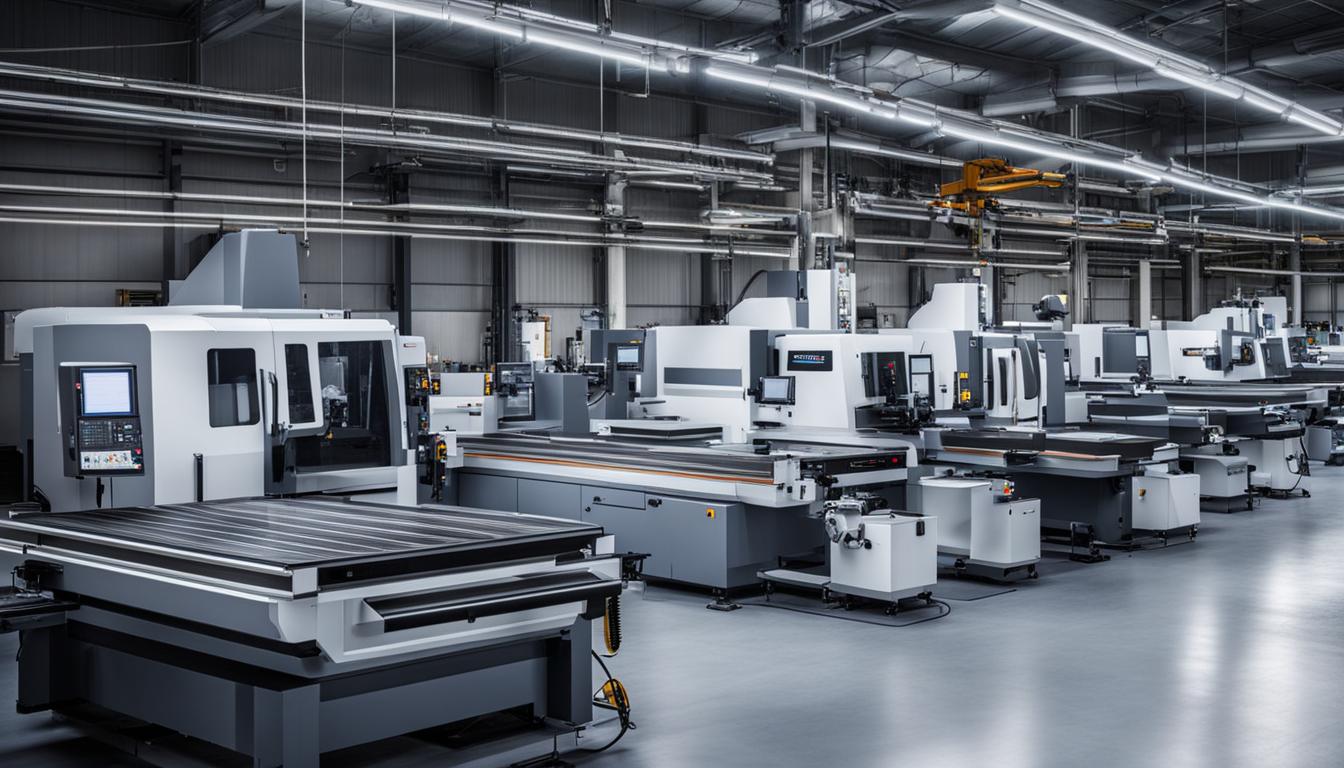
Fadal Machining Centers, a name synonymous with American job shop productivity, continues to manufacture new CNC machines, offering a blend of legacy reliability and modern technological advancements. The brand, now under new ownership, maintains its commitment to providing robust vertical machining centers for diverse industrial applications. This enduring presence in the market addresses a common question among machinists regarding Fadal’s current production status.
Fadal Machining Centers: a Legacy of Innovation
The origins of Fadal Machining Centers trace back to 1955 when Francis de Caussin established a garage machine shop, eventually incorporating as Fadal Engineering in 1960. The company made its official debut as Fadal Machining Centers in 1980, quickly gaining recognition for its pioneering work in tool changer automation during the 1970s. This early focus on efficiency laid the groundwork for future success.
Fadal introduced its first Vertical Machining Center (VMC) prototype in 1979, a significant step that would define its market presence. The VMC 4020, in particular, became a cornerstone product, widely celebrated as the best-selling vertical machining center in American history. Its affordability and ease of service made it a staple in tens of thousands of North American job shops throughout the 1980s and 1990s.
Ownership of Fadal changed hands multiple times, beginning with its acquisition by Giddings & Lewis in 1988, followed by stints under ThyssenKrupp and MAG Industrial Automation Systems. New machine production under these entities eventually ceased around 2008, leading to uncertainty about the brand’s future. However, Fadal was relaunched in 2014 by Merrill Technologies Group (MTG), introducing a new ‘Classic series’ and an updated control system.
A significant development occurred in 2024 when Troy Alwin and Alwin Machinery Sales acquired Fadal, marking a return to family ownership. This acquisition has revitalized the brand, emphasizing its American roots and a renewed focus on customer commitment and continuous improvement. The company now operates with a strong dedication to its legacy while embracing modern manufacturing practices.
The Modern Fadal VMC Lineup and Offerings
| Feature | Fadal VMC 4020 | Fadal VMC 6032 |
|---|---|---|
| X-Axis Travel | 40 inches | 60 inches |
| Y-Axis Travel | 20 inches | 32 inches |
| Z-Axis Travel | 20 inches | 30 inches |
| Spindle Taper | CAT 40 | CAT-40 / BT-40* |
| Spindle Speed | 10,000 RPM | 10,000 / 15,000* RPM |
| Rapid Traverse (X,Y,Z) | 900 IPM | 787 IPM |
| Tool Capacity | 24 tools | 24 / 30* / 40* tools |
| Max. Table Load | 1,500 lbs (approx) | 4,400 lbs |
| Control System | Fadal 64MP | Fadal 64MP |
Fadal, under its current ownership, proudly offers a comprehensive portfolio of redesigned and advanced vertical machining centers. These machines include both 40 and 50 taper VMCs, alongside capabilities for 5-axis machining. The ‘Classic VMC series’ represents technologically enhanced iterations of the robust box-way machines that Fadal has produced for over four decades.
The current lineup features several models designed to meet varying production demands. Linear guide machines, such as the VMC2015, VMC2520, and VMC3320, cater to lighter duty and high-speed applications. For heavier material removal and larger parts, Fadal continues its tradition with box-way machines like the VMC4020, VMC6030, and VMC8030, with 50-taper options available for the larger models.
A key advancement in modern Fadal machines is the integration of the Fadal 64MP control system. This controller offers enhanced processing power and speed while maintaining backward compatibility with the legacy Fadal CNC 88HS and MP controls. This ensures that existing programs and operator familiarity can be leveraged, easing the transition for shops upgrading their equipment.
Fadal machines are engineered to hold precise tolerances, critical for today’s demanding manufacturing environments. Standard CNC milling operations typically achieve tolerances of ±0.005 inches (0.13 mm). For applications requiring higher accuracy, precision CNC machining can reach ±0.002 inches (0.051 mm), with tight tolerance machining capable of achieving ±0.001 inches.
Optimizing feeds and speeds is essential for efficient material removal and tool life. For aluminum, recommended cutting speeds range from 600-800 surface feet per minute (SFM), with feed rates between 300-500 mm/min. When machining mild steel, cutting speeds typically fall between 100-300 SFM, and feed rates are generally 200-400 mm/min. These parameters are guidelines and should be adjusted based on specific tooling, material, and machine conditions.
Here is a comparison of specifications for two popular Fadal VMC models:
*Optional configurations available.
Sustaining Operations: Legacy Machine Replacement Parts
The extensive installed base of Fadal machines across North America ensures a robust aftermarket for replacement parts and support. Even for models whose new production ceased years ago, components for the Fadal CNC 88 and 88HS controls, as well as mechanical and electrical parts, remain widely accessible. This strong support network is a primary reason for the enduring value of used Fadal equipment.
Specialized aftermarket suppliers, such as THECNCSOURCE and ITSCNC, maintain substantial inventories of Fadal VMC replacement parts, often exceeding 365 unique stock-keeping units (SKUs). These suppliers offer everything from spindle components and automatic tool changer (ATC) parts to encoders, amplifiers, ballscrews, and various circuit boards. They can often provide same-day shipping, minimizing downtime for critical repairs.
When original Fadal part numbers are discontinued, these aftermarket specialists frequently assist with compatible substitutions, ensuring that older machines can continue to operate effectively. Comprehensive documentation, including schematics and exploded views, is also available to aid technicians in troubleshooting and maintenance. This ecosystem of support is vital for shops relying on legacy Fadal equipment.
Revitalizing Performance: Remanufactured Fadal Controls
For Fadal machine owners seeking to extend the life and enhance the capabilities of their existing equipment, remanufactured control systems and upgrade kits offer a practical solution. These options provide a cost-effective alternative to purchasing new machinery, allowing older VMCs to meet contemporary production demands. The Fadal 1400-4 Upgrade Kit (PCB-0280B), for instance, was designed to transition machines from earlier 1400-1 or -2 control systems to a more advanced platform.
Remanufactured control kits typically include essential printed circuit boards such as the CPU card, communication card, software module, keyboard interface, mill card, video card, and spindle card. Each component undergoes meticulous remanufacturing processes to ensure high durability and reliability, often backed by warranties. This approach helps to restore or even improve the machine’s original performance specifications.
Beyond Fadal’s proprietary control upgrades, some shops opt for complete retrofits using third-party CNC controllers, such as Centroid systems. These retrofits can involve replacing original DC servo motors with modern AC brushless servos, leading to significant improvements in speed, power, precision, and overall reliability. Such comprehensive upgrades can transform an aging Fadal VMC into a highly capable and efficient production asset.
Fadal’s Enduring American Machine Brand Status
Fadal has consistently maintained its identity as an American machine tool builder since its founding by the de Caussin family in Chatsworth, California. The brand’s current ownership by Troy Alwin and Alwin Machinery Sales reinforces this heritage, with the company proudly declaring itself ‘100% American and family owned.’ This commitment resonates strongly with many domestic manufacturers.
While Fadal’s manufacturing footprint has evolved over the decades, the emphasis remains on American production and support. The 2014 relaunch under Merrill Technologies Group indicated manufacturing operations in Michigan and California. Today, the company’s headquarters in West Chicago, Illinois, serves as a central point for its operations, distribution, and customer support network across the United States and Canada.
Fadal’s enduring presence in the market is a testament to its foundational design principles: building affordable, serviceable, and reliable vertical machining centers. The brand continues to be a significant player, particularly in the used machine market, where its large installed base and readily available parts and service ensure strong resale value. This combination of new production and robust legacy support solidifies Fadal’s position as a respected American machine brand.