
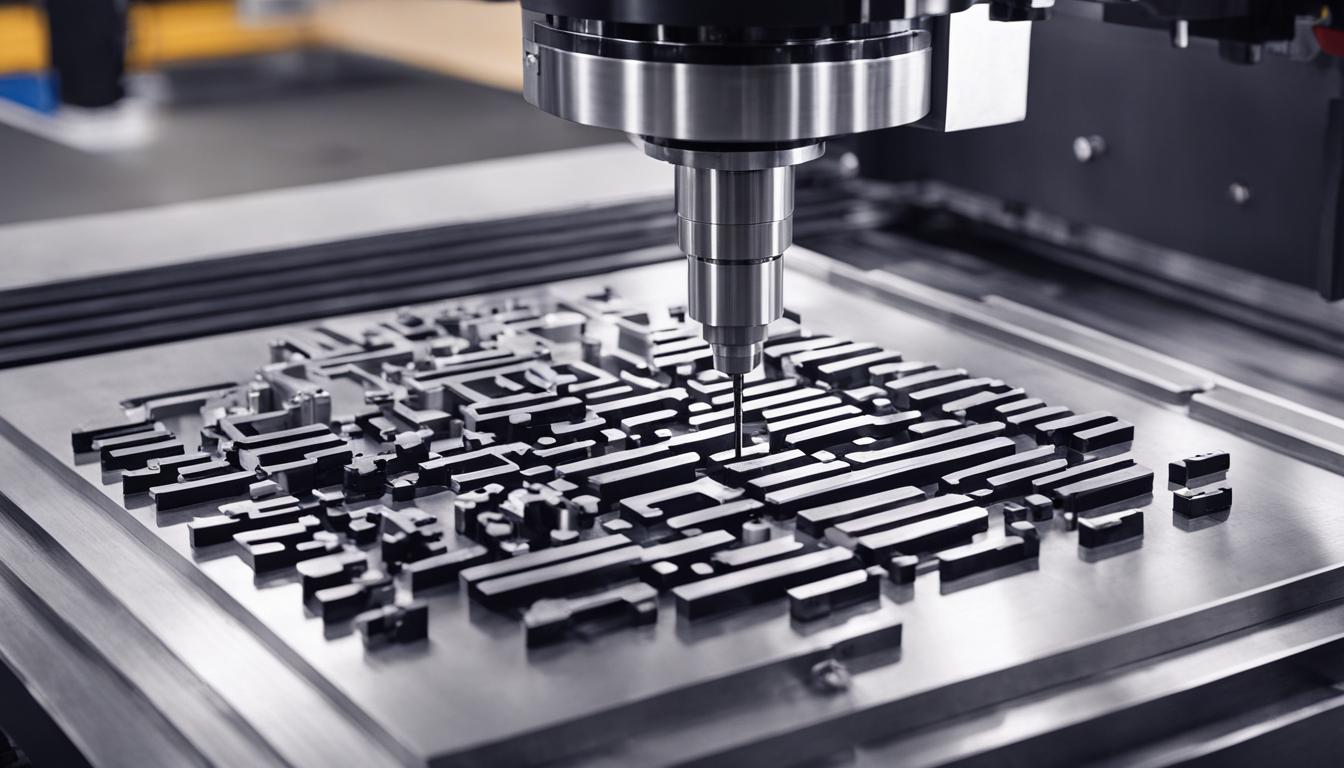
Centroid CNC control systems offer a compelling solution for modernizing and enhancing machine tool performance across various applications. These controls bridge the gap between entry-level hobbyist systems and high-end OEM industrial packages, specifically targeting the brownfield retrofit market for older mills and lathes.
Centroid CNC Control Retrofits
Centroid controls are specifically designed for the brownfield retrofit market, addressing older 3-axis vertical machining centers, toolroom mills, knee mills, and engine lathes. They provide a viable upgrade path when original controls reach end-of-life, lack OEM support, or face spare parts availability issues. Key product lines for production shop retrofits include the M400 for compact VMCs, the All-in-One DC Servo for machines with existing DC brush servos, and the All-in-One AC Spindle/AC Servo for modernizing legacy analog/VFD spindles.
Production facilities frequently report that Centroid’s conversational Intercon programming environment significantly boosts operator productivity. Features like the Tool Check cycle, USB/network DNC, and a rotatable 3D toolpath preview are practical advantages over aging legacy controls. Experienced installers typically complete a 3-axis VMC retrofit, including commissioning, within three to five working days.
The M400 control, for instance, is a compact, panel-mount or pedestal-mount CNC with integrated I/O and a color LCD, ideal for Bridgeport-class machines. For machines already equipped with DC brush servos, the All-in-One DC chassis integrates the CNC controller and servo amplifiers into a single enclosure. This streamlined architecture simplifies installation and enhances system reliability.
Centroid offers comprehensive retrofit packages, available as turn-key or component-level systems, all pre-wired and tested at their Pennsylvania factory. These solutions can include pre-programmed PLC ladders, motor wiring, and custom cables for spindle, coolant, and other accessories, ensuring a ready-to-install solution tailored to specific machine tools.
Acorn CNC Controller Boards and Advanced Hardware
| Feature | Acorn | AcornSix | Allin1DC | Oak | Hickory |
|---|---|---|---|---|---|
| Max Axes | 4 | 6 | 6 | 8 | 8 |
| Motor Type | Stepper / AC Servo (Step/Dir) | Stepper / AC Servo (Step/Dir) | DC Servo | AC/DC Servo | AC/DC Servo (EtherCAT) |
| Loop Type | Open / Hybrid Closed | Open / Hybrid Closed | Closed | Closed | Closed |
| I/O (Onboard) | 8 In / 8 Out | 16 In / 16 Out | Up to 272 In / 272 Out | Up to 272 In / 272 Out | 32 In / 32 Out |
| Communication | Ethernet | Ethernet | Ethernet | Ethernet | EtherCAT |
The Centroid Acorn CNC controller is a popular 4-axis step-and-direction control board, featuring an integrated 1GHz ARM Cortex A8 Motion Control CPU. It communicates reliably with a Windows 10/11 PC via an Ethernet connection, running the Centroid CNC12 software. This hybrid architecture leverages a standard PC for the user interface while dedicated hardware handles critical motion control.
Acorn boards provide essential I/O capabilities, including eight optically isolated inputs and eight relay outputs. They also incorporate one encoder input, crucial for rigid tapping and threading on mills and lathes, and a 12-bit analog output for precise VFD spindle speed control. PWM output is also available for BLDC spindle motor drives or laser applications.
For more demanding applications, the newer Hickory EtherCAT-based CNC Controller supports up to eight axes with EtherCAT communication. This advanced board significantly simplifies wiring and installation, contributing to increased system reliability and performance for a wide range of typical CNC machine tools.
Centroid’s product line extends to other robust controller boards, including the AcornSix, which offers 6-axis step-and-direction control, and the Allin1DC, a closed-loop system for up to six DC servo axes with built-in 15-amp servo drives. The Oak controller provides closed-loop control for up to eight AC or DC servo axes, offering extensive I/O expansion.
Touchscreen Operator Consoles and Software Kits
Centroid’s touchscreen operator consoles, often referred to as the Virtual Control Panel (VCP), provide an intuitive and user-configurable interface. These panels place all essential machine tool controls directly at the operator’s fingertips, making them ideal for mills, lathes, routers, and other specialized machinery.
These consoles feature dedicated buttons for common machine functions, including axis jogging, spindle control, feed hold, and cycle start. Operators can customize auxiliary buttons for specific applications like tool indexing, clamping, or vacuum control, enhancing workflow efficiency. The displays are typically large, color LCDs, often 15 inches, with anti-glare coatings for clear visibility in shop environments.
The core of Centroid’s control is the CNC12 software, which operates on a Windows 10/11 PC and communicates with dedicated Centroid hardware via Ethernet. This hybrid architecture ensures that while the PC manages the user interface, the critical high-speed machine tool motion and PLC functions are handled by the robust Centroid hardware. This approach combines the flexibility of a PC with the reliability of dedicated CNC control.
Intercon conversational programming is a cornerstone of Centroid’s mill and lathe software kits. This ‘fill-in-the-blanks’ G-code generator allows operators to input dimensions directly, making it highly effective for one-off parts, prototypes, and short-run production without requiring a full CAM seat. It includes help screens for common cycles and provides a rotatable 3D preview of the toolpath.
Centroid maintains a customer-friendly software licensing model, offering perpetual licenses where users own their software version outright. Since the Acorn controller’s introduction in 2017, all CNC12 software updates have been provided free of charge to existing license holders. Affordable upgrades for new features are available, ensuring controls remain current without recurring subscription fees.
DIY and Industrial Controller Solutions
Centroid caters to both the do-it-yourself (DIY) enthusiast and industrial sectors with distinct controller solutions. For DIY builders, component-level systems like the Acorn and AcornSix kits provide the core hardware and software, enabling users to integrate them into custom machine builds. Self-service technical support is readily available through Centroid’s community forums, which are monitored by technicians.
Conversely, industrial clients can opt for turn-key Centroid systems, which are pre-assembled, programmed, and rigorously tested at the factory. These comprehensive packages are designed for direct installation on new machinery or as upgrades for existing NC/CNC equipment, minimizing downtime and ensuring rapid deployment. Centroid’s manufacturing of CPUs, motor amplifiers, PLCs, and software in-house ensures seamless component compatibility.
The flexibility of Centroid controllers extends to motor compatibility. Acorn boards support a wide array of step-and-direction drives, including common stepper motor drives and various AC brushless servo motor drive packages from manufacturers like Delta, Estun, and Yaskawa. The Allin1DC is tailored for DC servo systems, while Oak and Hickory support both AC and DC servo motors, offering broad application versatility.
For optimal performance of Centroid’s hybrid PC-based control systems, specific computer requirements are crucial. Recommended specifications include a multi-core CPU with a single-core benchmark of at least 1500, an SSD (Intel or Samsung recommended), a minimum of 8 GB RAM (16 GB or more advised), and a dedicated Ethernet port for reliable communication with the CNC controller. Laptops, Atom-based, and ARM-based CPUs are generally discouraged due to potential performance and connectivity issues.
Precision, Feeds, Speeds, and Modern Practices
Achieving precise dimensions is fundamental in CNC machining, with standard tolerances for most milling and turning operations on metal parts typically ranging from ±0.05 mm to ±0.13 mm. Specifying tighter tolerances beyond functional necessity can significantly increase manufacturing costs.
For high-precision applications, tolerances as tight as ±0.025 mm (±0.001″) are achievable, and in some critical cases, even ±0.005 mm can be met, particularly for features like precision holes or bearing seats. Grinding operations are often employed to achieve the tightest surface finishes and dimensional accuracy after initial milling or turning.
Centroid controls incorporate advanced motion control features to optimize feeds and speeds. Their 2000-line look-ahead capability ensures smooth, continuous tool motion without hesitation, which is vital for achieving superior surface finishes and running programs with very short moves at high feedrates. This processing power reduces the need for post-machining grinding and polishing.
Modern engineering practices are well-supported by Centroid systems, including seamless USB and network DNC for efficient file transfer, real-time part graphics that display tool position during operation, and robust tool check cycles for safe program stops and restarts. The controls also offer user-editable PLC programming and compatibility with various CAD/CAM systems, providing comprehensive solutions for contemporary manufacturing challenges.