
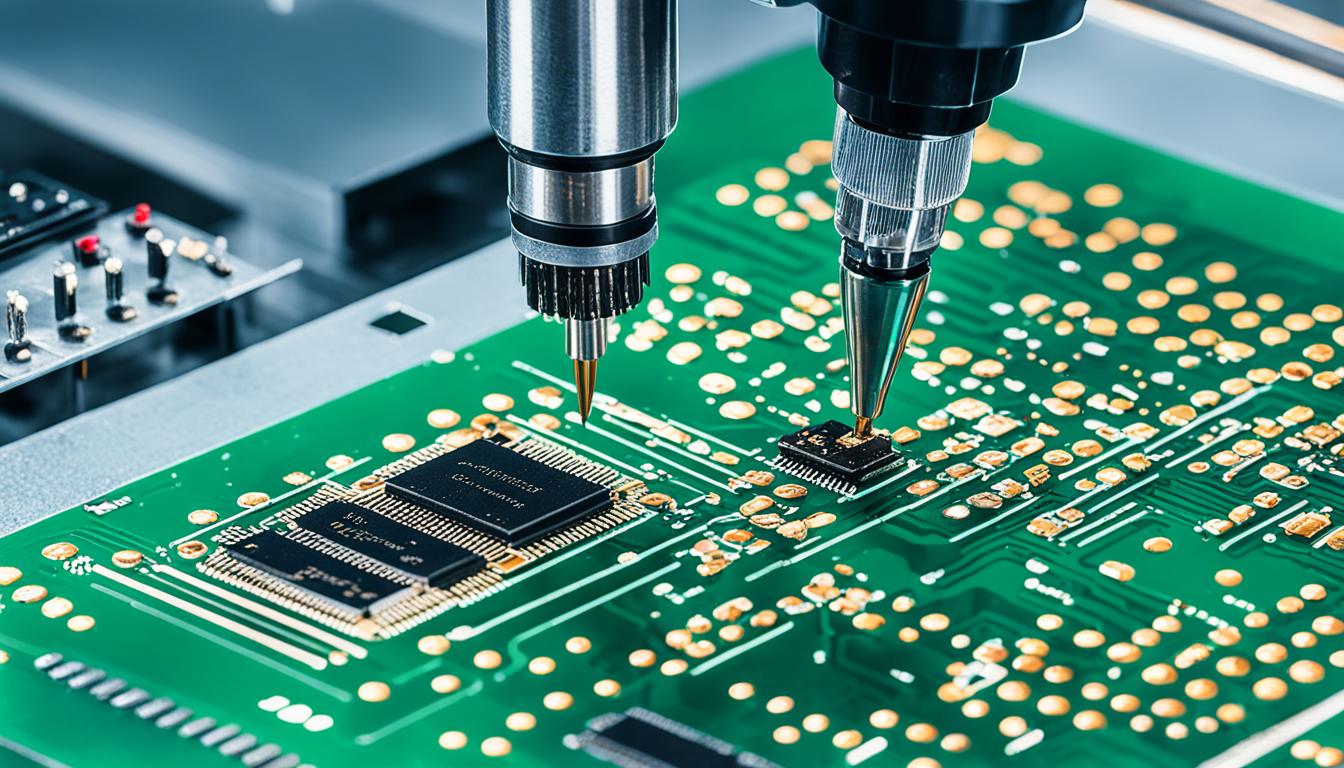
A Printed Circuit Board (PCB) Computer Numerical Control (CNC) machine is a specialized subtractive manufacturing system designed for fabricating circuit boards. These machines precisely remove material from a copper-clad substrate, creating the intricate traces, pads, and holes that form an electronic circuit. Unlike traditional chemical etching, CNC PCB milling offers a dry, environmentally friendlier alternative for rapid prototyping and small-batch production.
Operating as a point-to-point motion control system, a PCB CNC machine translates digital design files into physical movements. This automation ensures high accuracy in positioning and aperture sizing, crucial for the reliable assembly of electronic components. The increasing demand for miniaturization in electronics drives the continuous development of these systems towards higher speed, precision, and reliability.
Precision in Copper Isolation Routing
Isolation routing is a fundamental technique employed by PCB CNC machines to define conductive traces on a copper-clad board. This method involves using a rotating cutting tool to remove a minimal amount of copper, thereby creating insulating gaps around the desired circuit paths. It effectively separates copper fields to serve as independent signal or power lines.
This mechanical process offers distinct advantages over chemical etching, primarily eliminating the need for hazardous chemicals and allowing for fabrication in a typical office or lab environment. High-quality circuit boards can be produced, making it a preferred choice for hobbyists and professional designers seeking quick turnaround times.
Commonly, isolation routing of traces and pads utilizes V-shaped engraving bits, often 0.2mm with a 20-degree angle, made from titanium-coated carbide for consistent results. A typical isolation gap carved by these machines is approximately 0.25 mm wide. Standard routing tolerances for PCB profiles, slots, and cutouts are generally around ±0.005 inches (±0.127 mm), though tighter specifications may be achievable with specialized tooling.
The Criticality of Small PCB Drill Bits
| Parameter | Typical Range for PCB CNC | Notes |
|---|---|---|
| Spindle Speed (RPM) | 30,000 – 150,000 RPM | Up to 200,000 RPM for micro-drilling. |
| Spindle Runout | < 5 µm (ideally < 1 µm) | Crucial for micro-tooling precision. |
| Small Drill Bit Diameter | 0.15 mm – 1.5 mm | Micro drills often < 0.5 mm. |
| Micro-Drill Feed Rate | 0.5 – 3.0 µm per revolution | Adjust based on material and hole size. |
| Isolation Routing Gap | ~0.25 mm | Achieved with V-shaped engraving bits. |
| Plated Hole Tolerance | ±0.003 inches (±0.076 mm) | Standard for manufacturing. |
| Routing Outline Tolerance | ±0.005 inches (±0.127 mm) | Typical for PCB profiles and cutouts. |
Drilling precise holes is a critical step in PCB fabrication, accommodating through-hole components, vias, and mounting points. The choice of drill bit material significantly impacts performance and longevity, especially when working with abrasive materials like FR-4 fiberglass. Tungsten carbide bits are the industry standard due to their exceptional hardness and wear resistance, maintaining sharp edges even at very small diameters.
High-speed steel (HSS) bits serve as a more affordable alternative for less dense or single-layer boards but dull much faster on FR-4. For micro-drilling applications, particularly for holes under 0.50 mm, carbide is almost invariably used, requiring high-precision machinery to prevent breakage.
Standard drill bit sizes for through-hole components typically range from 0.6 mm to 1.5 mm, with micro drill bits often falling below 0.5 mm. For holes under 0.50 mm, spindle speeds commonly range from 80,000 to 150,000 RPM, with feed rates between 0.5 to 3.0 µm per revolution. Optimal settings depend on the material, hole size, and tool geometry, with slower speeds risking chip packing and burrs, and excessive feeds increasing tool stress.
Drill hole tolerances are crucial for component fit and board reliability. For plated through-holes, a tolerance of ±0.003 inches (±0.076 mm) is generally preferred, while non-plated holes typically allow for ±0.002 inches (±0.051 mm). These allowances account for plating variations, drill wear, and process factors inherent in manufacturing.
Rapid Prototyping Circuit Boards with CNC
CNC machining offers significant advantages for rapid prototyping circuit boards, providing a fast, accurate, and cost-effective method for developing new electronic products. Prototypes can be created in a matter of hours, significantly reducing lead times compared to conventional manufacturing processes that might take days or weeks.
The high accuracy of CNC machines, often achieving tolerances as tight as ±0.01 mm (0.0004 inches), ensures that prototypes precisely match design specifications. This precision is vital for evaluating design functionality and making necessary improvements before committing to mass production.
Furthermore, CNC prototyping supports a wide range of materials, including various metals and engineering plastics, which is an advantage over some additive manufacturing methods like 3D printing that may have material limitations. This versatility allows engineers to test the same design with different materials to determine the best fit for mechanical, functional, and physical properties.
The ability to make quick iterations and modifications directly from a digital CAD file further enhances the prototyping process. This flexibility, combined with reduced initial investment costs as no specialized molds or tooling are required, makes CNC machining an excellent choice for accelerating product development cycles.
Effective Dust Containment for FRP Materials
Machining Fiberglass Reinforced Plastic (FRP) materials, such as FR-4 used in PCBs, generates significant amounts of fine dust. Effective dust containment is not merely about workshop cleanliness; it is critical for operator health, machine longevity, and maintaining machining accuracy. Fine particles can remain suspended in the air, posing respiratory hazards.
A comprehensive dust collection system for CNC machines typically includes a dust shoe mounted around the spindle, a flexible hose, a cyclone separator, and a shop vacuum or dedicated dust collector. The cyclone separator is highly recommended as it captures larger chips before they reach the main filter, preserving suction and extending filter life.
Crucially, the filtration system should incorporate a High-Efficiency Particulate Air (HEPA) filter. HEPA filters are designed to capture 99.97% of airborne particles 0.3 microns or larger, ensuring clean air output and significantly improving workshop air quality. This is especially important when machining composite materials like carbon fiber or fiberglass.
High RPM Precision Spindles: the Heart of PCB CNC
High RPM precision spindles are indispensable components in PCB CNC machines, directly influencing machining quality, productivity, and long-term operational stability. PCB processing often involves extremely small cutting tools, necessitating very high spindle speeds to achieve efficient cutting, reduce resistance, minimize burr formation, and improve surface finish.
Spindle speeds for PCB milling can range from 30,000 RPM to 100,000 RPM, with advanced machines capable of 160,000 RPM or even 200,000 RPM for micro-drilling applications. For holes smaller than 0.3 mm, speeds exceeding 50,000 RPM are often necessary. Higher RPM generally correlates with better accuracy, especially as tool diameters decrease.
Rotational accuracy and runout control are paramount for precision PCB machining. Even minimal spindle runout, ideally less than 5 micrometers (µm) and sometimes below 1 µm for advanced models, can significantly impact accuracy and tool life when using tiny tools. Spindle bearings are critical in achieving this precision.
Angular contact ball bearings are widely used in high-speed spindles due to their ability to handle both radial and axial loads simultaneously, offering high rigidity and precision. For ultra-high-speed applications, ceramic balls made from silicon nitride are often employed in bearings, as they are lighter and generate less centrifugal force and dynamic friction torque than steel balls. Hybrid water-air cooling systems are also common to extend operational lifespan.