
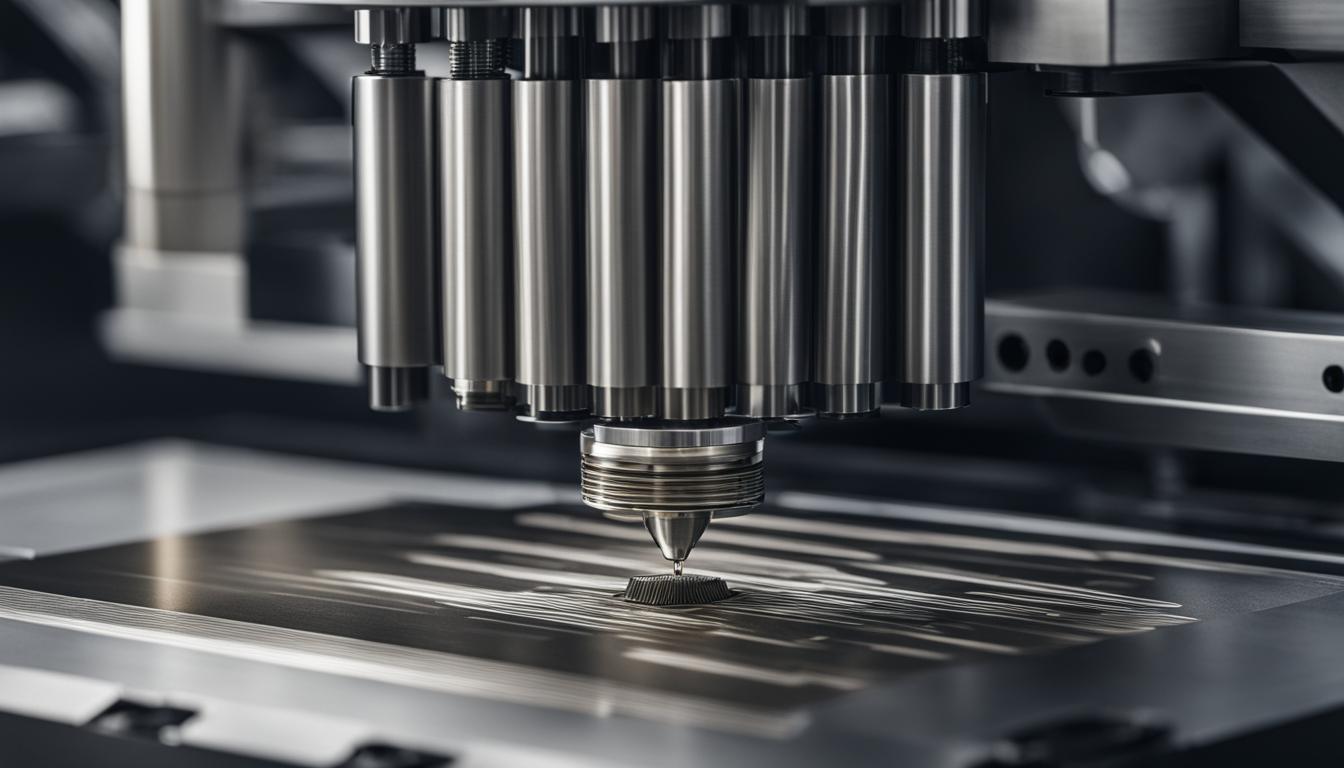
The Atomstack A5 series of diode laser engravers, while primarily designed for non-metal materials, can indeed mark and etch certain metal surfaces. Achieving visible and permanent marks on metal with these machines requires a clear understanding of diode laser power limitations and the application of specific material preparation techniques. Unlike fiber lasers, which are engineered for direct metal engraving, diode lasers operate at a different wavelength and possess lower optical power, necessitating a more nuanced approach for metallic substrates.
Diode lasers typically emit blue-violet light, around 445-455 nm, a wavelength that bare, reflective metals do not readily absorb. This poor absorption means the laser energy often bounces off or dissipates too quickly to create a significant thermal reaction on untreated metal surfaces. Consequently, attempting to engrave raw stainless steel or aluminum without preparation usually results in no visible mark or a faint, easily removable smudge.
Diode Laser Technology and Metal Interaction
Diode lasers, such as those found in the Atomstack A5 series, typically offer optical output power ranging from approximately 4.5W to 6W, despite being advertised with higher input power ratings like 20W or 40W. This optical power is sufficient for engraving a wide array of organic materials and some plastics, but it presents limitations when interacting with metals. The fundamental challenge lies in the reflective and thermally conductive properties of most bare metals.
For effective metal marking, a laser must impart enough energy to alter the material’s surface, either through oxidation, melting, or vaporization. Diode lasers, with their specific wavelength and power output, generally achieve surface-level changes rather than deep material removal on metals. This distinction is crucial; while a diode laser can ‘mark’ or ‘etch’ metal, it typically cannot ‘engrave’ in the sense of creating deep, material-removing cuts like a fiber laser.
The Atomstack A5 Pro and A5 Pro+ models, for instance, feature compressed laser spots, with the A5 Pro+ achieving a focus area as small as 0.02mm² and optical power between 5.5W-6W. This finer spot size enhances the energy density, improving marking capabilities on suitable materials, including certain metals.
Achieving Marks on Stainless Steel
| Parameter | Atomstack A5 20W (Optical Power) | Atomstack A5 Pro/Pro+ (Optical Power) |
|---|---|---|
| Optical Output Power | 4.5W – 5W | 5W – 6W |
| Laser Wavelength | 455 ± 5nm | 445 ± 5nm |
| Focusing Method | Fixed Focus | Fixed Focus |
| Laser Spot Size (A5 Pro+) | N/A | 0.02mm² (compressed) |
| Engraving Area | 410 x 400mm | 410 x 400mm |
Marking stainless steel with an Atomstack A5 diode laser is achievable, but it almost always requires the use of a specialized laser marking spray. These sprays, such as CerMark Ultra or similar products, create a ceramic-like layer on the metal surface that readily absorbs the diode laser’s energy.
When the laser beam interacts with this coating, a chemical reaction occurs, bonding the material to the stainless steel and creating a durable, high-contrast black mark. Without such a coating, a diode laser will struggle to produce a visible or permanent mark on bare stainless steel due to its reflective nature and high thermal conductivity.
Optimal settings for marking stainless steel with a diode laser and marking spray typically involve high power and moderate speed. For a 10W diode laser, starting parameters around 100% power and 600-900 mm/min with a 0.10 mm interval (approximately 254 DPI) are recommended for a single pass. It is essential to apply a thin, even coat of the marking spray and allow it to dry completely before laser processing.
While diode lasers can create surface marks on stainless steel, they are not suitable for deep engraving. For professional-grade, deep engravings on stainless steel, fiber lasers are the preferred tool.
Precision Engraving Anodized Aluminum
Anodized aluminum is one of the most receptive metal types for diode laser engraving. The anodizing process creates a porous oxide layer on the aluminum’s surface, which is then often dyed with color. A diode laser effectively removes this colored anodized layer, exposing the lighter, raw aluminum underneath and creating a high-contrast mark.
This process results in clear, permanent markings, typically appearing white or silver against the colored background of the anodized layer. The Atomstack A5 series, including the A5 20W, has demonstrated good performance in engraving anodized aluminum.
Achieving optimal results on anodized aluminum involves careful adjustment of laser power and speed. Generally, lower power and higher speed settings are recommended to remove only the anodized layer without damaging the underlying base metal. Excessive power can lead to a rough, gray, or burnt appearance, indicating that the laser has begun to interact with the bare aluminum rather than just the coating.
Optimizing Focus for Diverse Materials
Accurate laser focus is paramount for achieving precise and high-quality results across all materials, including metals. The Atomstack A5 series typically features a fixed-focus laser diode, which simplifies the focusing procedure by eliminating moving parts in the beam path and allowing for a narrower focus. However, proper focal distance adjustment relative to the material surface remains critical.
For non-metal cutting, such as wood or acrylic, the focus needs to be precisely set to maximize the energy density at the material’s surface or slightly below, depending on the desired cut depth and material thickness. A slightly defocused beam can result in a wider kerf and less efficient cutting. The Atomstack A5 20W, for example, can cut poplar plywood and dark acrylic, but struggles with clear acrylic due to poor absorption of the blue laser light.
When marking metals, especially with a marking spray, the laser’s focal point should be precisely on the sprayed surface to ensure the most efficient reaction with the coating. For anodized aluminum, maintaining a tight focus on the anodized layer ensures clean ablation without affecting the base metal. Consistent focus across the entire work area is essential for uniform marking quality.
Surface Etching Techniques and Limitations
Surface etching with a diode laser involves creating shallow, high-contrast marks by locally heating, melting, or oxidizing the top micrometers of a material. For metals, this is primarily achieved through the use of laser marking compounds or by targeting specific surface treatments like anodization. Bare, untreated metals, particularly highly reflective ones like aluminum and stainless steel, are challenging for diode lasers to etch directly.
The Atomstack A5 Pro and Pro+ models are capable of directly marking ‘mirror stainless steel’ and ‘lacquered metal,’ indicating their ability to interact with specific surface finishes. However, for most other bare metals, a marking spray is indispensable. These sprays facilitate a chemical bonding process that creates a permanent, dark mark on the metal surface.
While diode lasers are excellent for surface marking and etching on suitable materials, they are not designed for deep material removal or cutting of metals. For applications requiring significant material ablation or cutting through metal sheets, industrial fiber lasers are the appropriate technology. Diode lasers excel in applications like creating serial numbers, logos, or decorative patterns on treated metal surfaces, offering an accessible entry point into metal marking for hobbyists and small businesses.