
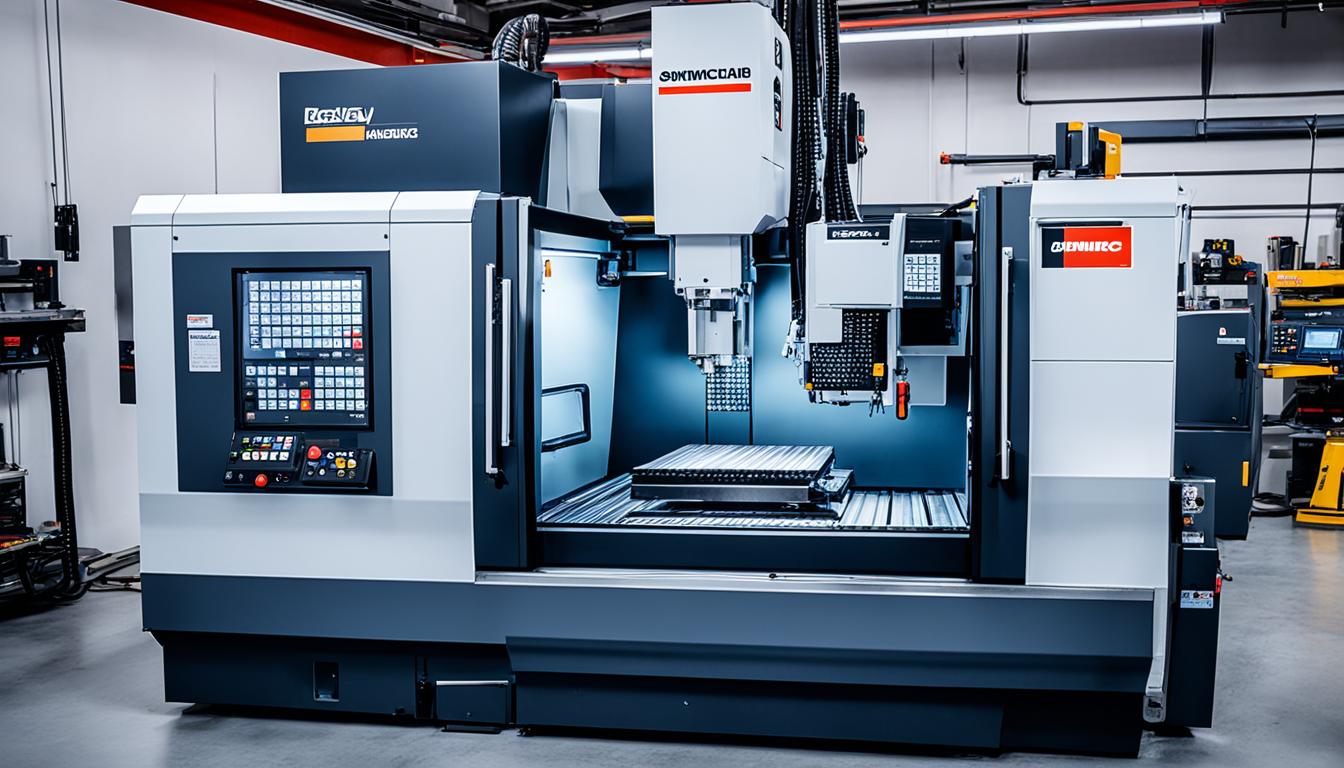
Acquiring a used CNC machine can represent a significant capital investment for any manufacturing operation. Beyond the initial purchase price, a thorough technical evaluation of several critical factors is essential to determine the machine’s actual long-term cost and operational viability.
Understanding these underlying expenses prevents unexpected downtime and ensures the equipment meets production demands. A comprehensive assessment includes depreciation, spindle health, controller modernity, logistical challenges, and potential refurbishment needs.
Depreciation Factor Evaluation
The depreciation of a CNC machine is influenced by several key variables, extending beyond its chronological age. Factors such as the machine’s model, specific features, and overall condition significantly impact its market value. Economic climate, along with supply and demand dynamics, also play a crucial role in determining resale prices.
Machine hours, particularly ‘cutting hours,’ offer a more accurate gauge of wear than simple age. A machine with extensive cutting hours will likely exhibit more wear on critical components like the spindle and tooling, potentially leading to reduced precision.
Maintenance records provide a transparent history of the machine’s care, directly influencing buyer confidence and perceived remaining service life. Equipment used in demanding applications, such as high-volume production or with abrasive materials, typically depreciates faster due to increased stress and wear.
The control system’s generation and the machine’s axis count also affect value. Machines with five or more axes often retain better resale value due to their versatility and advanced capabilities.
Inspection of Spindle Wear
| Spindle Wear Indicator | Typical Symptom | Potential Cause |
|---|---|---|
| Decreased Performance | Loss of tolerance, inconsistent finish | Worn bearings, runout, shaft damage |
| Unusual Noise | Grinding, screeching, rattling | Bearing failure, contamination, lack of lubrication |
| Excessive Vibration | Chatter marks, reduced tool life | Imbalanced tooling, worn bearings, misalignment |
| Overheating | Spindle hot to touch, beyond normal | Insufficient lubrication, bearing failure, motor issues |
| Increased Tool Wear | Uneven cutting edges, shortened tool life | Spindle runout, poor tool seating |
The spindle is a CNC machine’s core component, directly impacting performance and part quality. Detecting spindle wear early is critical to prevent costly failures and maintain machining accuracy. Operators should monitor for several key indicators during routine operation.
Common signs of spindle wear include decreased performance, loss of tolerance, and inconsistent surface finishes on machined parts. Unusual noises like grinding, screeching, or rattling often indicate bearing issues, which can stem from contamination, impacts, or insufficient lubrication.
Excessive vibration is another critical symptom, often caused by imbalanced tooling, worn bearings, or spindle misalignment. Overheating, beyond normal operating temperatures, can signal insufficient lubrication or bearing failure. Increased tool wear, such as uneven cutting edges or shortened tool life, also points to potential spindle problems.
Precision measurement is essential for assessing spindle health. Static runout, measured with a dial test indicator (DTI) and a certified test bar, should be evaluated at the spindle nose and further along the test bar. For new precision Vertical Machining Centers (VMCs), radial runout should be ≤10μm (0.0004 inches), while standard machines typically allow up to 25μm (0.001 inches).
Vibration analysis, utilizing accelerometers and specialized software, provides real-time data on bearing health, imbalance, and misalignment. This proactive approach helps identify issues before they escalate into major failures, optimizing maintenance scheduling.
Controller Age Considerations
The CNC controller functions as the machine’s brain, and its age significantly impacts functionality, compatibility, and support. While some older controllers, particularly from manufacturers like FANUC, are renowned for their longevity and can operate for 15-20 years or more, their capabilities may not align with modern manufacturing demands.
FANUC’s 0i-D/F and 0i-F Plus controllers, for instance, boast impressive Mean Time Between Failures (MTBF) ratings, exceeding 47 and 52 years respectively. This durability means many 20-year-old FANUC systems remain in active service, often with backward compatibility for older G-code.
However, older control systems can present challenges. Technology obsolescence can limit integration with newer software, advanced automation, and real-time data analytics platforms. Finding genuine replacement parts for very old controllers can also become difficult, leading to unpredictable lead times and variable pricing.
Upgrading an outdated controller can be a substantial investment, with full retrofits potentially costing around $8,000, though this might be more economical than a $15,000 OEM board replacement for some older machines. Replacing an entire CNC controller or system can exceed $50,000, excluding installation and lost productivity.
Transport and Rigging Costs
Moving a used CNC machine involves complex logistics and specialized services, incurring significant costs. Heavy equipment shipping rates typically range from $1,000 to $50,000, depending on factors like equipment size, weight, shipping distance, and permit requirements.
For standard transport, rates generally fall between $2.50 to $4.00 per mile, while oversize loads can cost $3.75 to $7.50 per mile. Shorter hauls often have a higher per-mile rate due to fixed costs being spread over fewer miles.
Rigging services, which involve the specialized lifting and positioning of machinery, typically cost $250 to $500 per hour for a standard three-person crew with a small to mid-size crane. Most single-machine rigging projects range from $3,500 to $15,000, influenced by access, machine size, weight, and required equipment.
Additional costs include crane rental, mobilization fees, custom-engineered lift plans (starting at $1,500 and potentially exceeding $8,000 for complex lifts), and municipal permits. Heavy haul transport can add $5 to $15+ per loaded mile, depending on permit complexity, escort requirements, and route surveys.
Refurbishment Budget Planning
Planning a refurbishment budget for a used CNC machine requires a detailed assessment of potential repairs and upgrades. Rebuilding a spindle, for example, typically costs between $1,000 and $15,000, depending on the extent of damage, which is often 25% to 45% of the cost of a new spindle.
Common spindle repair costs include $700 to $1,600 for a damaged tool interface, $400 to $1,400 for bearing journals, and up to $4,000 for shaft damage, which can double the base repair cost. Replacing the entire spindle can range from $14,000 to $24,000.
Other significant refurbishment areas include ball screws and electrical systems. Ball screw nut rebuilds can cost $350-$500 for ball replacement or $1,200-$1,500 for a full regrind and rebuild. Complete screw and nut replacement can exceed $1,500 to $4,000.
Electronics repairs typically range from $500 to $5,000, while major component damage can reach $25,000. Labor rates for CNC machine repair services generally fall between $100 and $200 per hour, with emergency rates potentially higher.
A full machine rebuild, which involves remanufacturing most components except the basic iron structure, can cost approximately 75% of a new machine’s price. This extensive process replaces motors, servomotors, drives, ball screws, gearboxes, wiring, and the control system, ensuring the machine performs as new or better.