
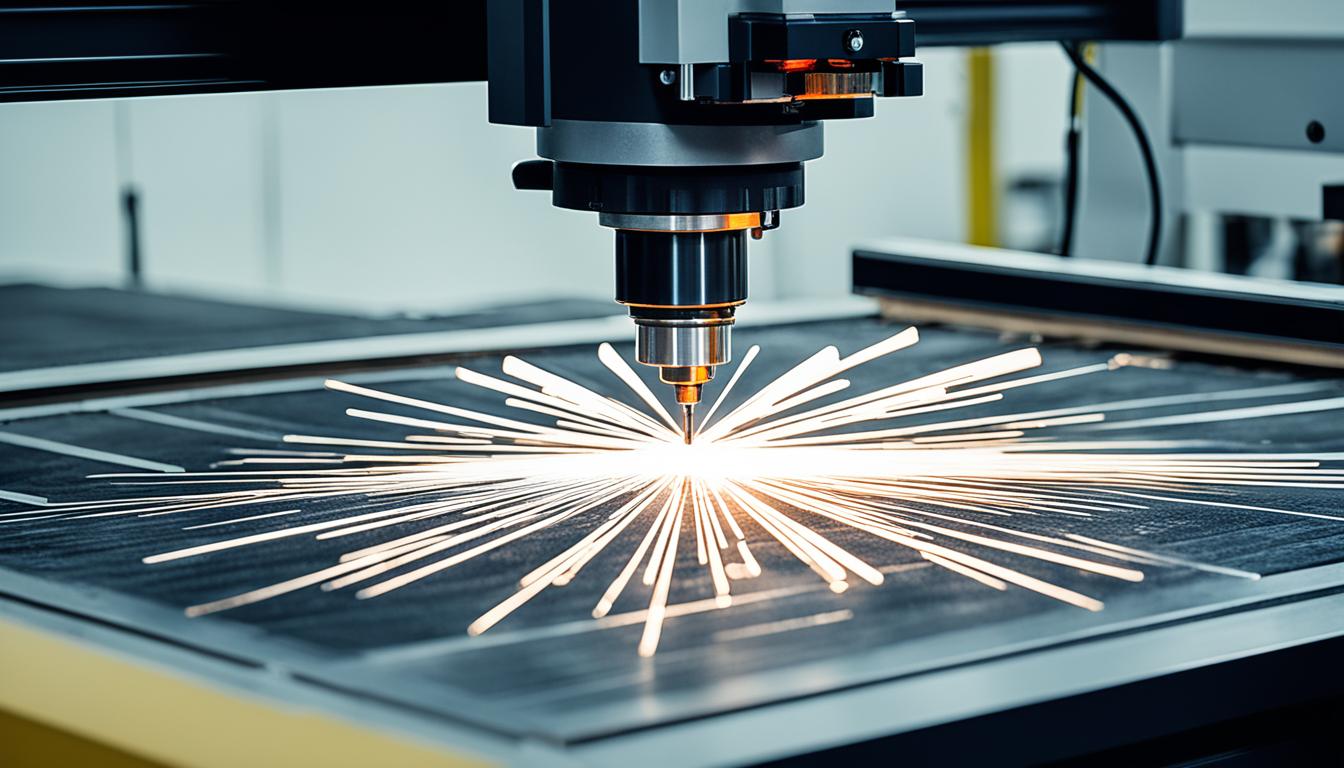
Effective CNC programming requires a deep understanding of material properties to achieve optimal results. Each material, from soft aluminum to hardened tool steel, demands specific strategies for feeds, speeds, and tooling. Ignoring these distinctions can lead to poor surface finishes, premature tool wear, and scrapped parts.
Machinists must adapt their approach to account for factors like thermal conductivity, hardness, and ductility. Modern engineering practices leverage advanced tooling and intelligent machine controls to push the boundaries of precision and efficiency across a wide range of materials. This guide explores key considerations for common material types.
Aluminum High-Speed Machining Parameters
Aluminum is widely favored in CNC machining due to its excellent strength-to-weight ratio, superior machinability, and thermal conductivity. High-speed machining (HSM) of aluminum prioritizes high spindle speeds and feed rates to maximize material removal while maintaining surface quality. Optimal surface feet per minute (SFM) for aluminum with carbide tooling typically ranges from 800 to over 3,000, depending on the specific alloy and operation.
Spindle speed is a critical factor for aluminum, as smaller tools require proportionally higher RPM to achieve optimal cutting speeds. For instance, a 1/2-inch end mill might require 11,460 RPM at 1,500 SFM, while a 1/4-inch end mill at 2,000 SFM would need 30,560 RPM. General aluminum production often utilizes 10,000-15,000 RPM for tools 3/8 inch and larger, with 20,000-30,000 RPM beneficial for smaller tools to achieve better results.
Standard tolerances for CNC-machined aluminum parts typically range from ±0.05 mm for general milling to ±0.01 mm for high-precision applications. However, tolerances should be selected by feature and function, not by applying a single tight number to the entire drawing. Factors like material properties, machine precision, tool condition, and thermal control significantly influence achievable tolerances.
Stainless Steel Chip Load Control
| Material Type | Typical Spindle Speed (RPM) | Typical Feed Rate (IPM) | Key Machining Challenge | Primary Strategy |
|---|---|---|---|---|
| Aluminum (6061-T6) | 10,000 – 24,000+ | 60 – 120+ | Burr formation, thin-wall deflection | High-speed, high-feed, efficient chip evacuation |
| Stainless Steel (304/316) | 1,150 – 1,500 (for 1/2″ cutter) | 10 – 24 | Work hardening, stringy chips | Low speed, aggressive feed, dynamic milling, flood coolant |
| Plastics (e.g., Acrylic, HDPE) | 18,000 – 24,000 | 60 – 300 | Heat melt, deformation, chip re-welding | Sharp tools, air assist/coolant, high feed, shallow passes |
| Titanium (Ti-6Al-4V) | ~760 – 1,150 (for 1/2″ cutter) | 12 – 16 | Low thermal conductivity, work hardening | Low RPM, high feed, high-pressure coolant, rigid setup |
| Hardened Tool Steel | Moderate to Low | Conservative | Extreme hardness, abrasive wear | Coated carbide/PCBN, rigid holders, small DOC/WOC |
Machining stainless steel presents unique challenges due to its high ductility, low thermal conductivity, and tendency to work-harden rapidly. Effective chip load control is paramount to prevent the material from stretching and flowing into long, stringy chips that can wrap around tooling, cause breakage, and scratch surfaces.
A common strategy for stainless steel, particularly 304 and 316 grades, involves using lower surface speeds and higher feed rates. This aggressive approach ensures the tool consistently cuts beneath the work-hardened layer created by the previous pass, preventing ‘rubbing’ that generates excessive heat and further hardening. Recommended chip loads for 304 stainless with a 1/2-inch 4-flute carbide end mill are around 0.0015 inches per tooth, reducing to 0.001 inches per tooth for 3/8-inch end mills.
Dynamic milling techniques, such as limiting radial engagement to 20-30% of the cutter diameter while increasing axial depth, are highly effective. This maintains a controlled engagement, reduces heat, and improves tool life. Flood coolant is essential, directed precisely at the tool-material interface to evacuate chips and control heat at the cutting edge.
Plastic Heat Melt Prevention
CNC machining plastics, especially heat-sensitive varieties like polypropylene and polyethylene, requires careful management to prevent melting, deformation, and poor surface finishes. Plastics have significantly lower thermal conductivity than metals, meaning heat generated during cutting concentrates at the tool tip.
Optimizing cutting parameters is crucial. Lowering cutting speed and adjusting feed rate can reduce heat buildup. A too-low feed rate can cause excessive dwell time, while a too-high rate may lead to insufficient tool engagement. Using sharp tools with appropriate geometry, such as high-speed steel (HSS) or carbide tools, is vital for efficient cutting with minimal heat generation.
Effective cooling and chip evacuation are non-negotiable. Air assist systems or coolants, including water-based options or mist coolants, help dissipate heat and clear chips. For thicker plastic materials, employing multiple shallow passes instead of a single deep cut can prevent overheating. Avoiding tool dwell, especially in corners, also minimizes heat generation and chip re-welding.
Titanium Slow Speed Feeds
Titanium alloys are renowned for their high strength-to-weight ratio and corrosion resistance, but they are notoriously difficult to machine. The material’s low thermal conductivity means that 80-90% of the heat generated concentrates directly on the cutting edge, leading to rapid tool wear and potential chemical reactions with the tool material.
Successful titanium machining demands a counter-intuitive approach: low RPM and high feed rates. Running the spindle too fast generates excessive heat, while feeding too slowly causes the tool to rub, leading to work hardening. For Grade 5 (Ti-6Al-4V), surface speeds of 120-160 SFM (35-50 m/min) are conservative starting points for uncoated carbide.
Maintaining a larger chip load and avoiding unnecessary rubbing significantly reduces temperature and minimizes work hardening. High-pressure coolant (ideally 1,000 PSI or more) is critical, as it blasts chips out of the flutes and delivers fluid directly to the cut zone, preventing thermal shock and re-cutting chips. Rigid setups and minimizing tool overhang are also essential to combat titanium’s elasticity and tendency to chatter.
Hardened Tool Steel Strategies
Machining hardened tool steels requires robust strategies to manage extreme hardness, abrasive wear, and high cutting forces. These materials, often heat-treated to 60-62 HRc, demand specialized tooling and precise parameter control. Even tool steels like D2, with added chromium, can machine similarly to materials at 62-65 HRc due to their toughness.
Utilizing coated carbide or Polycrystalline Cubic Boron Nitride (PCBN) tooling is essential for machining hardened steels. These tools offer the necessary hardness and heat resistance to withstand the demanding cutting conditions. Maintaining tool rigidity through high-precision holders, such as shrink-fit or milling chucks, is crucial to achieve maximum tool life and maintain tight tolerances.
Conservative engagement strategies, often involving smaller radial and axial depths of cut, are typically employed to manage heat and tool wear. Adaptive feeds can help avoid chatter and maintain consistent cutting forces. Modern practices also incorporate cryogenic or controlled Minimum Quantity Lubrication (MQL) to manage heat effectively at the cutting zone.