
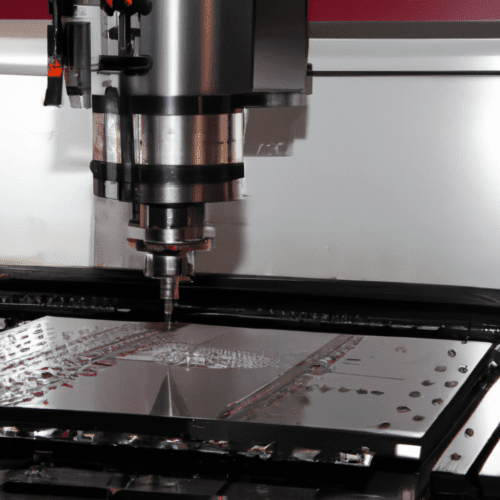
Computer Numerical Control (CNC) machining has fundamentally reshaped modern manufacturing across diverse industries. This subtractive manufacturing process utilizes pre-programmed computer software to dictate the movement of factory tools and machinery, enabling the creation of highly precise and complex components from various materials. Its versatility and accuracy make it indispensable for producing parts that meet stringent engineering specifications.
The ability of CNC machines to execute intricate designs with exceptional repeatability has driven innovation in sectors demanding high performance and reliability. From aerospace to medical devices, these systems ensure consistent quality and dimensional accuracy, often surpassing the capabilities of traditional manufacturing methods.
Aerospace Structural Components
Aerospace manufacturing relies heavily on CNC machining for producing structural components that must withstand extreme temperatures, high pressures, and constant mechanical stress. Materials like titanium alloys (e.g., Ti-6Al-4V) and high-strength aluminum alloys (e.g., 7075-T6) are commonly used due to their superior strength-to-weight ratios and durability.
Five-axis CNC machining centers are particularly critical in this sector, allowing tools to approach workpieces from multiple angles without repositioning. This capability is essential for creating complex geometries, such as turbine blades, structural brackets, and engine housings, in a single setup. Such multi-axis kinematics minimize cumulative errors and ensure consistent part quality, which is paramount for flight safety and performance.
Achieving tight tolerances is a non-negotiable requirement for aerospace parts, often demanding precision of ±0.001 inches (0.025 mm) or even tighter on critical features. Surface finishes are also crucial, with typical requirements ranging from Ra 0.8 to 3.2 µm for structural components, ensuring optimal performance and reducing friction.
Machining challenging materials like titanium requires specialized tooling and controlled parameters. For Ti-6Al-4V, recommended cutting speeds for carbide tools range from 45-100 m/min, with feed rates of 0.08-0.15 mm/tooth, emphasizing sharp edges and high-pressure through-tool coolant to manage heat and prevent work hardening.
Automotive Engine Blocks
| Material | Common Alloys/Grades | Typical Tolerances (mm) | Surface Finish (Ra µm) | Cutting Speed (SFM / m/min) | Feed Rate (IPT / mm/tooth) |
|---|---|---|---|---|---|
| Aluminum | 7075-T6, 6061-T6 | ±0.025 to ±0.05 | 0.8 – 3.2 | 300-1000 SFM | 0.004-0.012 IPT |
| Titanium | Ti-6Al-4V (Grade 5) | ±0.025 to ±0.05 | 0.8 – 3.2 | 45-100 m/min | 0.08-0.15 mm/tooth |
| Stainless Steel | 316L, 17-4 PH | ±0.01 to ±0.025 | 0.4 – 1.6 | 60-120 m/min | 0.05-0.1 mm/tooth |
| Tool Steel | P20 | ±0.005 to ±0.025 | 0.4 – 1.6 | 100-200 SFM | 0.003-0.008 IPT |
CNC machining is fundamental to the production of automotive engine blocks, cylinder heads, and other powertrain components. These parts demand exceptional precision, durability, and performance to withstand extreme temperatures, pressures, and mechanical loads. Aluminum alloys like A356-T6 and 6061-T6, along with cast iron and various steels, are frequently machined for these applications.
Engine blocks, in particular, require intricate machining for cylinder bores, mounting surfaces, and fluid passages. Critical bores often necessitate tolerances as tight as ±0.025 mm, while sealing surfaces may require a surface roughness of Ra 1.6 µm or better. Cylinder bores, for instance, demand an even finer finish, typically Ra 0.4 µm, to ensure proper piston ring sealing and minimize wear.
The manufacturing process for engine components often involves a combination of CNC milling, turning, and drilling operations. Modern CNC machines can achieve dimensional accuracy down to ±0.002 mm for specialized engine parts, ensuring optimal fit and function within complex assemblies.
Feeds and speeds for aluminum alloys like 6061-T6 are generally higher than for harder materials, with milling speeds often ranging from 600-1000 SFM. Maintaining an adequate chip load is vital to prevent rubbing and heat buildup, which can lead to work hardening and reduced tool life.
Medical Surgical Tools
The medical industry relies on CNC machining for producing a wide array of surgical instruments and implantable devices, where precision, biocompatibility, and sterilization capabilities are paramount. Materials such as 316L stainless steel, 17-4 PH stainless steel, and titanium alloys (e.g., Ti-6Al-4V) are commonly selected for their corrosion resistance, mechanical strength, and inertness.
Surgical instruments like scalpels, forceps, and retractors require extremely fine surface finishes to prevent contamination and ensure smooth operation. Patient-contact surfaces routinely demand a surface roughness of Ra 0.4 µm, often achieved through post-machining processes like electropolishing or passivation.
Dimensional accuracy for medical components is exceptionally stringent, with some specialized parts requiring tolerances as tight as ±0.0002 inches (0.00508 mm). This level of precision is critical for the functionality of complex surgical tools and the long-term success of implants.
Machining 316L stainless steel presents challenges due to its high work-hardening rate and low thermal conductivity. Optimal practices involve using sharp carbide tools, maintaining consistent cutting parameters, and employing effective coolant strategies to manage heat and chip formation, thereby extending tool life and ensuring part quality.
Consumer Electronics Cases
CNC machining is integral to manufacturing cases and enclosures for consumer electronics, where aesthetics, lightweight design, and precise fit are essential. Common materials include aluminum alloys (e.g., 6061, 5052, 7075), stainless steel, and various engineering plastics like ABS, polycarbonate (PC), and PEEK.
These applications often prioritize a sleek appearance and tactile feel, necessitating excellent surface finishes. An ‘as-machined’ finish typically has a surface roughness of Ra 3.2 µm, but tighter options like Ra 1.6 µm or 0.8 µm are frequently specified for visible surfaces, often followed by post-processing such as anodizing or bead blasting to enhance durability and aesthetics.
Design flexibility and rapid iteration are key advantages of CNC machining for consumer electronics, allowing for quick prototyping and modifications. Tolerances for electronics cases are generally precise, with CNC machining capable of achieving accuracy as close as ±0.005 mm, ensuring components fit together seamlessly.
Material selection is critical; aluminum alloys offer a lightweight solution with good thermal conductivity, ideal for heat dissipation in devices. Plastics provide electrical insulation and versatility for complex shapes, while stainless steel offers robustness and corrosion resistance for premium products.
Custom Mold Tooling
Custom mold tooling, particularly for plastic injection molding and die casting, extensively utilizes CNC machining to create intricate cavities and cores. Tool steels like P20 are a preferred choice due to their balanced mechanical properties, consistent hardness, and excellent machinability.
P20 tool steel is typically supplied in a pre-hardened state, with a hardness range of 28–34 HRC, which allows for direct machining of mold cavities without the need for subsequent heat treatment. This significantly shortens production cycles and minimizes the risk of deformation.
The surface finish of mold tooling is paramount, directly influencing the surface quality of the molded parts. P20 steel offers good polishability, making it suitable for molds requiring high surface finishes. Achieving a smooth surface, often Ra 0.4 µm or better, is crucial for plastic products that demand a premium aesthetic.
Precision is critical for mold tooling, with CNC machines capable of holding tolerances as low as ±0.005 mm (0.0002 inches) for intricate features. This accuracy ensures the dimensional stability of the molded components and the longevity of the mold itself.