
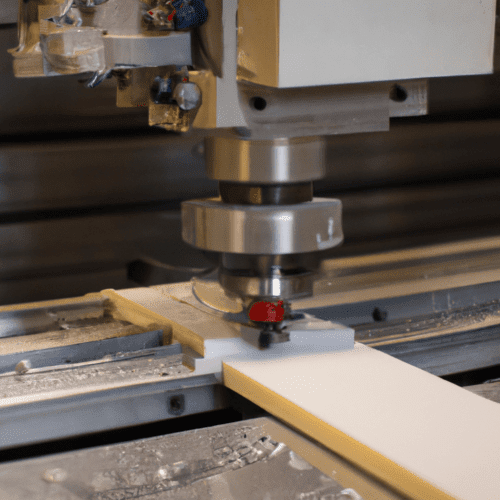
CNC routers are highly capable machines for cutting various wood types, offering precision and repeatability across diverse applications. Understanding the specific characteristics of different woods, optimizing cutting parameters, and selecting appropriate tooling are fundamental for achieving superior results and maximizing machine efficiency.
Understanding Wood Types and Their Machinability
Wood materials present unique challenges and opportunities for CNC routing due to their anisotropic nature and varying densities. Hardwoods, such as oak, maple, and walnut, are characterized by their dense cellular structure and often intricate grain patterns. These properties demand specific cutting strategies to prevent burning, excessive tool wear, and tear-out.
Softwoods, including pine, cedar, and spruce, possess a softer, more uniform texture and are generally easier to machine. While softwoods allow for faster feed rates, operators must remain vigilant for resin buildup on tooling and potential fuzzy surfaces, particularly when cutting along the grain.
Optimal chip load, which is the thickness of material removed by each cutting edge per revolution, varies significantly between wood types. For hardwoods, typical chip loads range from 0.001 to 0.003 inches per flute. Softwoods, being less dense, can often accommodate higher chip loads, generally between 0.003 and 0.004 inches per flute.
Optimizing Depth of Cut for Wood Routing
| Feature | Upcut Bit | Downcut Bit | Compression Bit |
|---|---|---|---|
| Chip Evacuation | Excellent (upwards) | Poor (downwards) | Balanced (towards center) |
| Top Surface Finish | Prone to tear-out | Clean, crisp | Clean, crisp |
| Bottom Surface Finish | Clean, crisp | Prone to tear-out | Clean, crisp |
| Workholding | Requires strong hold-down | Aids workholding | Aids workholding |
| Primary Use | Deep cuts, through-cuts, chip removal | Shallow pockets, veneers, clean top edge | Double-sided laminates, plywood, clean top & bottom |
The ‘depth per pass,’ also known as axial depth of cut (DOC), is a critical parameter that dictates how deep the router bit plunges into the material during a single cutting pass. Correctly setting this value is essential for maintaining tool integrity, achieving desired surface finishes, and preventing undue stress on the CNC machine.
Several factors influence the appropriate depth per pass, including the router bit’s diameter, the hardness and density of the wood, the rigidity of the CNC machine, and the spindle’s available power. A more robust machine with higher spindle power can generally handle deeper cuts, especially in tougher materials.
General guidelines suggest that for softwoods, the depth per pass should not exceed the bit’s diameter. For hardwoods, a more conservative approach is recommended, with the DOC typically limited to 0.5 times the bit diameter. When performing slotting operations, where the bit is engaged on both sides, the DOC should be reduced to 0.5 times the diameter for all wood types to minimize tool load.
Exceeding these recommended depths can lead to several undesirable outcomes, including increased tool deflection, premature bit breakage, and burning of the workpiece. It can also result in a poor surface finish and place excessive strain on the machine’s motor and drive system.
Selecting the Right End Mill: Downcut vs. Upcut
Choosing the correct end mill for woodworking applications significantly impacts cut quality, chip evacuation, and tool life. Upcut spiral bits feature flutes that pull chips upwards, away from the workpiece and towards the spindle. This design is highly effective for chip evacuation, making it suitable for deep cuts and through-cuts where a clean bottom edge is prioritized.
Conversely, downcut spiral bits push chips downwards, compressing the material fibers into the workpiece. This action results in a very clean, crisp top edge, making downcut bits ideal for shallow grooves, dados, and applications where the top surface finish is critical, such as on veneers or laminates. However, their chip evacuation is less efficient, requiring slower feed rates to prevent chip buildup and overheating.
Compression router bits offer a hybrid solution, combining both upcut and downcut geometries on the same tool. The lower portion of the bit has an upcut spiral, while the upper portion features a downcut spiral. This unique design pulls chips towards the middle of the cut, ensuring clean, tear-out-free edges on both the top and bottom surfaces, making them indispensable for double-sided laminated panels and plywood.
Essential Dust Management for CNC Woodworking
Effective dust management is paramount in CNC woodworking environments, directly impacting operator health, machine longevity, and overall shop cleanliness. Wood dust, particularly from MDF, is extremely fine and poses significant respiratory hazards if not properly contained.
A comprehensive dust collection system typically comprises a dust shoe attached to the spindle, a flexible hose, and a dust collector unit. Dust shoes capture debris directly at the source, preventing it from dispersing into the air and accumulating on machine components.
Dust collector units range from compact shop vacuums for hobbyist machines to industrial-grade cyclonic systems for larger operations. For mid-size routers, systems with 600-1200 CFM (Cubic Feet per Minute) capacity are beneficial, while large industrial CNC routers often require multi-stage systems delivering 2000+ CFM. Many modern systems incorporate HEPA filtration to capture fine particles and maintain superior air quality.
Calibrating Spindle Speed for Optimal Performance
Spindle speed, measured in Revolutions Per Minute (RPM), is a critical parameter that must be carefully calibrated to the material, tooling, and desired cut quality. The spindle speed, in conjunction with the feed rate and the number of flutes on the bit, determines the chip load, which is the actual thickness of material removed by each cutting edge.
The fundamental chip load formula is: Chip Load = Feed Rate / (RPM × Number of Flutes). Achieving the correct chip load is vital; too small a chip load causes the bit to rub rather than cut, generating excessive heat and leading to burning, especially in hardwoods, and rapid tool dulling. Conversely, too large a chip load can result in excessive force, tool deflection, and potential bit breakage.
Typical spindle speeds for woodworking on desktop CNC routers often fall between 16,000 and 24,000 RPM. For dense hardwoods like walnut, a slightly lower RPM range of 6,000-8,000 RPM can be optimal to minimize heat buildup. Monitoring chip formation is key; well-formed chips indicate efficient cutting, while dust suggests an insufficient chip load.
Precision in CNC routing also involves adhering to standard tolerances. For CNC-routed parts, typical tolerances range from ±0.2 mm to ±0.3 mm. More general CNC machining operations often maintain standard linear tolerances around ±0.125 mm (±0.005 inches). Achieving tighter tolerances requires stable machines, high-quality cutting tools, and controlled environmental conditions.
- Material hardness and density
- Router bit diameter and number of flutes
- Desired surface finish
- Machine rigidity and spindle power